
How to Choose the Right Powder Transfer System
How to Choose the Right Powder Transfer System
If you’ve ever handled powders in a plant, whether it’s plastics, food ingredients, chemicals, or minerals, you already know the truth: powders have a personality of their own.
Some flow like water.
Some behave like wet sand.
Some cling to literally everything, including your soul.
So, choosing the right powder transfer system isn’t just a technical decision – it’s a strategic one that influences safety, efficiency, product quality, and day-to-day operations.

Know Your Powder Like You Know Your Product
Selecting a powder transfer system without understanding your material is like buying a tool without knowing what job you’re trying to do sometimes it works, but often it doesn’t.
Every powder behaves differently. Some flow like sugar. Others behave like they’re plotting against you.
Before choosing any equipment, consider questions such as:
• How easily does the material move under gravity or agitation?
• Is it fragile, dusty, abrasive, or prone to taking on moisture?
• How dense is it closer to a lightweight fine powder or a heavy granular solid?
• Does it respond well to air movement or resist being conveyed by airflow?
Once you understand your powder’s “personality,” the rest becomes easier.
Be Clear About What You Want to Achieve
Think about your process not just the material.
Are you feeding an extruder? Loading a silo? Charging a mixer? Feeding a packaging machine?
Different goals demand different systems.
For example:
- If you need a dust-free, closed-loop transfer → vacuum conveyors work well.
- If you want gentle handling for fragile materials → dense phase transfer is a good friend.
- If your powder needs to travel a short distance → a simple mechanical conveyor might do.
You don’t choose the system; your powders and process demand it.
Understand the Main Categories Without Getting Lost in Technical Depth
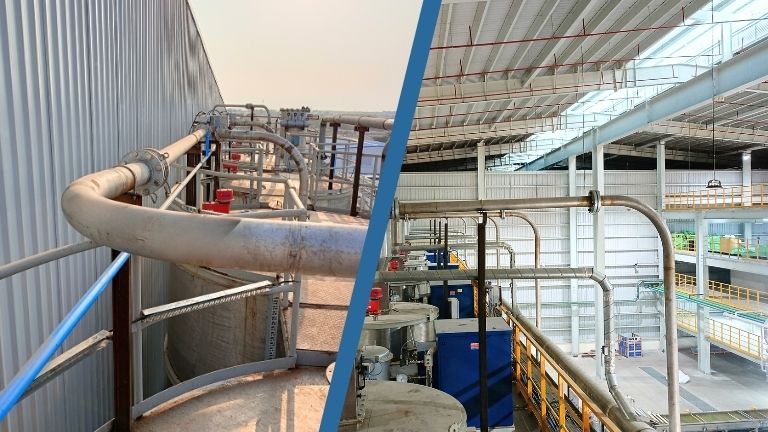
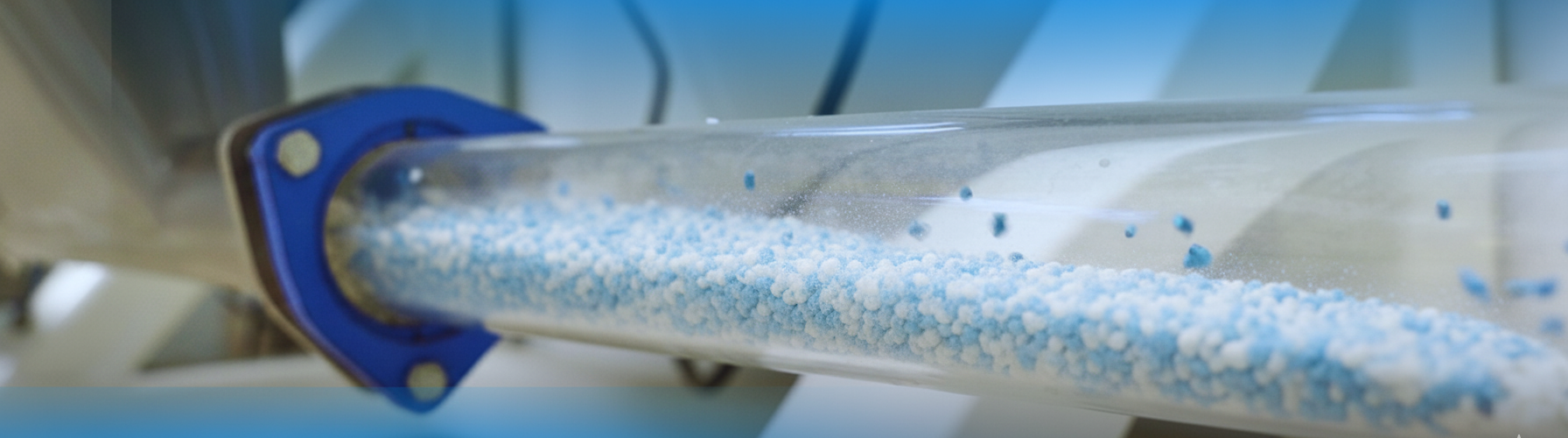
- Pneumatic Conveying
Uses air as a motive media to transport powders.
Two types:
Two common methods include:
• Dilute Phase – powders move quickly in an airstream.
• Dense Phase – powders move more slowly in compact groups.
Useful for longer distances and enclosed, low-dust operation.
2. Mechanical Conveyor
Mechanical means physical force for movement, which includes screws, belts, vibratory units, and similar equipment.
They’re dependable and straightforward, especially for shorter routes, though typically less enclosed than pneumatic systems.

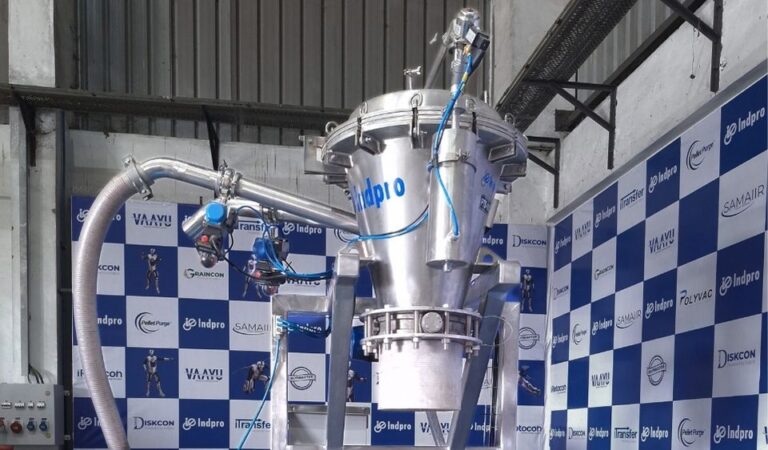
3. Vacuum Transfer
A compact, clean conveying method suitable for hygienic environments and moderate distances. It’s often favored for its neat layout and automation-friendly design.
Matching the Technology to Your Reality
Forget theory for a moment. Let’s talk real-world constraints:
- Limited floor space → Vacuum systems fit beautifully.
- Long travel paths with multiple bends? → Pneumatic dilute phase wins.
- Fragile or abrasive powders? → handle gently in dense-phase systems.
- Want to reduce dust and cleanup? → enclosed pneumatic or vacuum transfer can be advantageous.
- For short and simple runs? → mechanical conveyors remain a cost-efficient choice.
Choosing becomes much easier when you evaluate based on what your plant looks like, not what a catalog or salesperson says.
Think Beyond Today
Powder systems are long-term investments. If your production doubles next year or if you shift to a different grade of material, will your system handle it?
Questions worth asking:
- Will you need a higher transfer rate later?
- Are you planning to upgrade automation?
- Are new powders coming into the process?
- Will hygiene or safety standards change?
A flexible design saves you from redesigning the whole line later.
Always Test with Your Actual Powder
No two powders behave the same even if the spec sheet says otherwise.
Pilot testing is the most underrated step in the selection process.
A good technology partner will:
- Run trials
- Simulate your actual process
- Analyze flow behavior
- Optimize parameters
- Show you real performance data
This step eliminates guesswork.
Final Thoughts: Choosing the Right System Is Less About Machines, More About Understanding
Once you change the mindset from “Which technology is best?” to “What suits my material and my process?”, the entire decision becomes clearer.
To recap, a truly successful powder transfer system is one that:
- Suits your powder’s behavior
- Fits your layout
- Keeps operators safe
- Stays clean and contained
- Minimizes maintenance
- Grows with your process
You don’t need to know every detail of every system.
You just need to know your powder, your goal, and the kind of performance you expect.
Technology will take care of the rest.