The Secret Science of a Perfect Material Blend (It’s Not Just Shaking a Bag)
When you look at a big industrial mixer, you might think, “Well, that’s easy. Just toss everything in and hit ‘start’!”
But anyone who works with powders, granules, and bulk solids knows that achieving a truly homogeneous mix is less like making a simple salad and more like running a meticulous, high-stakes science experiment. Get it wrong, and you risk everything: your product quality, its consistency, and its ability to actually work as intended.
Let’s pull back the curtain on the science of blending efficiency and look at the nine most critical factors that mess up your mix.
The Nine Blend Killers: What Actually Impacts Your Mix
1. Particle Size: Big vs. Small – It Matters
Think about this: if your blend has really tiny particles alongside bigger chunks, what do you think will happen? Chances are, the smaller ones will settle in the gaps between larger particles, and you’ll end up with a mix that’s anything but uniform.
Uniform particle sizes mix more predictably. Wide size differences, on the other hand, increase the risk of segregation. tip: always check your material’s size distribution before mixing. Even small tweaks here can save a lot of headaches later.
2. Density: Weight Isn’t Just a Number
Different densities can be tricky. Heavier particles tend to settle faster, while lighter ones may stay on top. This uneven distribution can cause “dead zones” in your mixer.
Here’s where knowing your materials comes in handy. Understanding bulk and true density helps you choose the right mixer and mixing speed. Sometimes, just switching from a tumble mixer to a high-shear mixer can make the blend much more uniform.
3. Moisture Content: A Little Can Help, Too Much Can Hurt
Moisture is a double-edged sword. A little can help powders stick together and reduce segregation. Too much, though, and you’re dealing with clumping, caking, or even complete blockages.
Practical advice: measure and control moisture content before blending. Uneven moisture in a batch can create stubborn clumps that are hard to break up later a small thing that can ruin the mix if ignored.
4. Flow Properties: How Materials Move
Flow characteristics are often overlooked. Some powders flow easily, others stick, clump, or bridge in the mixer. Poor flow can create dead zones where materials barely move, leading to an uneven blend.
Spend time understanding how your materials flow. You can use flow aids, baffles inside the mixer, or adjust the fill level to improve efficiency. It’s one of those small adjustments that pay off big in the end.
5. Mixing Time and Mixer Type
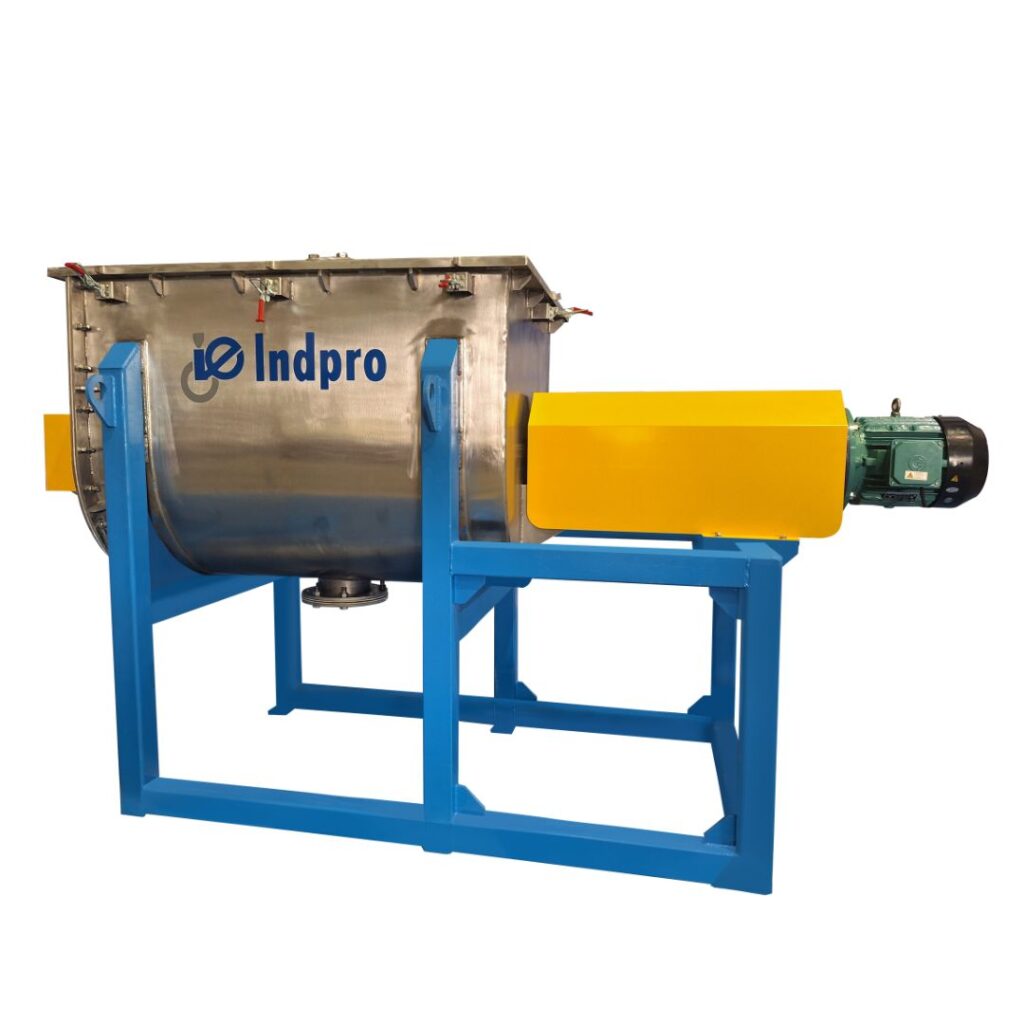
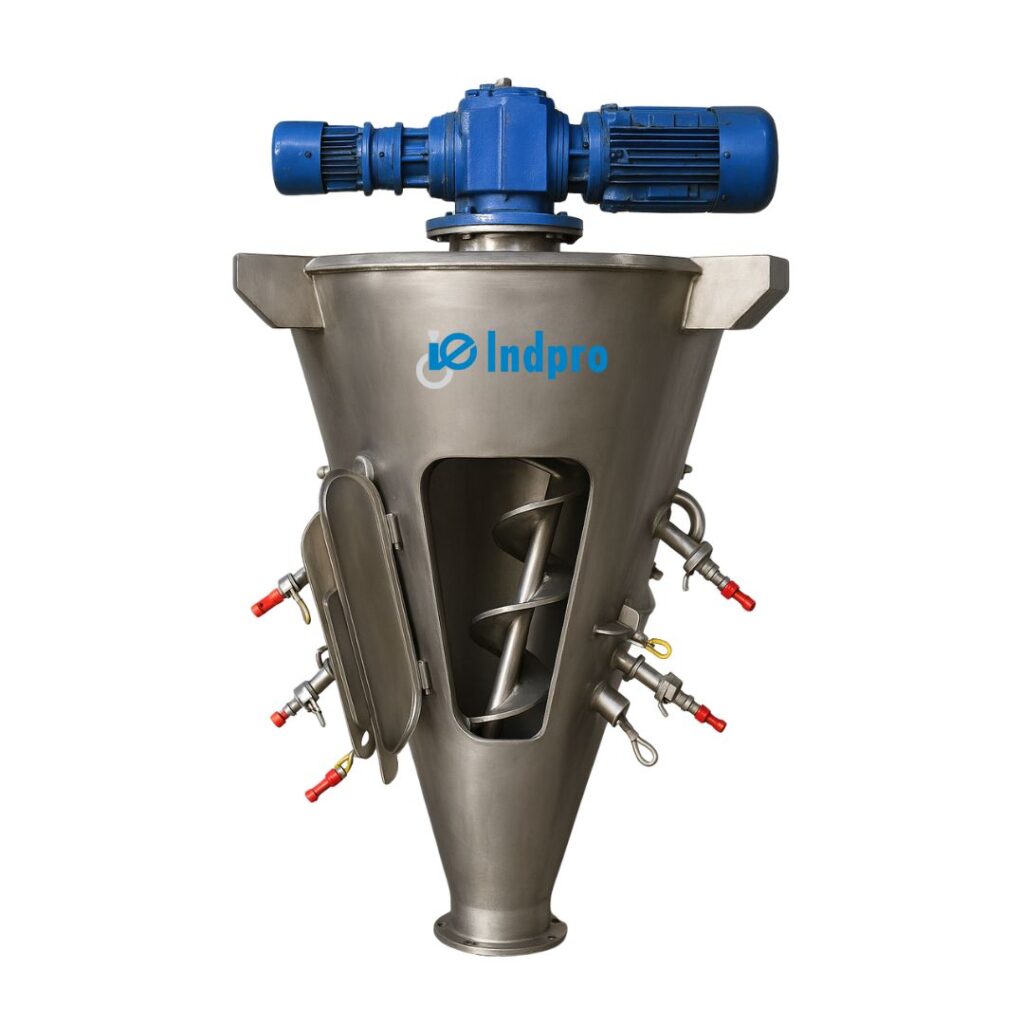
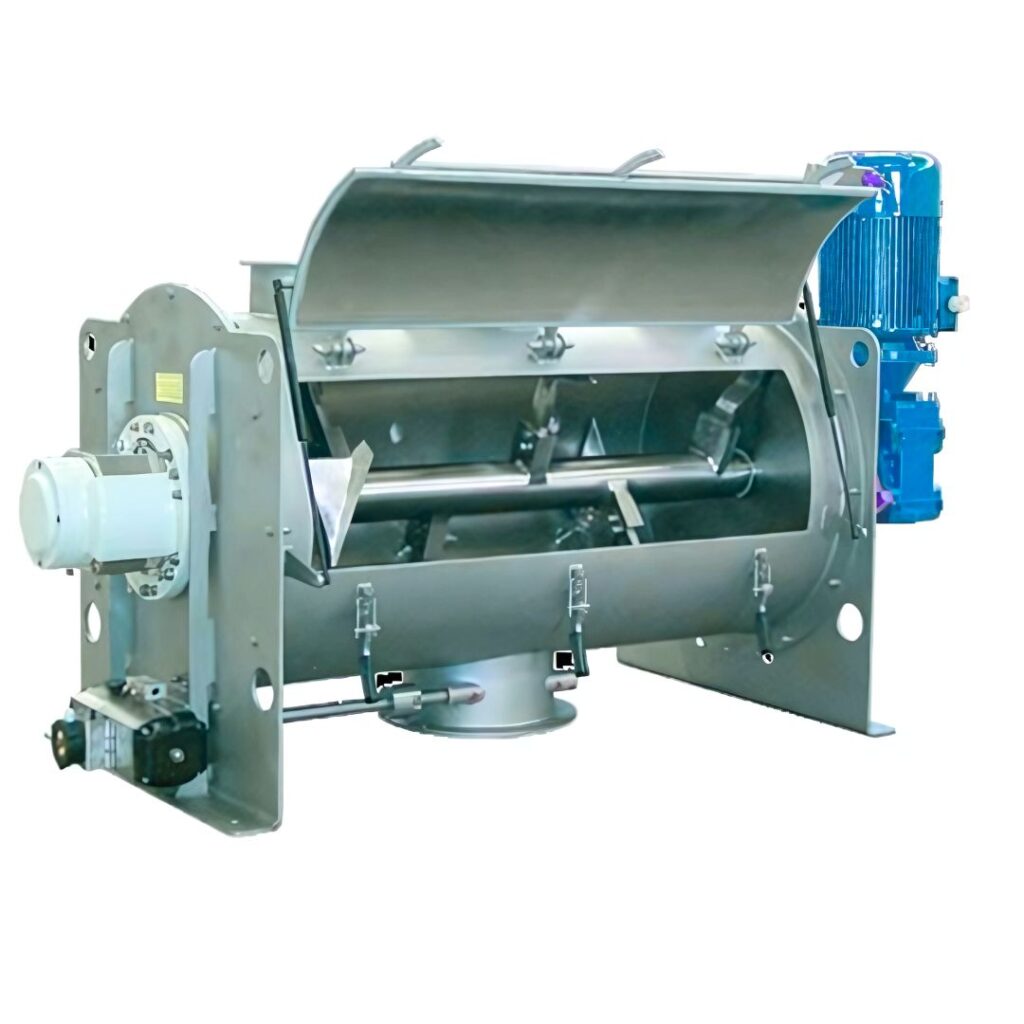
Not all mixers are created equal. Tumble mixers, ribbon blenders, and high-shear mixers each have their strengths depending on the materials. Mixing time matters too: overmixing can damage particles, under-mixing leaves uneven patches.
Rule of thumb: match your mixer type and speed to your material, and don’t rush the process. It’s better to mix a bit longer with the right method than to speed through and get poor results.
6. Order of Addition
It might seem trivial, but the sequence in which you add ingredients can make a big difference. Minor additives, like colorants or small-volume chemicals, are often added last to ensure they distribute evenly without overwhelming the bulk material.
7. Segregation Risks
Even after a perfect mix, materials can segregate during transport or storage. Vibrations, slopes in bins, or hopper discharge can all cause separation. Keep this in mind when designing your storage and handling processes to maintain homogeneity.
8. Temperature Sensitivity
Some powders are heat-sensitive or prone to static. High-speed mixing can generate friction, causing clumps or degradation. Being aware of temperature effects prevents unnecessary material issues.
9. Sampling & Testing for Homogeneity
Finally, mixing isn’t complete without verifying uniformity. Sampling techniques like rotational sampling or core sampling, followed by lab analysis, ensure your blend meets quality standards. A great mix in theory only works if you can prove it in practice.
Wrapping It Up
Mixing isn’t just about turning on a machine. It’s about understanding your materials particle size, density, moisture, flow, and more, and using that insight to guide your process. Think of it as a mix of science and a little bit of art.
When you consider all these factors, your final blend will be consistent, reliable, and high-quality exactly what your production process needs. And honestly, taking the time to understand your materials now will save a lot of stress later.