Damage-Free Coffee Bean Handling- How Pneumatic Conveying Makes It Possible
Damage-Free Coffee Bean Handling:
How Pneumatic Conveying Makes It Possible
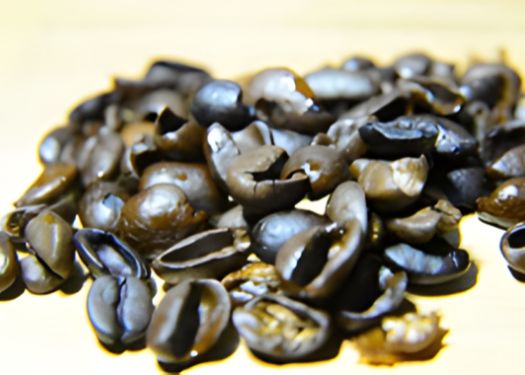
If you’ve ever watched coffee beans move through a processing plant, you know they seem sturdy. But here’s the twist: coffee beans are far more delicate than they appear. One rough conveyor, one sharp turn, or one burst of friction heat-and suddenly your premium beans are chipped, cracked, or stripped of aroma.
And if you’re producing for the specialty coffee segment or export markets, damaged beans aren’t just a quality issue-they’re a deal breaker.
So today, let’s break down why beans get damaged, and how pneumatic conveying has become the gentle, reliable, modern solution for coffee processors around the world.
Why Coffee Beans Get Damaged in the First Place
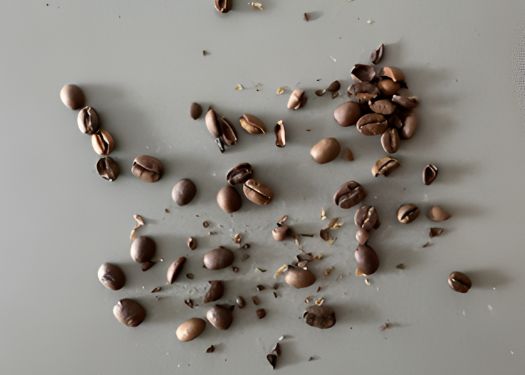
Although coffee beans look tough, they behave more like fragile cereals when handled at scale. Coffee beans take a beating during processing if the conveying system isn’t designed with care. Incorrectly designed conveyors often apply excessive forces, friction, and impact. The result? Cracks, breakage, and loss of delicate skin.
1. The Inevitable Problems with Traditional Mechanical Conveying
1. Difficult to Clean
Mechanical conveyors have too many moving parts-crevices, belts, screw flights-making thorough cleaning time-consuming and labor-intensive. This increases downtime and contamination risks.
2. Higher Maintenance
Chains need lubrication, belts require tensioning, screws wear out… maintenance never ends. And when a breakdown happens, it interrupts the entire line. Diagnosing and pinpointing issues in long systems can be challenging.
3. Routing Limitations
Mechanical conveyors dictate your layout. Want to go vertical? Or around structural beams? Too bad-you’re limited by fixed geometry and space constraints. They require substantial physical space, which is a drawback in crowded facilities.
Issues in Wrongly Designed Pneumatic Conveying Systems. Not all pneumatic systems are created equal
Pneumatic conveying is one of the gentlest and cleanest ways to move coffee beans but only when it’s designed correctly. A badly engineered system can create its own set of challenges, and many processors don’t realize the root of their problems is not pneumatic conveying itself, but the way it was configured and designed.
Here are the most common issues that arise from wrongly designed pneumatic systems:
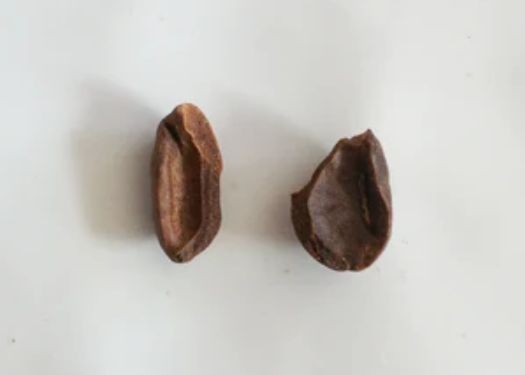
Cracking
Cracks form and weaken the structure of the beans
Chipping
Breakage and rupture of beans deteriorates quality
Skin Peeling
Outer layer is peeled off due to friction
Aroma and Flavor Loss
Heat from friction and breakage due to impact can strip the bean’s natural oils.
And the consequences?
- Inconsistent roast profiles
- Unstable brew quality
- Lower-grade output
- Customer complaints over flavor variations
When your product is literally defined by flavor, aroma, and consistency, this kind of damage simply cannot be allowed.
2. Why Choose Dense Phase Pneumatic Transport for Coffee?
Here’s where pneumatic conveying steps in-not as a fancy upgrade but as a necessity for quality-focused coffee processors.
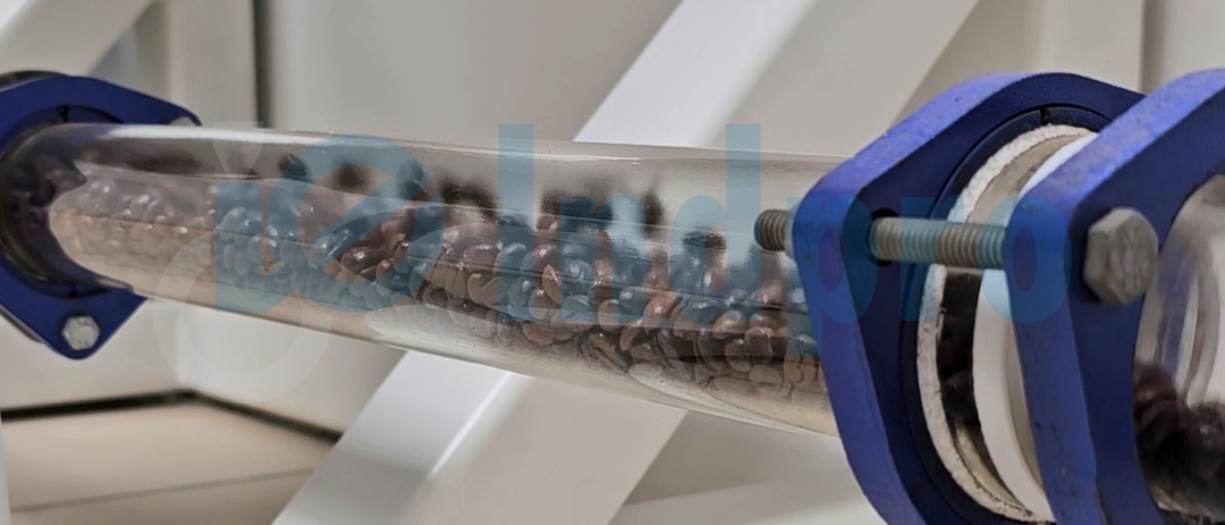
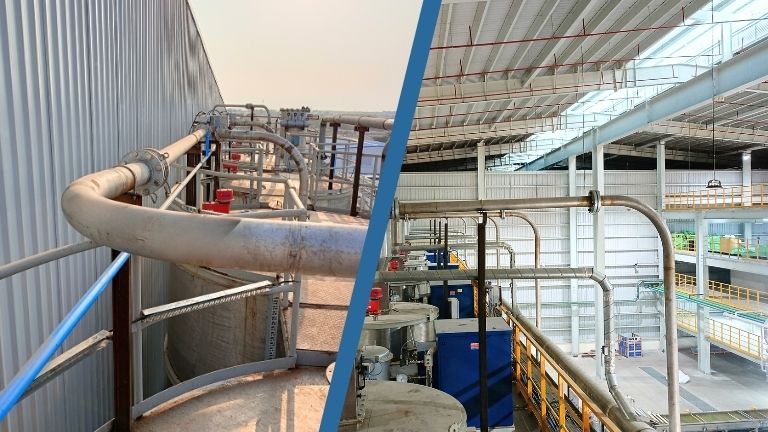
Pneumatic conveying uses controlled airflow inside enclosed pipelines to move beans gently and safely.
Why processors prefer pneumatic transport:
1. Gentle Handling Coffee Conveyors
Air cushions the beans, preventing collisions and metal contact.
The result? No cracking, no chipping, no “bruised” beans.
2. Low Heat Transfer
Since there’s minimal mechanical friction, the beans maintain their natural moisture and aromatic oils.
3. Zero Contamination
Closed pipelines keep dust, moisture, and foreign particles out.
4. Flexible Routing
Unlike mechanical conveyors, pipelines can run vertically, horizontally, and around tight corners.
5. Clean, Hygienic, and Food-Safe
Perfect for meeting modern food safety standards.
Simply put: pneumatic conveying protects the bean, preserves the flavor, and enhances overall plant efficiency.
3. Where Pneumatic Conveying Works Best in Coffee Processing
Let’s break down the key areas inside a coffee plant where pneumatic transport truly shines.
A. Transport of Raw Coffee Beans to the Roaster
- Raw beans are relatively robust
- Moisture content is higher
- Their surface skin is still intact
Using pneumatic conveying here ensures:
- No mechanical shock
- No premature peeling
- Smooth, controlled flow to the roaster hopper
This directly improves roast uniformity and reduces rejections.
B. Storing and Transferring Roasted Coffee beans
Once roasted, beans must be transferred through storage, grinding or extraction processes.
- From roasting to storage
- From storage to extraction
- From storage to blending
- From blending to grinding
- From grinding to bag loading stations
Pneumatic conveying allows:
- Consistent feeding at specified throughput to different machines
- Minimal to no breakage of fragile beans
- Dust-free and contamination-free operation
When your brand sells “premium whole bean coffee,” damaged beans inside the bag are a big no-no. Pneumatic transport keeps every bean Instagram-perfect.
4. Coffee Transport Solutions by Indpro
Indpro specializes in custom-designed pneumatic systems that focus on gentle, damage-free coffee handling.
What makes the Indpro approach different?
Customized to Bean Type
Green beans, roasted beans, ground coffee-each flows differently. Systems are tuned accordingly.
Optimized Air Velocity
Too fast? Beans break.
Too slow? Lines choke.
Indpro balances speed, pressure, and pipeline design perfectly.
Food-Grade, Hygienic, Dust-Free Systems
Ideal for premium, specialty, and export-grade coffee processors.
Minimal Maintenance, Long-Term Reliability
No belts, no screws, no buckets-just efficient blowers and pipelines.
End-to-End Support
From raw bean intake to packaging conveyor feeding, Indpro covers the entire handling journey.
Choosing the right conveying system for coffee isn’t guesswork-it’s science.
Indpro offers a fully functional test lab where you can:
- Run your actual coffee beans through trial conveyors
- Check breakage rates
- Optimize air velocity
- Validate conveying distances
- Measure aroma retention
- Confirm packaging line compatibility
This takes all the uncertainty out of system selection.
You see how your beans behave before the system is built.
For specialty coffee producers, this test lab alone is often the biggest confidence booster.
Damage-free coffee bean handling isn’t just a quality improvement-it’s a brand reputation builder.
And with Indpro’s specialized coffee handling solutions and the test lab facility, processors can design a system that’s tailor-made for their bean, their roast profile, and their production scale.