Indpro Logo

Indpro
Typically replies within an hour

Indpro
"Hello!👋

How can I help you today with your bulk material handling needs?"
×
Chat with Us

Design Engineering of Automatic Bag Slitting Machines

Design Engineering of Automatic Bag Slitting Machines

In modern bulk solids processing industries – such as polymers, chemicals, food ingredients, minerals, and petrochemicals – raw materials frequently arrive in bags ranging from 10 kg to 50 kg. While bagged material provides logistical flexibility, it introduces a major operational challenge inside the plant: safe, efficient, and contamination-free emptying of bags into the process stream.

Historically, this task relied heavily on manual bag opening, which introduced inefficiencies, safety risks, and product losses. As plants scale up production and prioritize automation, Automatic Bag Slitting Machines have become critical equipment in the bulk handling ecosystem.

However, designing a high-performance bag slitting machine is not merely about cutting bags. It requires a carefully engineered system that integrates mechanical design, process flow, safety engineering, and material behavior considerations.

This article explores the design engineering principles behind Automatic Bag Slitting Machines, providing insight into how modern machines achieve high efficiency, safety, and reliability.


The Role of Bag Slitting Machines in Industrial Processing
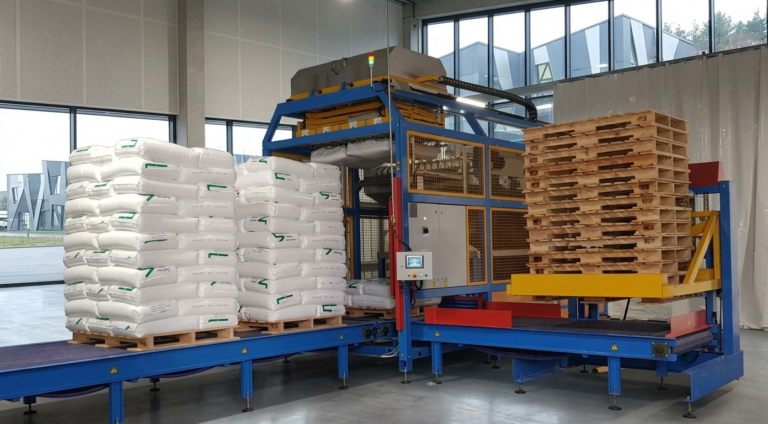
bag slitting machine

Bag slitting machines function as the entry point for bagged raw materials into automated production lines. Their primary function is to

• Open sealed bags automatically 

• Separate packaging material from product 

• Recover nearly all product inside the bag 

• Discharge the material into the process stream

Typical downstream systems include:

• Pneumatic conveying systems 

• Rotary airlock valves 

• Vibro sifters 

• Process mixers 

• Storage silos 


In high-capacity plants, bag slitting machines may process hundreds to thousands of bags per hour, making them a critical component for maintaining continuous production flow.


Fundamental Design Objectives

The engineering design of a bag slitting machine must achieve several objectives simultaneously.

 High Throughput: Industrial systems must handle large volumes of bagged materials without bottlenecks. Typical capacities range from: 300 to 1500 bags per hour depending on bag size and material characteristics.

 Maximum Product Recovery: Ideally, the machine should recover more than 99% of the material inside the bag, minimizing product losses.

 Reliable Bag Separation: Empty bags must be removed effectively without contaminating the product stream.

 Dust Containment: Powder materials can generate significant dust during bag opening, requiring engineered dust control systems.

 Operator Safety: The machine must eliminate risks associated with:

         • Rotating blades 

         • Moving conveyors 

         • Falling bags 


Meeting these objectives requires a multi-disciplinary engineering approach.


Key Modules in Automatic Bag Slitting Machine Design
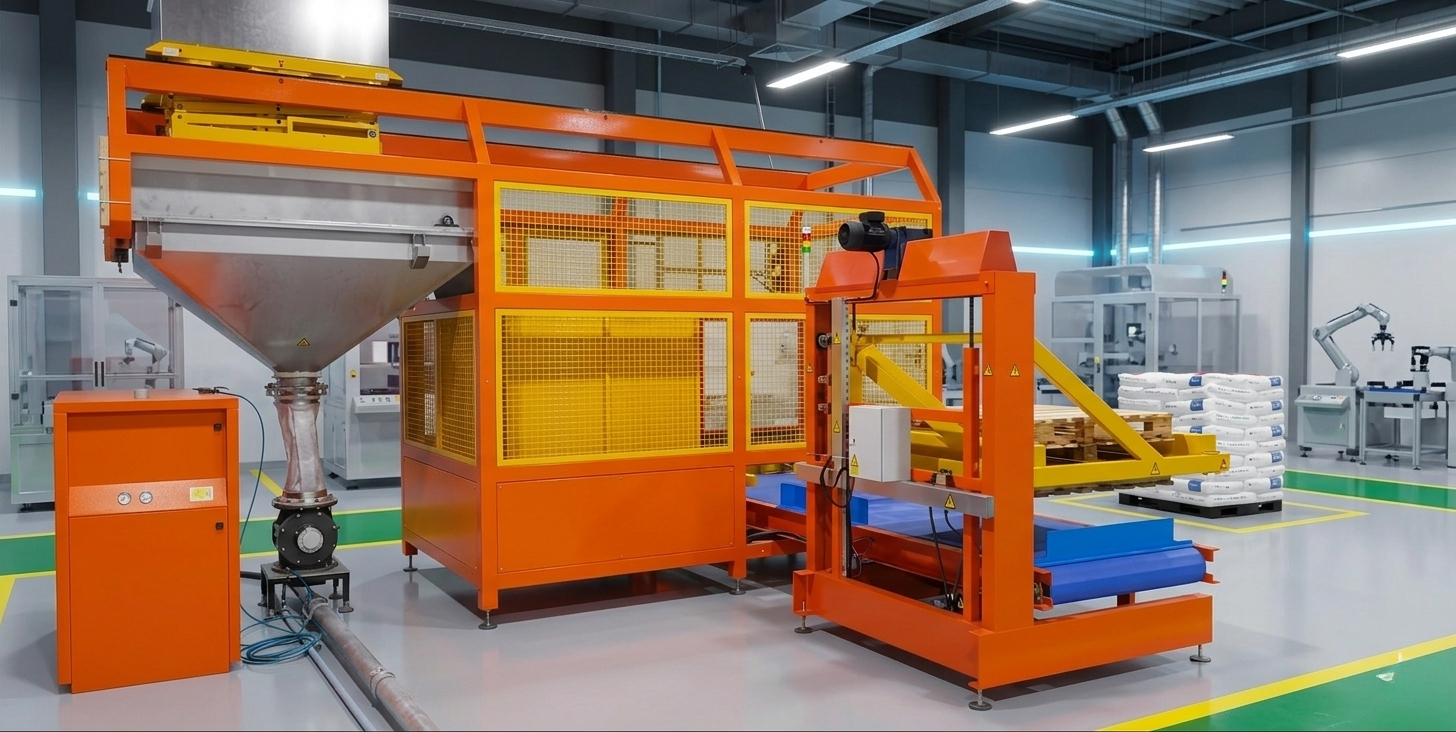
A well-engineered bag slitting machine consists of several integrated modules working together as a cohesive system.

The major engineering modules include:

1. Bag feeding system 

2. Slitting mechanism 

3. Bag separation system 

4. Product discharge hopper 

5. Dust extraction system 

6. Bag compaction or discharge unit 

7. Automation and control system 

Each module plays a crucial role in achieving reliable operation.


1. Bag Feeding System Design

The feeding system determines how bags enter the slitting chamber, directly influencing throughput and operational stability.

Feeding Methods

Common feeding arrangements include:

• Manual bag loading onto conveyors 

• Roller conveyor feeding 

• Belt conveyor feeding 

• Automatic bag depalletizing systems 

• Robotic bag handling systems 

Engineering Considerations

Bag Orientation Control: Bags must be oriented correctly before entering the slitting zone to ensure consistent cutting.

Structural Strength: Industrial machines must support continuous loads of 25–50 kg bags, requiring reinforced conveyor structures.

Flow Synchronization: The feeding system must synchronize with the slitting mechanism and downstream material handling equipment.

Poor synchronization can lead to:

• Machine choking 

• Bag accumulation 

• Irregular throughput 

Modern designs often incorporate variable speed drives (VFDs) to optimize feed rates.


2. Slitting Mechanism Engineering

The slitting mechanism is the core functional element of the machine.

It is responsible for accurately cutting open the bag without excessive shredding or product loss.

Blade Design Options: Various blade types are used depending on bag construction.

Common blade designs include:

• Rotary cutting blades 

• Fixed knife blades 

• Serrated blades 

• Multi-blade cutting arrays 

Each blade type is suitable for different bag materials.

Blade Positioning

The blade system must ensure:

• Full bag opening 

• Controlled cutting depth 

• No tearing off bag material 

Precision blade positioning helps prevent:

• Partial cuts 

• Bag wrapping around blades 

• Product spillages 

Modern machines allow adjustable blade configurations to accommodate different bag types.


3. Engineering the Bag Separation System

After the bag is slit open, the next challenge is to separate the empty bag from the discharged material.

This stage is critical to ensure that bag fragments do not contaminate the product stream.

Separation Technologies: Several separation technologies are used in bag slitting systems –

Rotating Drum Screens: A rotating perforated drum allows product to pass through while retaining bag fragments.

Vibratory Screens: Vibration assists in separating powder materials from bag pieces.

Mechanical Rake Systems: These systems pull empty bags away from the material flow.

Design Challenges

Effective separation must address:

• Sticky or cohesive powders 

• Large bag fragments 

• High throughput rates 

Advanced designs incorporate self-cleaning screen mechanisms to prevent clogging.


4. Material Discharge and Flow Engineering

Once the product is separated from the bag, it must flow smoothly into downstream equipment.

However, bulk solids rarely behave like liquids, and improper design can lead to severe flow problems.

Key Factors in Hopper Design

Engineers must consider:

• Angle of repose 

• Bulk density 

• Particle size distribution 

• Moisture content 

• Cohesiveness of the material 

These factors influence hopper geometry.

Hopper Configurations

Typical hopper types include:

• Conical hoppers 

• Pyramid hoppers 

• Mass-flow hoppers 

Correct hopper design prevents:

• Material bridging 

• Rat-holing 

• Inconsistent discharge 

Reliable material flow ensures uninterrupted downstream processing.


5. Dust Control Engineering

 Dust generation is a major concern when handling powdered materials.

Materials such as:

• Polymers 

• Pigments 

• Silica 

• Chemicals 

• Flour and starch 

can generate airborne dust during bag slitting operations.

Dust Control Strategies: Effective dust management systems include:

Sealed Slitting Chambers: Enclosing the cutting area prevents dust escape.

Negative Pressure Zones: Dust extraction systems maintain negative pressure inside the machine.

Integrated Dust Extraction Ports: These ports connect to plant dust collectors.

Benefits of Dust Control

Proper dust management provides:

• Improved operator safety 

• Reduced product losses 

• Compliance with environmental regulations 

In certain industries, dust control is also critical for explosion prevention.


6. Safety Engineering in Bag Slitting Machines

Safety is a fundamental requirement in industrial equipment design.

Bag slitting machines contain below parts which pose potential hazards:

• Rotating blades 

• Moving conveyors 

• Heavy bags 

Essential Safety Features: 
 

Modern machines incorporate-

 • Interlocked Access Doors: The machine stops automatically if access doors are opened.

 • Emergency Stop Systems: Strategically placed emergency stop buttons allow immediate shutdown.

 • Blade Guards: Protect maintenance personnel during service operations.

 • Jam Detection Sensors: Sensors detect abnormal loads and stop the machine to prevent damage.

Safety engineering must comply with international standards such as:

• ISO safety guidelines 

• CE machinery directives 

• OSHA safety regulations


7. Handling Diverse Bag Types

Industrial plants often receive materials in different bag formats.

Common bag constructions include:

• Multi-wall paper bags 

• Woven polypropylene bags 

• Polyethylene bags 

• Laminated composite bags 

• Raffia bags 

Each bag type behaves differently when cut.

Engineering Adaptability

High-performance bag slitting machines offer:

• Adjustable blade configurations 

• Flexible feeding mechanisms 

• Modular separation systems 

This flexibility allows the machine to handle multiple bag formats without extensive reconfiguration.


8. Automation and Control Systems

Automation significantly enhances the efficiency and reliability of bag slitting machines.

PLC-Based Control Systems

Modern machines use programmable logic controllers (PLCs) to manage:

• Bag feeding speed 

• Blade operation 

• Jam detection 

• Emergency shutdown procedures 

Advanced Monitoring Features

Smart systems may include:

• Bag counting systems 

• Load monitoring sensors 

• Real-time throughput tracking 

• Predictive maintenance alerts 

Integration with SCADA or plant-wide control systems allows centralized monitoring of operations.


9. Integration with Downstream Process Equipment

A bag slitting machine rarely operates as a standalone unit.

Instead, it functions as part of a larger bulk solids handling system.

Typical integration includes:

• Pneumatic conveying systems 

• Rotary airlock valves 

• Vibro sifters 

• Storage silos 

• Process mixers 

Proper engineering integration ensures:

• Smooth material transfer 

• Minimal dust generation 

• Balanced system throughput 

Incorrect integration can create process bottlenecks and material flow disruptions.


Performance Metrics and Industrial Expectations

To evaluate system performance, several key metrics are used.

Performance ParameterTypical Industrial Value
Throughput300–1500 bags/hr
Bag Weight Range10–50 kg
Product Recovery>99%
Bag Separation Efficiency>98%
Dust EmissionMinimal with extraction

High-performance systems maintain consistent performance even under continuous industrial duty cycles.

Emerging Innovations in Bag Slitting Technology

With the rise of Industry 4.0, bag slitting machines are evolving beyond purely mechanical equipment.

Future systems may incorporate:

Robotic Bag Feeding: Automated robotic arms can depalletize bags and feed them directly into slitting machines.

AI-Based Jam Detection: Machine learning algorithms can detect early signs of equipment malfunction.

Automated Bag Compaction: Empty bags can be automatically compacted to reduce waste handling volume.

Real-Time Production Monitoring: Operators can track system throughput and performance remotely.

These innovations are transforming bag slitting machines into smart nodes within digital manufacturing ecosystems.


Conclusion

Automatic Bag Slitting Machines are a vital link between bagged raw material logistics and automated industrial production.

Their design requires a deep understanding of:

• Mechanical engineering 

• Bulk material flow science 

• Safety engineering 

• Dust management 

• Automation technology 

A well-designed system ensures:

• High throughput 

• Minimal product losses 

• Improved plant safety 

• seamless integration with downstream processes 

As industries move toward greater automation and digitalization, the design engineering of bag slitting machines will continue to evolve – playing a key role in the future of efficient bulk material handling.
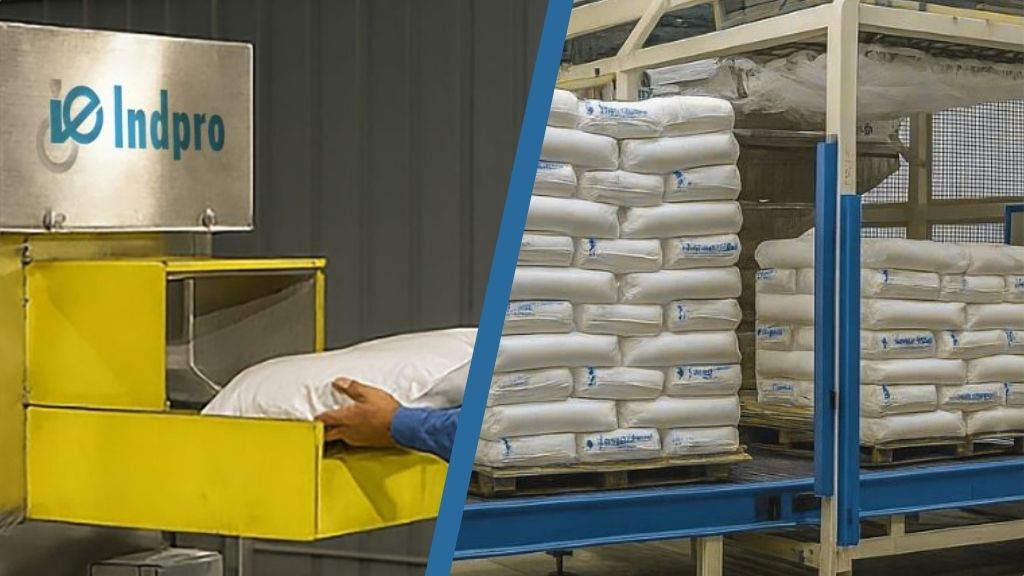
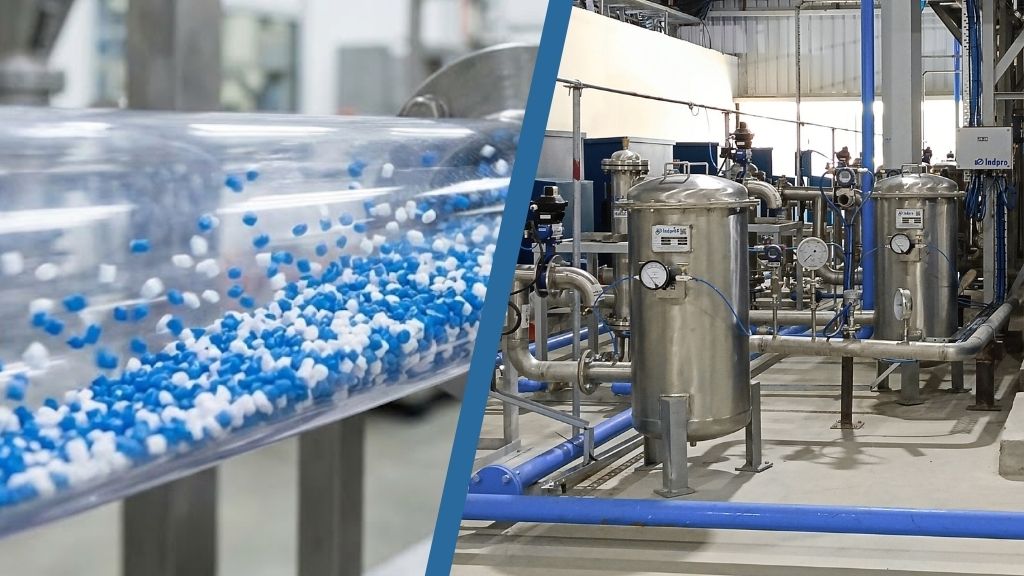


Closed Loop Nitrogen Conveying: Engineering Safe Transfer of Oxygen & Moisture-Sensitive Materials

Closed Loop Nitrogen Conveying: Engineering Safe Transfer of Oxygen & Moisture-Sensitive Materials

Across modern process industries, bulk solids handling has evolved from a simple material transfer activity into a critical process engineering function. Industries such as chemicals, polymers, battery materials, food processing, and minerals increasingly handle powders and granules that are oxidation-sensitive, moisture-sensitive, explosive, or contamination-sensitive.

Traditional air-based pneumatic conveying systems, while widely used, introduce inherent risks when dealing with such materials:

• Oxidation and product degradation 

• Explosion hazards due to oxygen presence 

• Moisture contamination 

• Product quality deterioration 

• Safety risks for operators and plants 

To overcome these challenges, many advanced processing facilities are adopting Closed Loop Nitrogen Conveying Systems – an engineered solution designed to ensure inert, contamination-free, and energy-efficient material transfer.

Closed loop nitrogen conveying represents a paradigm shift in bulk solids handling, transforming conveying systems into controlled process environments rather than simple transport mechanisms.


What is Closed Loop Nitrogen Conveying?

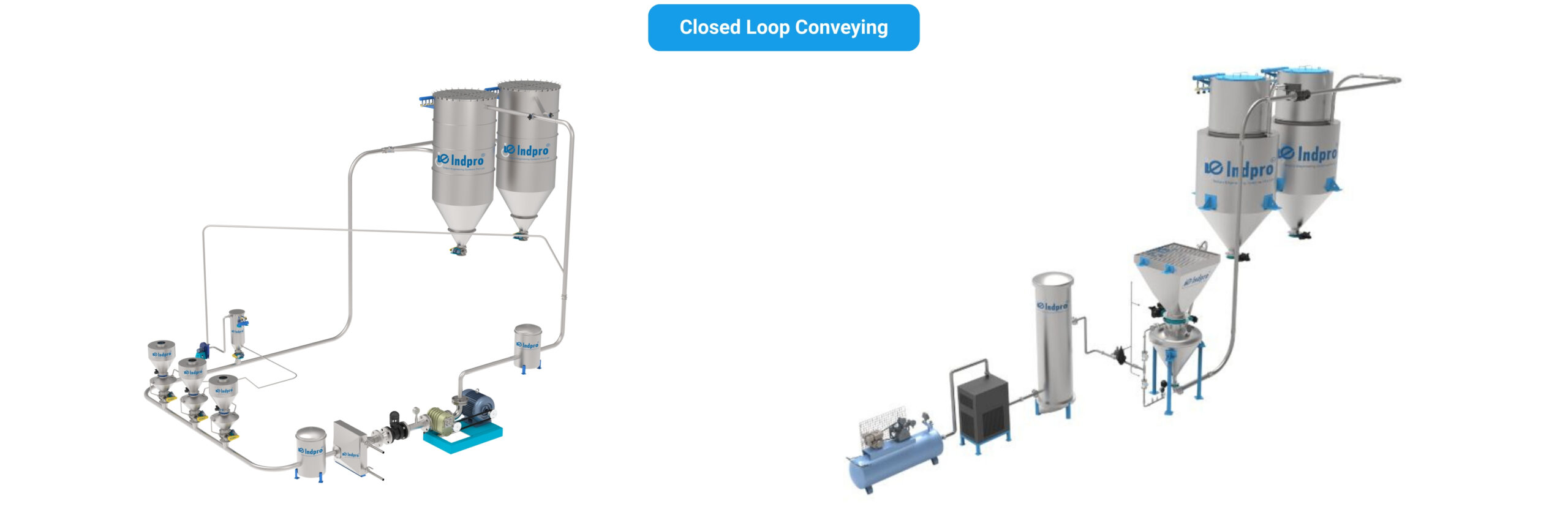
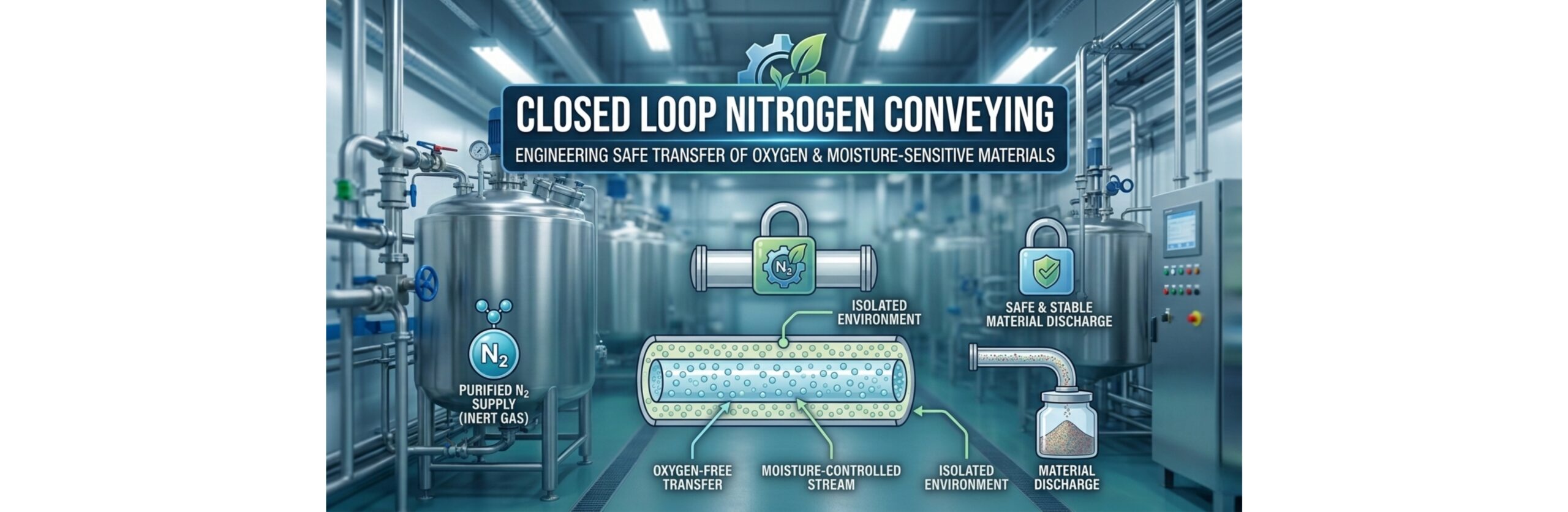
Closed Loop Nitrogen Conveying is a specialized pneumatic conveying system where nitrogen gas is used as the conveying medium instead of atmospheric air, and the gas is recirculated within a sealed loop rather than being vented to atmosphere.

The fundamental principle is simple but powerful:

The conveying gas (nitrogen) continuously circulates through the system in a closed circuit, maintaining an inert atmosphere while transporting bulk solids safely.


Typical System Components

A closed loop nitrogen conveying system generally consists of:

• Material feeding device

• Nitrogen gas blower or compressor 

• Conveying pipeline 

• Cyclone separator / filter receiver 

• High-efficiency filtration unit 

• Nitrogen recirculation line 

• Oxygen analyzer 

• Pressure control system 

• Nitrogen make-up supply 

• Safety interlocks and PLC control 


Operating Concept

1. Nitrogen gas is circulated through the conveying pipeline 

2. Bulk solids are entrained and transported through the pipeline 

3. Material is separated at the receiver 

4. Nitrogen passes through filters to remove residual dust 

5. Clean nitrogen is recirculated back to the blower 

6. Small nitrogen make-up compensates for minor system losses 

The result is a stable inert environment throughout the conveying cycle.


Importance of Closed Loop Nitrogen Conveying

In advanced processing industries, product quality, plant safety, and regulatory compliance are increasingly interlinked.

Closed loop nitrogen conveying provides a solution that addresses all three simultaneously.

1. Explosion Risk Mitigation

Many powders handled in process industries fall under combustible dust categories.

Examples include:

• Agrochemical powders 

• Polymer resins

• Food starch and sugar

• Battery materials 

• Metal powders 

When such powders interact with oxygen and an ignition source, the risk of dust explosion becomes significant.

By replacing air with nitrogen, the system maintains oxygen concentration below the limiting oxygen concentration (LOC), effectively eliminating explosion risk.

2. Oxidation Protection

Certain materials degrade rapidly in the presence of oxygen.

Typical examples include:

• Additives 

• Pharmaceutical powders 

• Food ingredients 

• Battery materials 

Closed loop nitrogen conveying ensures that oxidation-sensitive materials remain protected during transfer, maintaining product integrity.

3. Moisture Control

Atmospheric air often carries humidity and contaminants.

For hygroscopic materials, exposure to moisture can cause:

• Agglomeration 

• Caking 

• Flow problems 

• Reduced shelf life 

Closed loop nitrogen systems maintain low moisture environment, improving powder handling reliability.

4. Product Purity and Contamination Control

Industries such as food, pharmaceuticals, and specialty chemicals require extremely high levels of cleanliness.

A sealed inert system prevents:

• External contamination 

• Oxygen exposure 

• Cross-contamination 

5. Process Stability and Repeatability

Closed systems provide controlled conveying conditions, including:

• Stable gas velocity 

• Controlled pressure levels 

• Consistent gas composition 

This improves batch-to-batch consistency and process repeatability.


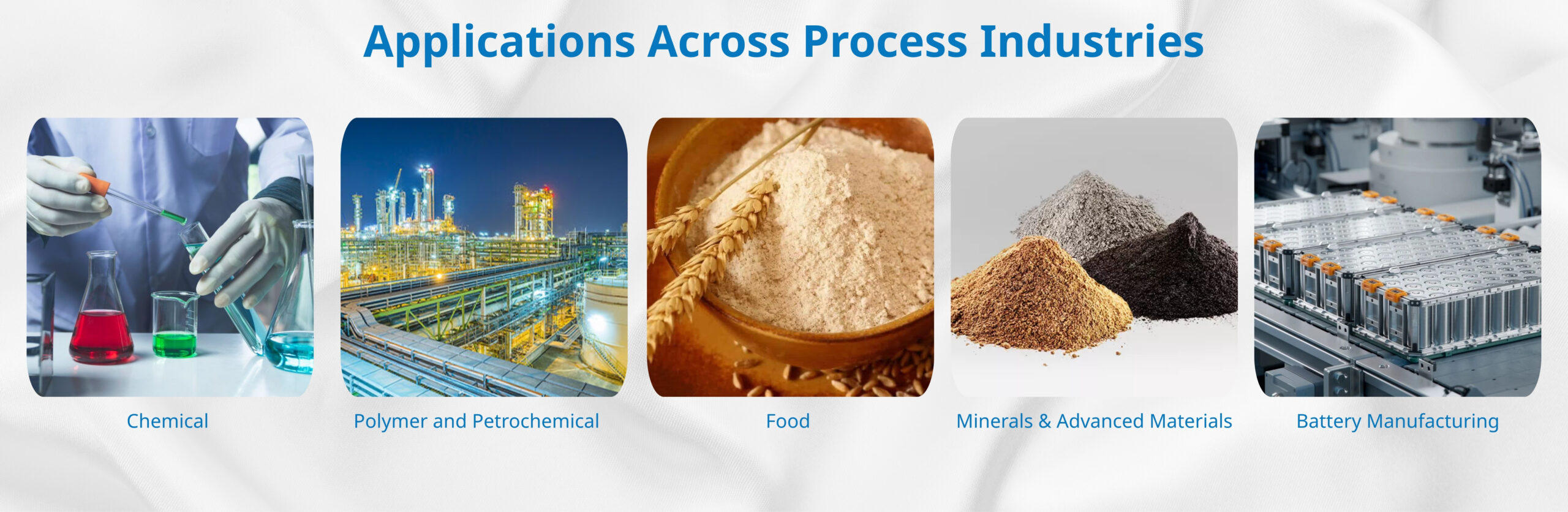
Applications Across Process Industries

Applications Across Process Industries

Closed loop nitrogen conveying has become increasingly important across multiple industrial sectors where product sensitivity and safety requirements are high.

Chemical Industry: Chemical processing frequently involves materials that are reactive, toxic, or oxidation-sensitive. Typical applications include:

• Specialty chemical powders 

• Catalysts 

• Activated carbon 

• Fine chemical intermediates

In these applications, closed loop nitrogen systems ensure:

• Safe handling of reactive powders 

• Protection from oxidation 

• Reduced operator exposure

Polymer and Petrochemical Industry: Polymer plants often require inert conveying environments, particularly when handling:

• Polymer resins 

• Additives 

• Masterbatch ingredients 

• Anti-oxidants

Closed loop nitrogen conveying helps maintain polymer quality and prevents oxidation of sensitive additives.

Food Processing Industry: Food ingredients mentioned below are often oxygen-sensitive or highly combustible:

• Milk powder 

• Starch 

• Sugar

• Cocoa 

• Nutritional powders 

Nitrogen conveying ensures:

• Extended shelf life 

• Flavor protection 

• Oxidation prevention 

• Improved food safety 

Minerals and Advanced Materials: Mineral and advanced material processing increasingly handles ultra-fine powders that require inert environments.

Examples include:

• Silicon powders 

• Silica 

• Metal powders 

• Activated minerals 

Nitrogen conveying prevents oxidation and dust explosion risks during handling.


Battery Manufacturing:   Battery manufacturing is one of the fastest growing applications for inert conveying systems.

Materials such as:

• Lithium compounds 

• Graphite powders 

• Cathode materials 

• Anode materials 

• Conductive carbon 

are often highly sensitive to oxygen and moisture.

Closed loop nitrogen conveying ensures:

• Controlled inert atmosphere 

• Moisture-free transfer 

• Contamination prevention 

• Enhanced safety in battery plants


Impact on Plant OPEX (Operational Expenditure)

One of the most common misconceptions is that nitrogen systems are operationally expensive.

However, closed loop nitrogen conveying significantly reduces operating costs compared to open nitrogen systems.

1. Nitrogen Consumption Reduction

Open systems vent nitrogen to atmosphere, resulting in continuous gas consumption.

Closed loop systems recirculate up to 95–98% of nitrogen, drastically reducing consumption.

2. Energy Optimization

Because the gas is recirculated:

• Blower power requirements are optimized 

• Pressure stability improves 

• Energy consumption per ton of conveyed material decreases 

3. Reduced Product Loss

Closed systems minimize:

• Dust emissions 

• Product loss 

• Contamination 

This improves material yield and process efficiency.

4. Lower Maintenance Costs

With proper filtration and gas recirculation:

• Blower wear reduces 

• Pipeline erosion decreases 

• System reliability improves 

5. Improved Safety Economics

Explosion prevention leads to:

• Reduced insurance costs 

• Improved regulatory compliance 

• Lower risk of production shutdowns 


Future Ahead: The Evolution of Inert Conveying Systems

Modern automatic bag slitting machines incorporate several advanced engineering features to ensure reliable performance.
 

As process industries move toward higher automation, stricter safety regulations, and more complex materials, closed loop nitrogen conveying is expected to become a standard design practice in many plants.

Several technological trends will shape the future of these systems.

 1. Smart Conveying Systems

Integration with PLC, advanced sensors, and real-time monitoring will enable:

• Oxygen level monitoring 

• Predictive maintenance 

• Intelligent gas flow control 

2. Integration with Industry 4.0

Future systems will include:

• Digital twins of conveying systems 

• Performance analytics 

• Remote diagnostics 

3. Expansion in Battery and Advanced Materials

With the rapid expansion of EV battery manufacturing and advanced materials, inert conveying will become a core infrastructure technology.

4. Sustainable Gas Management

Improved gas recovery systems will reduce nitrogen losses further, making systems even more energy efficient and environmentally sustainable.


Meeting ATEX requirements protects equipment and personnel – and ensures compliance with global manufacturing standards.


Conclusion

Closed loop nitrogen conveying represents a critical advancement in modern bulk solids handling engineering.

By combining safety, product protection, process stability, and operational efficiency, these systems transform conveying from a simple transport function into a controlled process environment.

As industries continue to handle more sensitive, reactive, and high-value materials, the adoption of closed loop nitrogen conveying will accelerate across sectors such as:

• Chemicals 

• Polymers 

• Food processing 

• Minerals 

• Battery manufacturing 

For engineering-driven companies, the question is no longer whether inert conveying is required, but rather how efficiently and intelligently it can be implemented.

Closed loop nitrogen conveying is therefore not merely a conveying technology – it is an essential enabler for the next generation of safe, efficient, and high-performance process plants.


Automatic Bag Slitting Machine: A Critical Link in Modern Bulk Solids Handling Systems

Automatic Bag Slitting Machine: A Critical Link in Modern Bulk Solids Handling Systems

In many process industries, raw materials are delivered in bagged form before being introduced into automated production systems. Despite increasing levels of plant automation, the bag opening stage often remains a manual bottleneck, limiting overall system efficiency.

Industries such as chemicals, polymers, food processing, and minerals frequently receive powders, granules, and pellets packaged in 25 kg to 50 kg bags made from woven polypropylene, multi-wall paper, or laminated plastic materials. Before these materials can enter the process stream, they must be safely opened, discharged, and transferred into bulk handling systems.

While manual bag cutting has historically been the standard approach, modern manufacturing environments demand higher throughput, improved dust containment, enhanced operator safety, and seamless integration with automated material handling systems. As a result, automatic bag slitting machines have emerged as a critical component of modern bulk solids handling infrastructure.

These systems enable manufacturers to transform a traditionally labor-intensive task into a controlled, continuous, and highly efficient material unloading operation.


The Role of Bag Slitting in Bulk Solids Handling

In a typical bulk solid handling process, material flow follows a structured path:

Raw material receipt → Bag opening → Material discharge → Conveying → Storage → Processing

Among these steps, bag opening is often underestimated, yet it directly influences several key operational factors:

• Material transfer efficiency

• Dust emissions and workplace cleanliness

• Raw material recovery

• Production throughput

• Operator safety

An inefficient bag opening operation can create downstream disturbances, including irregular feeding rates, dust contamination, and increased material losses.

Automatic bag slitting machines address these challenges by enabling controlled and consistent bag opening integrated within the plant’s overall material handling architecture.


What is an Automatic Bag Slitting Machine?

An automatic bag slitting machine is an engineered system designed to mechanically cut open bags and separate the packaging material from the product while allowing the bulk material to be discharged into downstream handling equipment.

These machines typically form the interface between bagged raw material handling and automated bulk conveying systems.

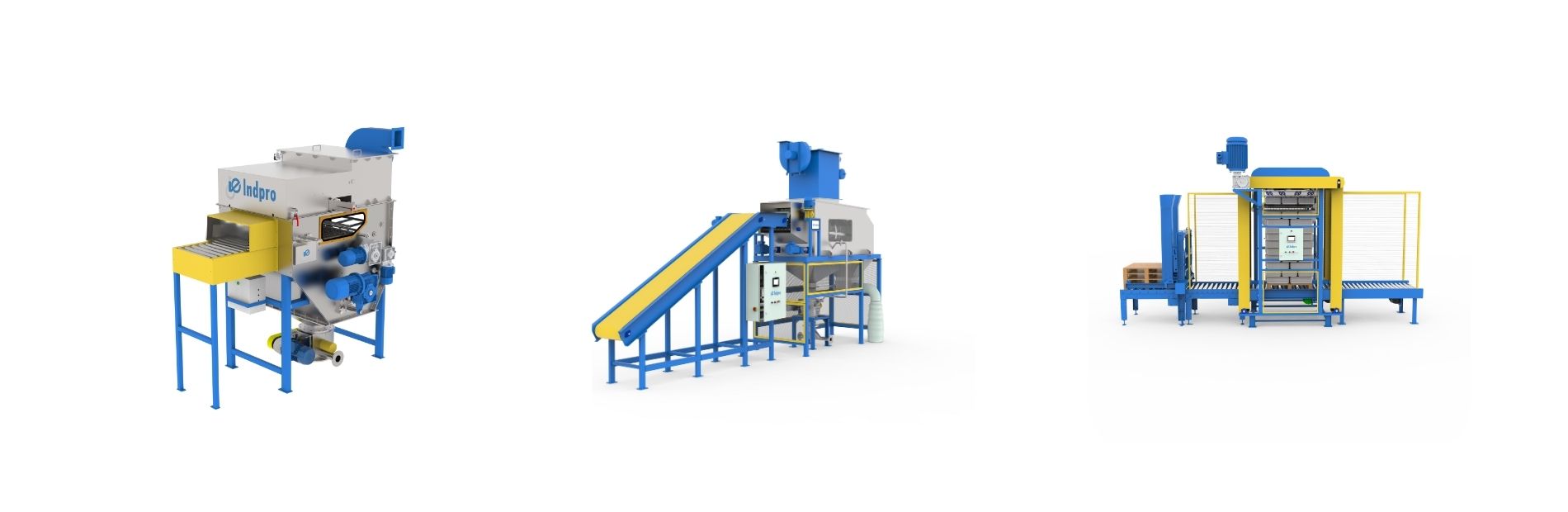
A standard bag slitting system incorporates several functional modules:

Bag Feeding Section: Bags are introduced manually or via conveyor into the machine inlet that guides them toward the cutting mechanism.

Precision Cutting Assembly: Rotary blades slit the bag structure, ensuring consistent opening while minimizing bag fragment generation.

Material Separation Grid or Screen: Bulk material passes through a grid or perforated screen into the receiving hopper, while bag remnants are retained.

Empty Bag Discharge System: Separated bag pieces are discharged through a dedicated outlet for collection and disposal.

Dust Extraction Interface: Integrated dust extraction ports connect to plant dust collection systems to maintain controlled air quality.

Automation and Control System: PLC-based control systems with safety interlocks allow integration with the plant’s automation network.


The discharged material can then be transferred via:

This architecture enables continuous and controlled material flow from bagged packaging into automated process lines.


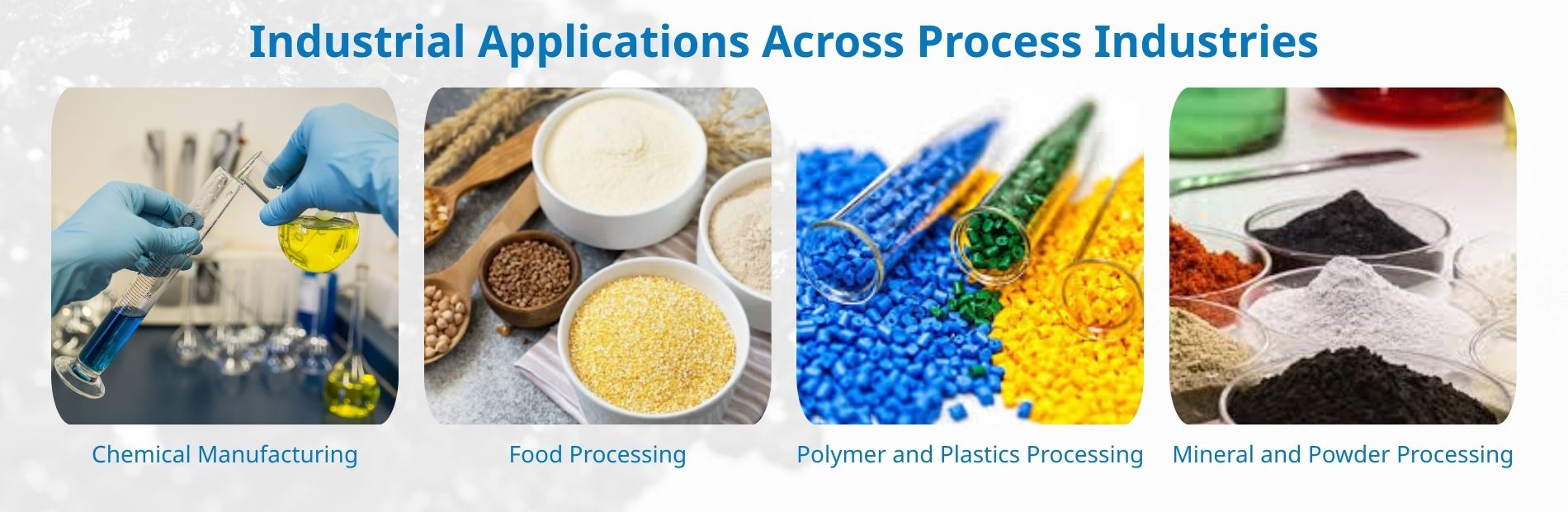
Industrial Applications Across Process Industries

Industrial-Applications-Across-Process-Industries

Automatic bag slitting machines are widely deployed in industries where bagged raw materials must be efficiently introduced into automated bulk solids handling systems. The following use cases illustrate how these systems support different process environments.

1. Chemical Manufacturing

Chemical plants frequently receive raw materials such as pigments, additives, catalysts, resins, and specialty powders in bagged packaging.

Automatic bag slitting systems enable controlled and dust-contained bag opening, allowing materials to be discharged directly into pneumatic conveying systems, reactors, or storage silos. This reduces operator exposure to hazardous powders while ensuring consistent material feeding.

2.  Food Processing

Food manufacturing operations handle ingredients like sugar, salt, flour, starch, cocoa powder, and milk powder in 25–50 kg bags.

Automatic bag opening systems support hygienic material handling, minimizing manual contact and reducing contamination risks. The discharged materials can be transferred efficiently into mixers, batching systems, or ingredient dosing units.

Polymer processing plants commonly handle polymer pellets, masterbatches, stabilizers, fillers, and additives in bagged form.
Automatic bag slitters allow these materials to be discharged into pneumatic conveying systems feeding extruders or compounding mixers, ensuring steady material supply while reducing pellet loss and spillage.
 

4. Mineral and Powder Processing

Mineral processing facilities often receive powders such as silica, talc, calcium carbonate, bentonite, and graphite in bags.
Automatic bag slitting machines help manage highly dusty materials by enabling enclosed cutting and integration with dust extraction systems, improving workplace cleanliness and operational safety during material unloading.


Why Automatic Bag Slitting Matters in Modern Manufacturing

1.  Eliminating a Manual Bottleneck

As manufacturing plants increasingly adopt automated systems for conveying, batching, and processing, manual bag opening becomes a critical bottleneck.

Automatic bag slitting machines transform bag unloading into a continuous, high-throughput operation, ensuring steady material supply to downstream equipment.

2.  Enhancing Workplace Safety

Manual bag cutting involves:
• Sharp cutting tools
• Repetitive physical effort
• Exposure to dust and airborne particles
 
Automated bag opening eliminates the need for handheld knives and significantly reduces operator interaction with potentially hazardous materials.
 
3.  Dust Containment and Environmental Compliance
 
Fine powders often generate airborne dust during handling, which can lead to:
• Health hazards
• Environmental compliance issues
• Dust explosion risks in extreme cases
 
Automatic bag slitting systems are designed with enclosed cutting zones and dust extraction ports, enabling integration with central dust collection systems to maintain controlled plant environments.
 
4. Improving Material Utilization
 
Manual bag opening frequently results in:
• Product spillage
• Incomplete bag emptying
• Residual material trapped in bags
 
Automated slitting ensures complete bag opening and efficient product discharge, maximizing material recovery.


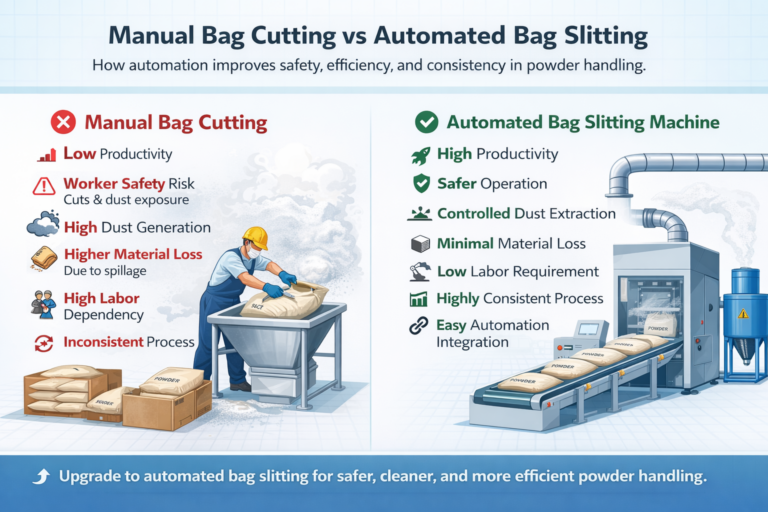
Manual Bag Cutting vs Automated Bag Slitting

Silicon powder is extremely fine, fragile, and sensitive to mechanical stress. Choosing the right conveying method is critical to protect material quality and ensure safe handling. The table below explains why dense phase pneumatic conveying is better suited than conventional dilute phase systems for battery-grade silicon powder.

Parameter Manual Bag Cutting Automatic Bag Slitting Machine
Productivity Low High
Worker Safety Risk of cuts and dust exposure Much safer operation
Dust Generation High Controlled with dust extraction
Material Loss Higher due to spillage Minimal
Labor Dependency High Low
Process Consistency Inconsistent Highly consistent
Automation Integration Difficult Easily integrated
Manual Bag Cutting vs Automated Bag Slitting


Engineering Considerations in Bag Slitting System Design

Modern automatic bag slitting machines incorporate several advanced engineering features to ensure reliable performance.
 

Maintaining a uniform particle size is crucial for battery performance too many fines or large agglomerates can reduce electrode consistency and cycle life.

1. Optimized Cutting Geometry: Blade assemblies are designed to efficiently slit various bag materials while preventing excessive bag fragment generation.
 
2. Product–Packaging Separation: Integrated screening mechanisms ensure clean separation between bulk material and bag remnants, preventing contamination of the product stream.
 
3. Dust Control Integration: Dedicated extraction ports enable effective connection with industrial dust collectors, maintaining low airborne particulate levels.
 

4. Automation and Process Control: PLC-based control systems provide:

• Process monitoring

• Equipment interlocks

• Alarm and fault diagnostics

• Integration with plant automation architecture

5. Automation and Process Control: PLC-based control systems provide:
 
• Process monitoring
 
• Equipment interlocks
 
• Alarm and fault diagnostics
 
• Integration with plant automation architecture
 
This ensures operational flexibility across different material packaging formats.
 

Meeting ATEX requirements protects equipment and personnel – and ensures compliance with global manufacturing standards.


The Future of Bagged Material Handling

As manufacturing industries continue to move toward higher levels of process automation, sustainability, and workplace safety, automated bag cutting systems will play an increasingly important role.

Automatic bag slitting machines enable plants to bridge the gap between bagged raw material logistics and fully automated bulk processing systems, improving both operational efficiency and environmental performance.


How Dense Phase Conveying Protects Silicon Powder Integrity in Battery Production?

How Dense Phase Conveying Protects Silicon Powder Integrity in Battery Production?

The global push toward electric mobility and renewable energy storage has put battery technology in the spotlight like never before. Among the many materials fueling this revolution, silicon powder has quickly emerged as a game-changer — promising higher energy density and improved performance over traditional graphite anodes. Yet handling silicon powder is not without challenges. Its ultra-fine particles are prone to degradation, segregation, and pose critical safety risks.

This is where dense phase pneumatic conveying shines protecting the integrity of silicon powder during transport while ensuring safety, efficiency, and compliance.

In this blog, we will explore what silicon powder is, its key properties and applications in battery manufacturing, and how dense phase pneumatic conveying through low-velocity, high-pressure transport plays a vital role in preserving particle integrity, preventing degradation, ensuring uniform particle size, and enabling safe, ATEX-compliant handling of this sensitive material.


What Is Silicon Powder?

Silicon powder consists of extremely small particles of elemental silicon a metalloid that sits between metals and non-metals on the periodic table. In its powdered form, silicon becomes a versatile feedstock used in a range of high-tech applications.

Silicon powder is produced via specialized processes such as reduction of silicon tetrachloride or metallurgical silicon grinding to achieve controlled particle sizes tailored to specific end-use requirements.


Key Properties of Silicon Powder

Silicon powder presents a unique combination of physical and chemical properties that make it highly valuable and equally challenging to handle:

  • Ultra-fine particle size: Typically, in the micrometer (µm) or submicron range.
  • High surface area: Enhances reactivity and electrochemical performance.
  • Brittle nature: Susceptible to fracture and particle size change under mechanical stress.
  • Low bulk density: Leads to aeration and fluidization challenges.
  • High purity: Battery-grade silicon powder requires purity levels often exceeding 99%.
  • Oxidation tendency: Can react with oxygen, particularly at elevated temperatures.
These properties make silicon powder excellent for boosting battery capacity, yet they also render it vulnerable during mechanical handling and transfer.


Applications of Silicon Powder

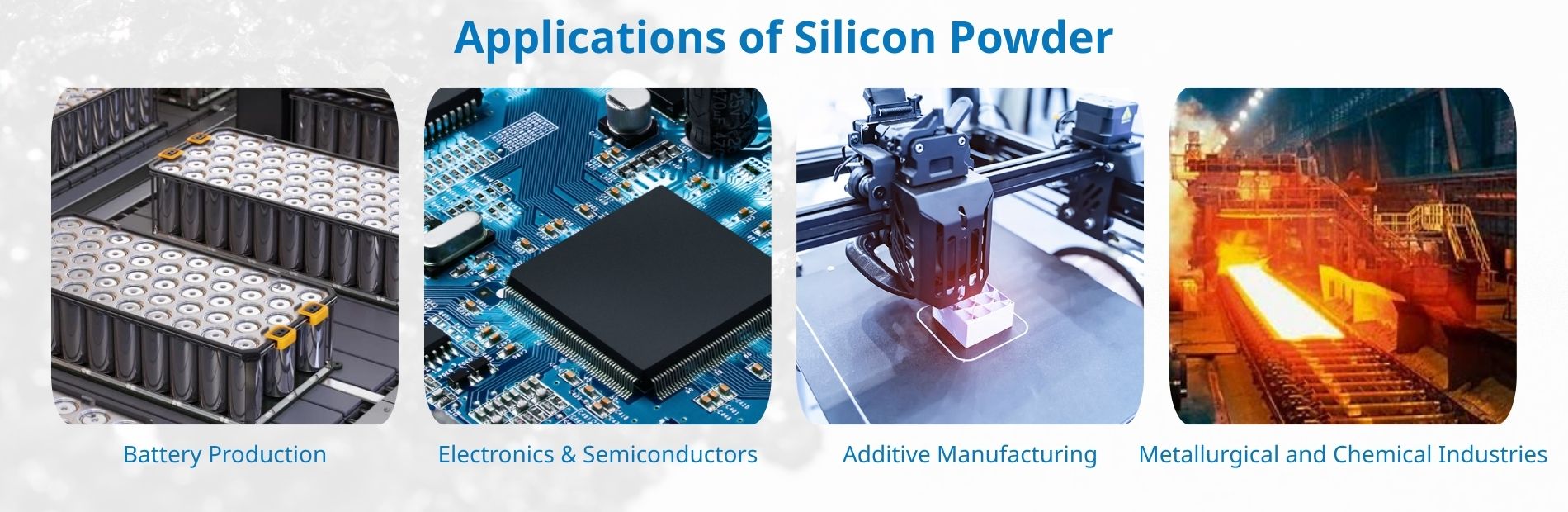
1. Battery Production: In lithium-ion batteries, silicon powder is increasingly blended into the anode to significantly improve energy density sometimes by 10x compared to conventional graphite. Its ability to pair with lithium makes it ideal for next-generation battery designs.

2. Electronics & Semiconductors: Used in the manufacture of electronic components, microchips, and photovoltaic cells due to its semiconducting properties.

3. Additive Manufacturing: In powder-based metal 3D printing processes, silicon powders are used to produce lightweight, high-performance parts.

4. Metallurgical and Chemical Industries: As an alloying agent and precursor in the manufacture of silicones and other specialty chemicals.


Challenges in Handling Silicon Powder

  • Particle breakage and degradation: High-velocity conveying systems can damage the fragile particles, cause fines generation, and result in particle size distribution changes reducing functional performance. 
  • Segregation: Differences in particle size and density can cause separation during transport, leading to inconsistent batches. 
  • Dust generation: Fine powders easily form airborne dust raising health, explosion, and environmental concerns. 
  • Safety hazards: Fine silicon powder can be combustible and potentially explosive under the right conditions. 
  • Regulatory compliance: Handling must meet strict standards such as ATEX (for explosive atmospheres) and local workplace safety regulations.


Why Dense Phase Pneumatic Conveying Is Ideal for Silicon Powder

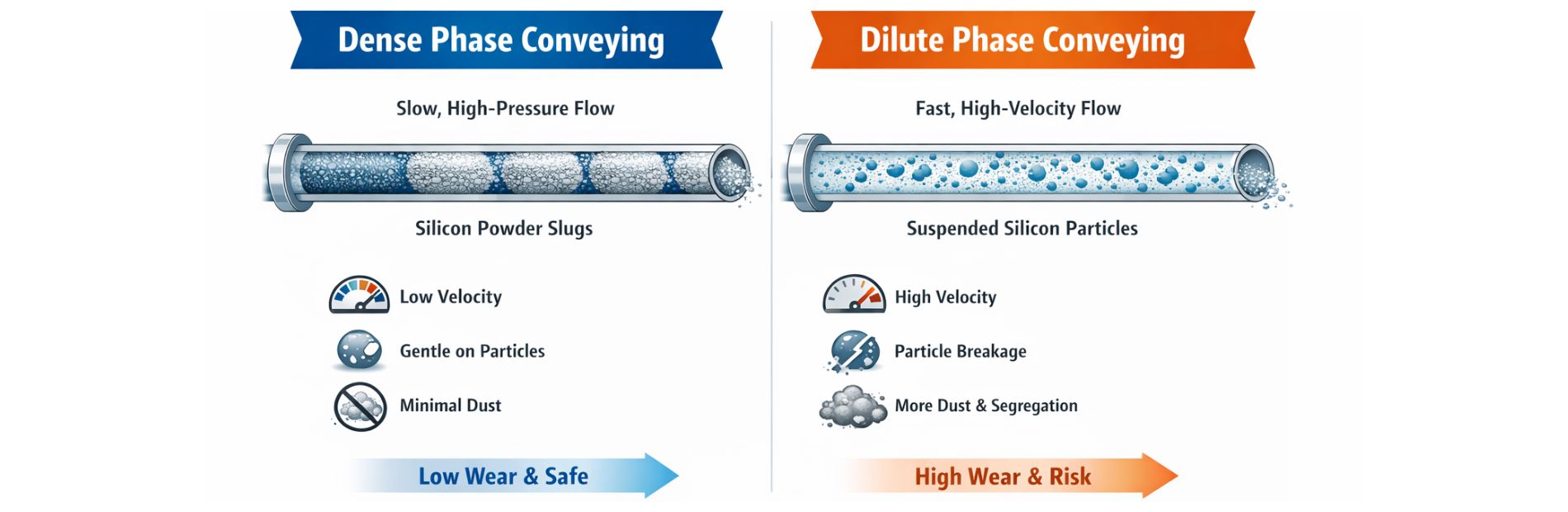
Silicon powder is extremely fine, fragile, and sensitive to mechanical stress. Choosing the right conveying method is critical to protect material quality and ensure safe handling. The table below explains why dense phase pneumatic conveying is better suited than conventional dilute phase systems for battery-grade silicon powder.

ParameterDense Phase Conveying
(Low Velocity)
Dilute Phase Conveying
(High Velocity)
Conveying velocityLow air speed moves material in plugs or slugsHigh air speed keeps material suspended
Impact on silicon particlesGentle movement preserves particle shape and sizeHigh particle collision causes breakage and fines generation
Particle size consistencyMaintains uniform particle size distributionParticle degradation leads to inconsistent PSD
Dust generationMinimal dust due to low turbulenceHigh turbulence creates airborne dust
Material segregationUniform flow minimizes segregationHigher chance of separation during transfer
Wear on pipelinesReduced pipeline wearIncreased erosion due to high-speed particles
Energy consumptionLower overall air usageHigher due to continuous airflow
Explosion riskReduced risk because of low dust formationHigher due to dust clouds and static build-up
Suitability for silicon powderHighly suitable for sensitive, fine powdersNot recommended for battery-grade powders

Parameter

Dense Phase Conveying

(Low Velocity)

Dilute Phase Conveying

(High Velocity)

Conveying velocity

Low air speed moves material in plugs or slugs

High air speed keeps material suspended

Impact on silicon particles

Gentle movement preserves particle shape and size

High particle collision causes breakage and fines generation

Particle size consistency

Maintains uniform particle size distribution

Particle degradation leads to inconsistent PSD

Dust generation

Minimal dust due to low turbulence

High turbulence creates airborne dust

Material segregation

Uniform flow minimizes segregation

Higher chance of separation during transfer

Wear on pipelines

Reduced pipeline wear

Increased erosion due to high-speed particles

Energy consumption

Lower overall air usage

Higher due to continuous airflow

Explosion risk

Reduced risk because of low dust formation

Higher due to dust clouds and static build-up

Suitability for silicon powder

Highly suitable for sensitive, fine powders

Not recommended for battery-grade powders


How Dense Phase Conveying Protects Material Integrity

1. Low-Velocity, High-Pressure Movement:

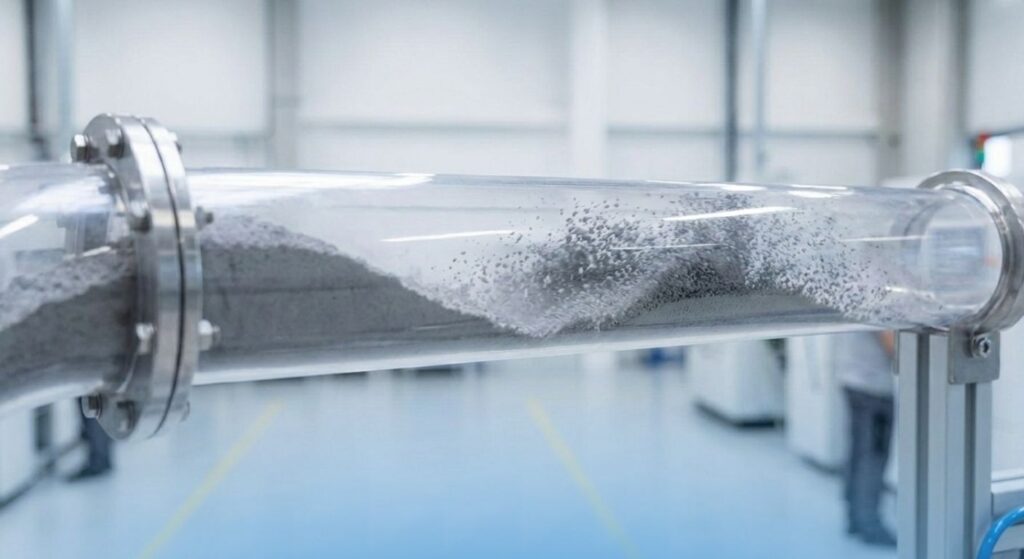
 In dense phase systems, particles move slowly and in large plugs instead of quickly suspended in air. This gentle motion:

  • Reduces impact and collisions between particles
  • Minimizes particle fracture or attrition
  • Preserves narrow particle size distribution

Maintaining a uniform particle size is crucial for battery performance too many fines or large agglomerates can reduce electrode consistency and cycle life.

2. Dust Control and Environmental Safety:

Fine silicon powder can readily become airborne causing inhalation hazards and plant contamination. Dense phase systems enable:
 
  • Closed-loop conveying preventing powder escape
  • Lower airflow reduces dust entrainment
  • Integrated filters and cyclone separators collect residual particulates
  • Improved housekeeping and environmental compliance

3. Explosion Risk and ATEX Compliance:

Fine metallic powders like silicon present explosion hazards when suspended in air at specific concentrations and under ignition sources. This risk is particularly relevant in battery manufacturing environments where electrostatic charges and mechanical equipment operate in close proximity. Dense phase pneumatic systems help mitigate these risks by:
 
  • Reducing Turbulence – Low-velocity flow means fewer chances of static discharge and dust clouds the primary drivers of explosive atmospheres.
  • Minimizing Dust Clouds – Less entrained dust reduces the likelihood of combustible dust layers forming on surfaces.
  • System Design for Safety – Conveying systems can be engineered to comply with ATEX Directive (2014/34/EU) or similar local safety standards, which mandate:
✓ Design and construction to prevent explosion sources
✓ ESD (electrostatic discharge) grounding
✓ Use of explosion vents or suppression systems
✓ Classification of zones and risk assessments
 

Meeting ATEX requirements protects equipment and personnel – and ensures compliance with global manufacturing standards.

Conclusion

In the high-stakes world of battery production, material integrity and safety cannot be compromised. Silicon powder plays a pivotal role in the next generation of high-performance batteries but only if its properties are preserved during handling and transfer.

Dense phase pneumatic conveying systems offer a powerful solution delivering ultra-fine powders with minimal degradation, reduced dust, improved safety, and regulatory compliance. By embracing low-velocity, controlled transport environments, manufacturers can protect product quality, safeguard workers, and support the cutting edge of energy storage innovation.

Importance of Bulk Powder Handling in Battery Manufacturing

Importance of Bulk Powder Handling
in Battery Manufacturing

The global battery market is expanding rapidly, driven by electric vehicles, renewable energy storage, portable electronics, and industrial applications. At the heart of this growth lies a critical—but often overlooked—factor: Powder Handling.

From lithium compounds and graphite to conductive additives and binders, powders form the foundation of battery production. How these materials are stored, conveyed, and processed directly impacts product quality, plant safety, and operational efficiency. Effective powder handling is no longer just a manufacturing requirement—it’s a competitive advantage.

This blog explores why powder handling is vital in battery manufacturing, the challenges involved, and how modern bulk material handling technologies address them


Powders Used in Battery Manufacturing

Battery cells are built from carefully engineered powder blends. These typically fall into two main categories:

Cathode-Based Powders

Cathode materials define the energy density and voltage of the battery. Common examples include:

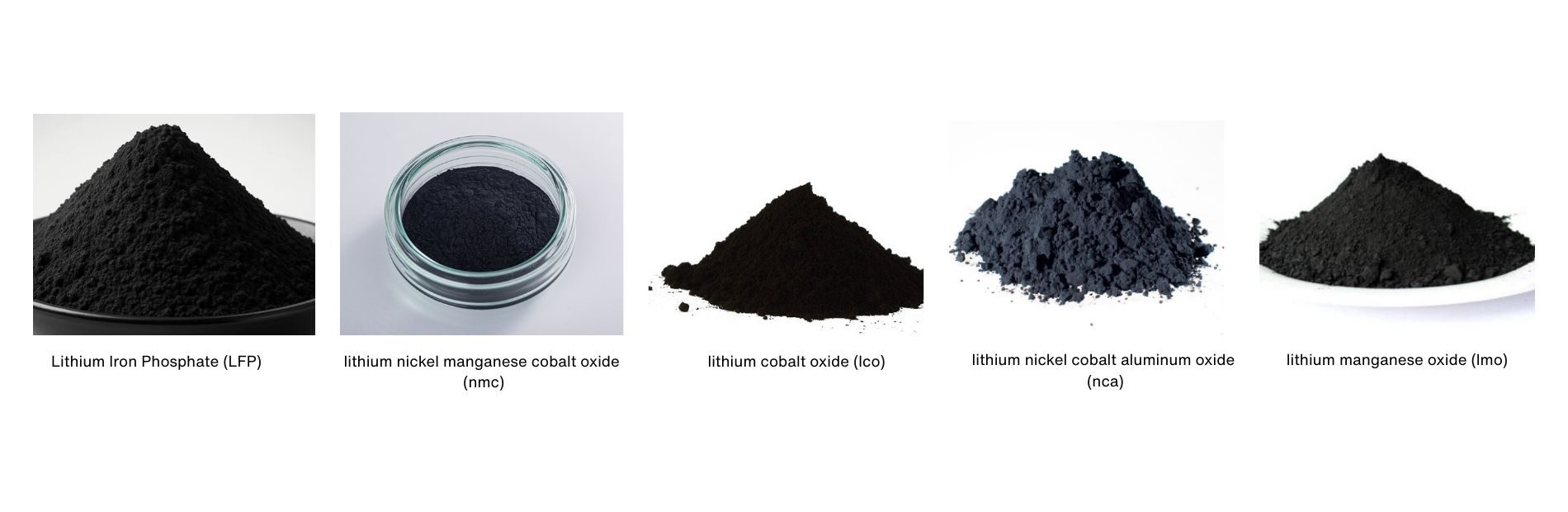
  • Lithium Iron Phosphate (LFP)
  • Lithium Nickel Manganese Cobalt Oxide (NMC)
  • Lithium Nickel Cobalt Aluminum Oxide (NCA)
  • Lithium Cobalt Oxide (LCO)
  • Lithium Manganese Oxide (LMO)

These powders are often:

  • Sub-micron to few-micron in size
  • Highly reactive and moisture sensitive
  • Expensive and intolerant to contamination

Anode-Based Powders

Anode materials influence charging speed, cycle life, and stability. Typical examples include:

• Natural Graphite
• Synthetic Graphite
• Silicon-based powders
• Hard carbon
• Conductive carbon black

These materials are extremely dusty, lightweight, and prone to electrostatic charging, making them particularly difficult to manage using conventional conveying methods.


Why Powder Handling Matters in Battery Production

Battery manufacturing demands exceptional control due to the fine, reactive nature of materials and strict quality standards. Here’s why powder handling is so critical:

1. Quality Control and Consistency

The properties of battery powders influence critical performance metrics such as capacity, cycle life, and electrical conductivity. Improper handling can lead to:

  • Density variations
  • Particle segregation
  • Inconsistent blending
These directly affect battery capacity, cycle life, and conductivity.
 

2. Safety and Environmental Protection

Many battery powders are flammable, toxic, or electrostatically sensitive. Uncontrolled dust increases risks of:

  • Fire and explosion
  • Worker exposure
  • Environmental contamination

3. Operational Efficiency

Inefficient powder transfer leads to:

  • Production delays
  • Material wastage
  • Higher labor dependency
In high-volume battery factories, these inefficiencies multiply rapidly.


Challenges Faced During Powder Handling

1. Dust Generation and Control

Fine particle powders have a high tendency to become airborne, leading to:

  • Contaminated production areas
  • Respiratory issues for workers
  • Fire and explosion hazards in confined spaces
Conventional material handling systems often fail to contain dust effectively.
 

2. Flowability Issues

Powders may exhibit poor flow characteristics caused by:

  • Cohesion
  • Moisture
  • Electrostatic charges
  • Irregular particle shapes
This leads to bridging, rat-holing, and inconsistent feeding—highly detrimental in precision battery production.
 

3. Cross-Contamination Risk

Mixing different powders (e.g., cathode active materials with conductive additives) while being contaminated with some particles from the previous batch can affect product quality and cause waste.

4. Maintaining Particle Integrity

Some materials are fragile and can break down with aggressive handling, significantly affecting:

  • Packing density
  • Electrochemical performance


Role of Bulk Material Handling Technology in Battery Powder Processing

1. Enclosed Powder Transfer

Using sealed conveying lines and closed storage ensures:

  • Zero dust escape
  • Clean production environments
  • Protection of sensitive materials
  • Preventing oxidation

2. Precise Feeding & Metering

Loss-in-weight feeders, controlled discharge devices, and automated batching provide:

  • Accurate dosing
  • Repeatable recipes
  • Uniform mixing

3. Gentle Handling

Modern systems minimize:

  • Particle breakage
  • Agglomeration
  • Degradation
Preserving powder characteristics throughout processing.
 
Powder conveying

One of the most critical technologies in bulk material handling of battery powder is the closed-loop nitrogen pneumatic conveying system.

Unlike conventional air conveying, this system uses inert nitrogen gas in a fully sealed loop.

Why this matters:

✱ Explosion Prevention: Nitrogen eliminates oxygen from the conveying environment, dramatically reducing:

  • Fire risk
  • Dust explosion probability
This is vital when handling graphite, carbon black, and lithium compounds.
 

 ✱  Moisture-Free Conveying: Nitrogen is dry by nature, preventing:

  • Moisture ingress
  • Powder degradation
  • Unwanted chemical reactions
This preserves cathode and anode material integrity. 
 

 ✱  Closed-Loop Operation: The nitrogen is continuously recirculated through filters and blowers, resulting in:

  • Minimal gas consumption
  • No emissions into the atmosphere
  • Clean-room compatible operation
 ✱   Contamination Control: Fully sealed pipelines prevent:
 
  • External contamination
  • Product loss
  • Operator exposure
Ideal for high-purity battery materials.

✱  Automation Ready: These systems integrate seamlessly with below equipments supporting fully automated battery production lines:
 

Concluding Remarks

Battery manufacturing success depends not only on chemistry—but on how that chemistry is handled.

With powders forming the foundation of every cell, bulk material handling technology becomes a core enabler of safety, quality, and scalability.

From cathode and anode powders to conductive additives, advanced solutions such as closed-loop nitrogen pneumatic conveying, precision feeding, enclosed storage, and automated transfer systems ensure: