
Automatic Bag Slitting Machine: A Critical Link in Modern Bulk Solids Handling Systems
Automatic Bag Slitting Machine: A Critical Link in Modern Bulk Solids Handling Systems
In many process industries, raw materials are delivered in bagged form before being introduced into automated production systems. Despite increasing levels of plant automation, the bag opening stage often remains a manual bottleneck, limiting overall system efficiency.
Industries such as chemicals, polymers, food processing, and minerals frequently receive powders, granules, and pellets packaged in 25 kg to 50 kg bags made from woven polypropylene, multi-wall paper, or laminated plastic materials. Before these materials can enter the process stream, they must be safely opened, discharged, and transferred into bulk handling systems.
While manual bag cutting has historically been the standard approach, modern manufacturing environments demand higher throughput, improved dust containment, enhanced operator safety, and seamless integration with automated material handling systems. As a result, automatic bag slitting machines have emerged as a critical component of modern bulk solids handling infrastructure.
These systems enable manufacturers to transform a traditionally labor-intensive task into a controlled, continuous, and highly efficient material unloading operation.
The Role of Bag Slitting in Bulk Solids Handling
In a typical bulk solid handling process, material flow follows a structured path:
Raw material receipt → Bag opening → Material discharge → Conveying → Storage → Processing
Among these steps, bag opening is often underestimated, yet it directly influences several key operational factors:
• Material transfer efficiency
• Dust emissions and workplace cleanliness
• Raw material recovery
• Production throughput
• Operator safety
An inefficient bag opening operation can create downstream disturbances, including irregular feeding rates, dust contamination, and increased material losses.
Automatic bag slitting machines address these challenges by enabling controlled and consistent bag opening integrated within the plant’s overall material handling architecture.
What is an Automatic Bag Slitting Machine?
An automatic bag slitting machine is an engineered system designed to mechanically cut open bags and separate the packaging material from the product while allowing the bulk material to be discharged into downstream handling equipment.
These machines typically form the interface between bagged raw material handling and automated bulk conveying systems.
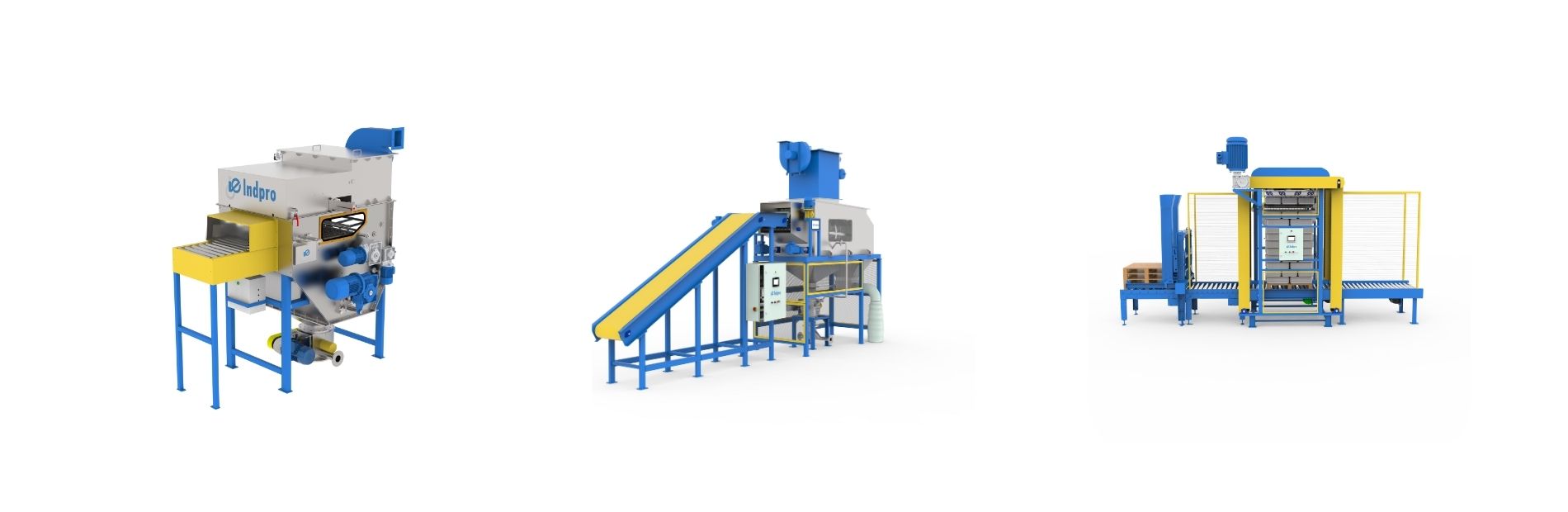
A standard bag slitting system incorporates several functional modules:
Bag Feeding Section: Bags are introduced manually or via conveyor into the machine inlet that guides them toward the cutting mechanism.
Precision Cutting Assembly: Rotary blades slit the bag structure, ensuring consistent opening while minimizing bag fragment generation.
Material Separation Grid or Screen: Bulk material passes through a grid or perforated screen into the receiving hopper, while bag remnants are retained.
Empty Bag Discharge System: Separated bag pieces are discharged through a dedicated outlet for collection and disposal.
Dust Extraction Interface: Integrated dust extraction ports connect to plant dust collection systems to maintain controlled air quality.
Automation and Control System: PLC-based control systems with safety interlocks allow integration with the plant’s automation network.
The discharged material can then be transferred via:
- Pneumatic conveying systems
- Screw conveyors
- Bucket elevators
- Gravity feeding systems
- Process dosing units
Industrial Applications Across Process Industries
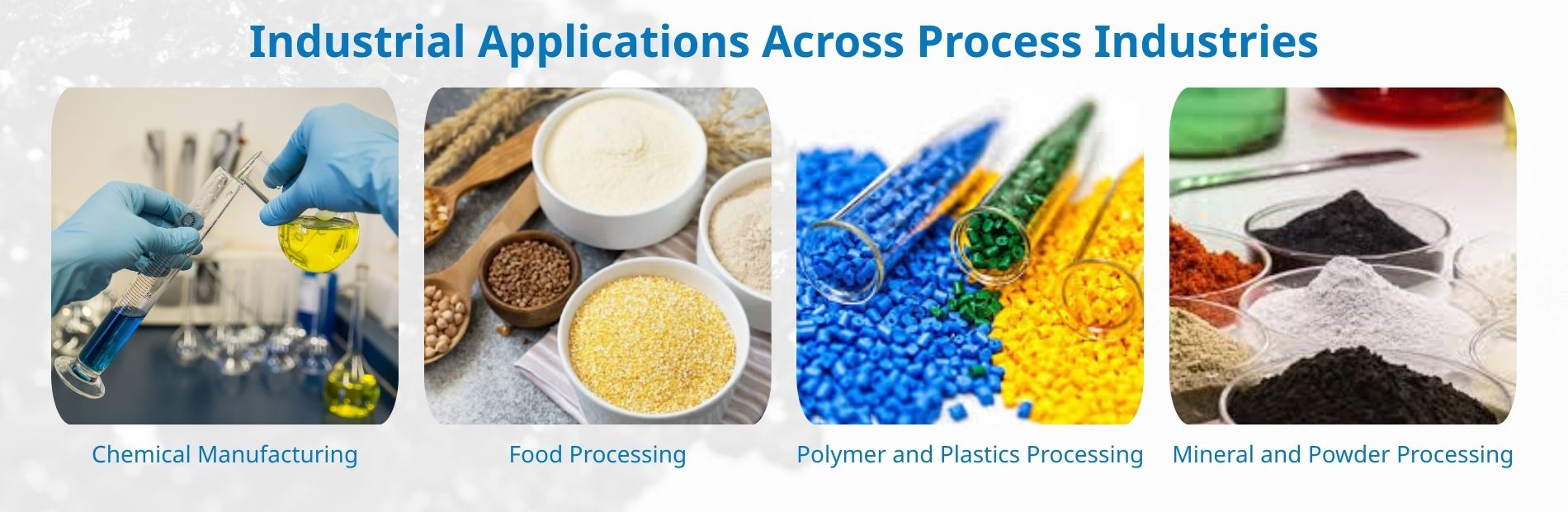
Automatic bag slitting machines are widely deployed in industries where bagged raw materials must be efficiently introduced into automated bulk solids handling systems. The following use cases illustrate how these systems support different process environments.
Chemical plants frequently receive raw materials such as pigments, additives, catalysts, resins, and specialty powders in bagged packaging.
Automatic bag slitting systems enable controlled and dust-contained bag opening, allowing materials to be discharged directly into pneumatic conveying systems, reactors, or storage silos. This reduces operator exposure to hazardous powders while ensuring consistent material feeding.
Food manufacturing operations handle ingredients like sugar, salt, flour, starch, cocoa powder, and milk powder in 25–50 kg bags.
Automatic bag opening systems support hygienic material handling, minimizing manual contact and reducing contamination risks. The discharged materials can be transferred efficiently into mixers, batching systems, or ingredient dosing units.
4. Mineral and Powder Processing
Why Automatic Bag Slitting Matters in Modern Manufacturing
1. Eliminating a Manual Bottleneck
As manufacturing plants increasingly adopt automated systems for conveying, batching, and processing, manual bag opening becomes a critical bottleneck.
Automatic bag slitting machines transform bag unloading into a continuous, high-throughput operation, ensuring steady material supply to downstream equipment.
2. Enhancing Workplace Safety
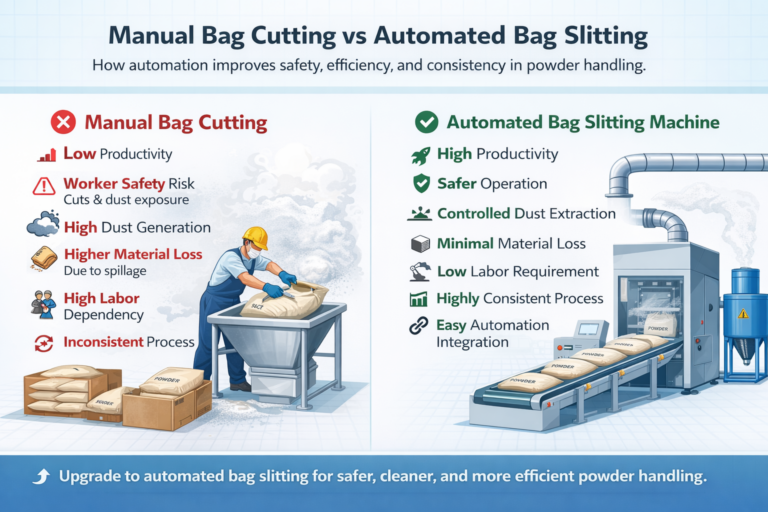
Manual Bag Cutting vs Automated Bag Slitting
Silicon powder is extremely fine, fragile, and sensitive to mechanical stress. Choosing the right conveying method is critical to protect material quality and ensure safe handling. The table below explains why dense phase pneumatic conveying is better suited than conventional dilute phase systems for battery-grade silicon powder.
| Parameter | Manual Bag Cutting | Automatic Bag Slitting Machine |
|---|---|---|
| Productivity | Low | High |
| Worker Safety | Risk of cuts and dust exposure | Much safer operation |
| Dust Generation | High | Controlled with dust extraction |
| Material Loss | Higher due to spillage | Minimal |
| Labor Dependency | High | Low |
| Process Consistency | Inconsistent | Highly consistent |
| Automation Integration | Difficult | Easily integrated |
Engineering Considerations in Bag Slitting System Design
Maintaining a uniform particle size is crucial for battery performance too many fines or large agglomerates can reduce electrode consistency and cycle life.
4. Automation and Process Control: PLC-based control systems provide:
• Process monitoring
• Equipment interlocks
• Alarm and fault diagnostics
• Integration with plant automation architecture
Meeting ATEX requirements protects equipment and personnel – and ensures compliance with global manufacturing standards.
The Future of Bagged Material Handling
As manufacturing industries continue to move toward higher levels of process automation, sustainability, and workplace safety, automated bag cutting systems will play an increasingly important role.
Automatic bag slitting machines enable plants to bridge the gap between bagged raw material logistics and fully automated bulk processing systems, improving both operational efficiency and environmental performance.