Indpro Logo

Indpro
Typically replies within an hour

Indpro
"Hello!👋

How can I help you today with your bulk material handling needs?"
×
Chat with Us

How Portable powder transfer systems Improve bulk material handling

How Portable Powder Transfer Systems Improve
Bulk Handling Efficiency and Flexibility

If you have ever worked in a facility that handles powders—whether in food, pharmaceuticals, chemicals, or plastics—you know the challenge all too well: how do you efficiently move materials across multiple processing lines without constantly reworking your setup?

That is where Portable Powder Transfer Systems (PTS) come into play. These are game-changers for manufacturers looking to boost flexibility, streamline operations, and maintain cleanliness and safety in bulk material handling.

Let us dig in and explore how mobility in powder transfer systems is not just a “nice-to-have” but a strategic advantage in modern material handling.


Why Mobility Matters in Bulk Material Handling

Imagine you are managing a plant with multiple mixing stations or packaging lines. Traditionally, material transfer would involve fixed piping, heavy lifting, or manual transport—all of which add time, labor, and risk to your process.

Now picture a portable system that moves where the need is, connects with ease, and starts transferring material in minutes.

Mobility eliminates bottlenecks. It gives you the freedom to:

  • Serve multiple lines with a single system
  • Respond quickly to demand changes
  • Clean, maintain, or relocate equipment effortlessly
  • Avoid long pipe runs and their associated pressure drops or contamination risks


How Do Portable PTS Work?

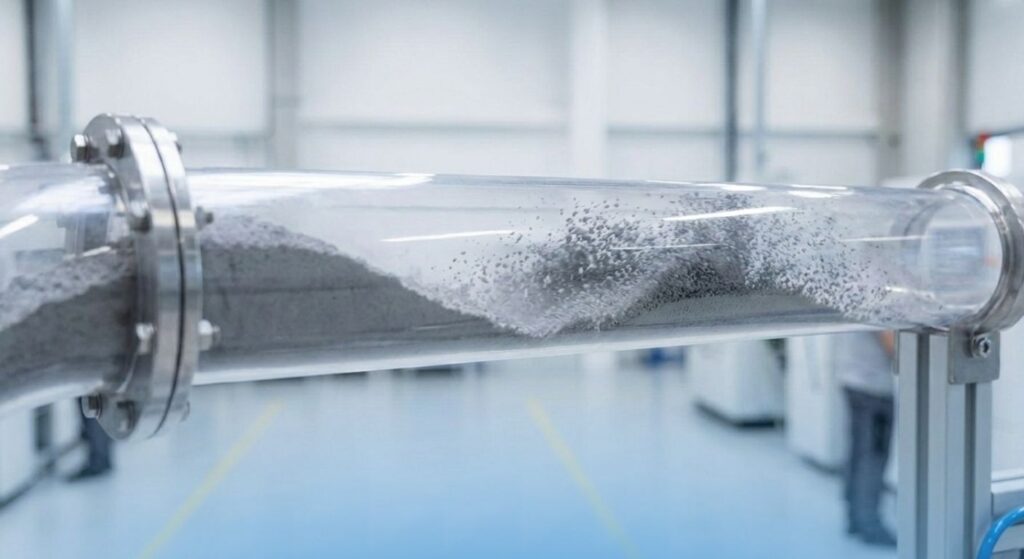
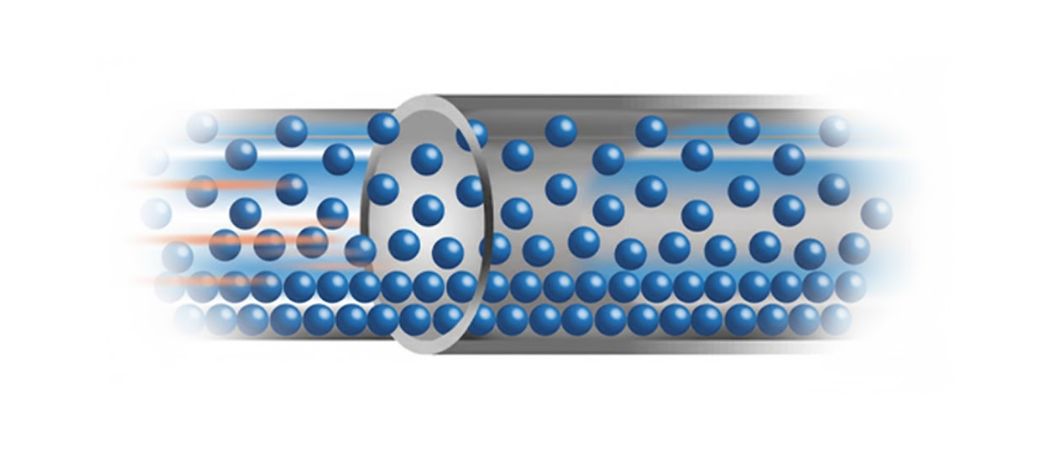
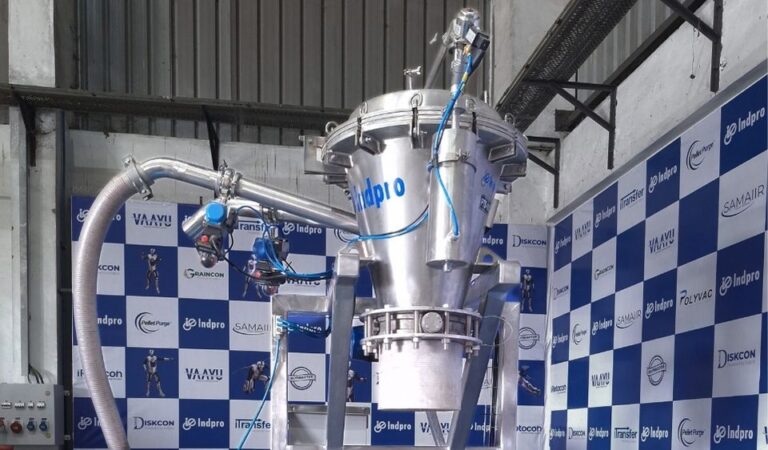
At the heart of most modern Portable Powder Transfer Systems is pneumatic conveying—a clean, enclosed method of moving powders using air pressure or vacuum. In a vacuum-based PTS, a vacuum pump creates negative pressure, pulling powders through a hose or pipe into the receiver, thus enabling dust-free transfer of powder, directly from source to destination—whether it’s a blender, reactor, or packaging machine.

Because the system is enclosed, you don’t have to worry about dust escaping into the work environment, keeping both your facility and your people safer.


Multi-Line Processing: A Real-World Advantage

Let’s say you have got three blending lines that need to be filled up one at a time, and you run different products on different days. Instead of having a dedicated transfer line for each setup, a portable PTS can serve all lines on a rotating basis, reducing both capital costs and space usage.

Benefits in a nutshell:

  • Better use of plant floor space
  • Lower investment in redundant equipment
  • Greater responsiveness to production shifts

This kind of flexibility is gold in industries where batch production, frequent changeovers, or small lot sizes are the norm.


Material Compatibility: Not All Powders Are Created Equal

A key factor in choosing a portable system is ensuring it can handle the types of powders you process. We are talking:

  • Fine or cohesive powders
  • Hygroscopic or heat-sensitive materials

Modern portable PTS units are designed with versatility in mind. Features like adjustable airflow, variable speed control, and specialized material contact parts (like food-grade stainless steel or anti-corrosive coatings) make them suitable for a wide range of applications.

If you’re processing delicate or high-value materials, this kind of gentle yet reliable transport is a must.


Automation & Integration: Smarter Handling on the Move

Portable doesn’t mean primitive.

Today’s powder transfer systems often come with:

  • Automated controls to just set it and forget it
  • PLC integration for plant-wide coordination
  • Sensors for level, pressure, or flow monitoring
  • Touchscreen interfaces for easy operation
how portable powder transfer system work

You can even set them up with recipe management systems, so switching between different materials or processes becomes a breeze.

So yes, you get mobility—but without sacrificing intelligence or control.


Easy to Move, Easy to Maintain

Let’s talk ergonomics and hygiene—two underrated heroes of bulk solids handling.

Most portable systems come with:

  • Compact frames on lockable caster wheels
  • Quick-connect clamps and hoses
  • Tool-less disassembly for fast cleaning

Whether you’re in pharma with strict cleaning validation needs or in food where cross-contamination is a nightmare, these systems help you stay compliant without a headache.

Plus, your maintenance team will love the reduced downtime and easier access.


Is a Portable PTS Right for You?

If your operations involve:

  • Multiple production lines
  • Frequent recipe changes
  • Limited floor space
  • A need for safe, dust-free material transfer

…then a portable powder transfer system might be exactly what you need.

It’s about flexibility. It is about smarter workflows. And above all, it’s about giving your production team the tools to do more, faster, and safer.

Ready to Add Some Mobility to Your Material Handling?

At Indpro, we have seen firsthand how the right powder transfer system transforms operations—from small batch plants to high-output facilities.

Curious if it’s the right fit for you? Let’s talk. We’re always here to help you move your materials… and your business… forward.

Why Basic Engineering Study is Essential for Process Plants

Why Basic Engineering Study is Essential for Process
Plants with need of Bulk Solids Handling

Imagine building a house without a blueprint. You might end up with crooked walls, awkward spaces, or worse—structural instability. Now, think of a bulk solids handling system the same way. Whether you are handling flour, cement, chemical powders, plastic pellets, or minerals, having a detailed plan is everything. It is of upmost importance to verify how the design for handling your specific powder, flakes or granules can be accommodated in your process. And that’s exactly where Basic Engineering Studies, also known as Front End Engineering Design (FEED) come into play.

In this blog, let us walk through why these early-stage studies are not just important—but essential—for the success of any bulk solids handling project.


So, What Exactly Is a “Basic Engineering Study”?

In simple terms, it is the technical foundation of your project.

Think of it as the bridge between an idea and a fully functional system. This study outlines all the key technical and design elements required to turn your bulk solids handling concept into a practical, executable solution.

what-is-basic-engineering

Here is what a typical Basic Engineering Study includes:

  • Process Flow Diagrams – To visualize how materials will move through various equipment in your system from point A to point Z.
  • P&IDs (Process & Instrumentation Diagrams) – A technical snapshot of your valves, instruments, pipelines, and process control logic.
  • Equipment Sizing & Selection – Choosing the right type and size of feeders, conveyors, blowers, filters, and more, based on your material properties and system requirements.
  • General Arrangement (GA) Drawing – Showing how all major components fit together within your available space.
  • Layout Drawings – A birds-eye view of the physical arrangement, including equipment spacing, piping routine, walkways, maintenance areas, essential supports, etc.
  • Foundation and Cutout Drawings – Providing critical data for civil and structural teams to design necessary RCC pedestals, support floor openings, and anchoring.
  • Cable Tray Layout – A detailed plan for routing power and control cables efficiently and safely across the plant, ensuring ease of maintenance and future scalability.
  • Utility Consumption Estimates – Air, water, electricity, and gas requirements to run the system efficiently.

It is the phase where ideas take form—not fully built but clearly visualized.


Why Is It So Important in Bulk Solids Handling?

Bulk solids don’t flow like liquids—they tend to behave unpredictably and often defy straightforward patterns. They can bridge, rat-hole, segregate, or even combust under the wrong conditions.

So, designing systems to handle them needs more than guesswork—it needs engineering backed by data and experience.

Here’s what a Basic Engineering Study helps you to avoid:

1. Costly Mistakes Later Down the Line

  • Making changes mid-project? That’s expensive.
    Changing a silo design after fabrication, redesigning a ductwork layout after construction, or fixing material flow problems post-installation can blow your budget.
    With a proper study, these risks are reduced dramatically.

2. Equipment That Doesn’t Fit—or Work

  • Bulk solids vary in particle size, density, moisture content, and flowability.
    What works for cement might clog up with starch or sugar. The study helps determine what type of feeder, valve, or conveyor is ideal based on your exact material properties.

3. Delayed Project Timelines

  • Guessing your way through design leads to scope creep, rework, and missed deadlines.
    Basic engineering gives you a clear scope and schedule, ensuring smoother project management.


The Real-World Benefits You’ll See

We’ve talked about why it matters—now let’s look at how it actually benefits you in real-world scenarios.

✅ 1. Better Project Planning

  • You’ll get a clear picture of what your project will look like—space needed, scope clarity and timeline to completion.

  • It helps align your engineering, procurement, and construction teams from Day One.

✅ 2. Improved Equipment Selection

  • A screw conveyor or pneumatic conveying? Pulse jet filter or wet scrubber?
    The study helps make these decisions based on logic and calculations, not assumptions.
    This leads to higher efficiency and fewer surprises.

✅ 3. Enhanced Safety & Compliance

  • Dust, static, or combustible powders? These aren’t just operational challenges, they’re safety hazards.
    The study identifies safety risks early, so you can build safeguards right into the design.

✅ 4. Seamless Integration with Existing Systems

  • Already have part of the setup in place? Basic engineering looks at how the new system will fit into your current infrastructure—whether that’s a process line, control panel, or PLC logic.


It’s Not Just Basic Engineering—It’s Risk Management

In the world of bulk solids, flow issues are common—but they’re also preventable.

A well-executed basic engineering study is like an insurance policy. It protects your investment by predicting and preventing the most common causes of failure: improper flow design, under- or over-sized equipment, and process inefficiencies.

It’s not about overengineering—it’s about engineering smart.


When Should You Go for a Basic Engineering Study?

Anytime you’re:

  • Setting up a new plant or greenfield project
  • Expanding or upgrading an existing line
  • Adding new materials or process changes
  • Facing chronic material handling problems

It’s particularly valuable in sectors like:

  • Food & beverage
  • Chemicals
  • Plastics
  • Cement & minerals
  • Pharmaceuticals


Don’t Skip the Basics

In today’s fast-paced industrial world, it’s tempting to jump straight to execution. But when it comes to bulk solids handling, rushing the design phase can cost more in the long run—in money, time, and headaches.

By investing in Basic Engineering Studies, you’re not just buying documents—you’re buying clarity, control, and confidence.

So, the next time you’re planning a material handling system, ask yourself:

So, the next time you’re planning a material handling system, ask yourself:
Are we starting with the right blueprint?”

Because with the right foundation, everything else becomes easier.

Want Expert Help?

At Indpro, we specialize in designing customized bulk solids handling solutions—and it all starts with a detailed basic engineering study with full functional project executions.

Why Jumbo Bag Unloading Essential for Food Powders & Granules

Why Jumbo Bag Unloading Systems Are
Essential for Handling Food-Grade Powders & Granules

Imagine running a food processing plant where jumbo bags of flour, sugar, milk powder, or starch arrive daily—each weighing hundreds of kilos. Just imagine having to open and unload each of these bags manually. Messy, dusty, bunch of spillages, right? That’s exactly the kind of challenge food manufacturers face. And that’s where the Jumbo Bag Unloading System steps in—not just as a machine, but as a real problem-solver.

Let’s unpack why this system is such a game-changer in the food industry.


First, What Is a Jumbo Bag Unloading System?

Jumbo Bag Unloading System—also known as an FIBC discharger or bulk bag unloader—is a specially designed piece of equipment used to safely and efficiently empty dry powders or granular materials from FIBCs (Flexible Intermediate Bulk Containers).

Think of it like an extra pair of skilled hands that:

  • Holds the jumbo bag in place
  • Helps open it securely from the bottom
  • Allows smooth flow of material into downstream processing
  • Prevents dust from flying everywhere
  • Keeps the operator safe and the product hygienic
  • Prevent material from spilling


The Real-World Challenges in the Food Industry

Let’s be honest—handling bulk materials in food production is no cakewalk. Here are some of the daily headaches food manufacturers deal with:

  • Dust clouds everywhere when opening bags—hello, health and safety hazards!
  • Material spillage that creates waste and slows things down
  • Cross-contamination risks in sensitive food environments
  • Manual handling injuries (those jumbo bags aren’t light!)
  • Irregular material flow during bag emptying
  • And of course, difficulty in keeping up with hygiene regulations like FSSAI, FDA, etc.

Does any of this sound familiar? If you’re in the food business, chances are you’ve faced at least one (or all) of these.


So, How Does the Jumbo Bag Unloading System Solve These Problems?

Great question. Let’s break it down:

1. Dust-Free Operation

  • With built-in dust extraction units and sealed discharge zones, these systems keep your plant air clean and your workers breathing easy.

2. Gentle Yet Efficient Discharge

  • Thanks to flow aids like bag massagers or vibrators, powders flow smoothly—no more poking, hitting or shaking bags.

3. No More Manual Dangerous Lifting

  • Operators don’t have to wrestle with jumbo bags anymore. Hoists and forklifts do heavy lifting. Safety levels go up, and back pain goes down.

4. Hygienic, Food-Grade Design

  • Stainless steel contact parts, easy-to-clean surfaces, and optional CIP systems ensure you stay compliant with food safety standards.

5. Smart Automation

  • With PLCs and sensors, and suddenly you’re running a smart, automated setup that alerts you when the bag is empty, checks flow levels, and even integrates with your conveying system.

6. Consistent Flow, Every Time

  • Whether it’s fine flour or granulated sugar, the system ensures a reliable, clog-free discharge.


Real Applications in the Food World

Here’s where it gets exciting. Jumbo Bag Unloading Systems are driving innovation across food manufacturing sectors like:

  • Dairy: milk powder, lactose, casein
  • Bakery: flour, sugar, starch
  • Confectionery: cocoa powder, glucose
  • Beverages: malt, coffee grounds, stabilizers
  • Snack foods: spices, seasonings, and flavors

No matter the material, if it comes in a bulk bag, this system can handle it—cleanly and efficiently.


The ROI is Real

And yes, the big question on your mind: “What about the investment?” Fair point. Let’s take a look at what you receive for your investment:

  • Reduced product loss from spillage
  • Fewer labor hours spent on unloading
  • Fewer health and safety incidents
  • Faster changeovers = more production uptime
  • Higher hygiene = fewer contamination risks

Long story short? A Jumbo Bag Unloading System pays for itself faster than you think.


A Small Change with a Big Impact

In the world of food manufacturing, it’s often the behind-the-scenes equipment that makes the biggest difference. A Jumbo Bag Unloading System may not be glamorous, but it can completely transform how you handle dry ingredients.

It’s cleaner. It’s safer. It’s faster.
And most importantly—it gives you peace of mind.

What Are the Key Dynamics to Consider in Silo Design?

What Are the Key Dynamics to Consider in Silo Design?

Designing for flow, safety, and long-term performance

When most people picture silos, they often see them as static, unchanging structures—simply large containers for storing powders or bulk materials. But in reality, silos are anything but passive. They breathe, vibrate, flex, and actively respond to the materials inside and the processes around them.

Every time a silo is filled or emptied, internal forces shift, pressure zones form, and material behaviors change—sometimes drastically. If these dynamic actions aren’t properly accounted for, the consequences can be serious: structural damage, inconsistent flow, unexpected blockages, or even safety hazards.

In the world of bulk solids handling, overlooking silo dynamics isn’t just a design flaw—it’s a risk to your entire operation. Because when silo design fails, it doesn’t just slow down your process—it can break your plant.

In this blog, let’s explore how a better understanding of silo dynamics can lead to safer, more efficient, and more reliable material handling systems.


What Do We Mean by “Silo Dynamics”?

Silo dynamics refers to the changing forces and behavior inside and outside a silo during three key phases: filling, storage, and discharge. Bulk materials behave unpredictably, often applying uneven, shifting loads to silo walls.

Even though silos look simple from the outside, they deal with complex internal pressures. These pressures change constantly depending on:

The type of material inside

  • How it flows
  • How it’s filled or emptied
  • External conditions such as vibration, temperature, and moisture

Ignoring these dynamic forces can lead to:

  • Deformed silo walls
  • Cracks in silo walls
  • Uneven pressure distribution
  • Material bridging and rat-holing
  • Unexpected vibrations
  • Frequent maintenance or safety hazards
  • Dangerous collapses or uncontrolled discharge

Yes, silos can fail—and the reason is often poor understanding of flow behavior and pressure dynamics.


1. Flow Patterns Matter More Than You Think

Dynamic pressure in silos is largely impacted by the flow pattern of the material.

1. Mass Flow:

In Mass Flow, material discharges uniformly from all areas, avoiding stagnant zones. The oldest material exists first, following the principle of FIFO.

Good for: Predictable discharge, minimized segregation, and uniform pressure.

mass material flow in Silo

2. Funnel Flow:

While material flows in a narrow path, the material along the walls remains static.

Bad for: Flow inconsistency, material segregation, material degradation, and uneven stress on silo walls.                         


Why does this matter?

Because different flow patterns exert different loads on your silo structure. Due to funnel flow, pressure imbalances can form, increasing the risk of structural damage and material degradation in dead zones.

Material Behavior Drives Silo Performance

Because different flow patterns exert different loads on your silo structure. Due to funnel flow, pressure imbalances can form, increasing the risk of structural damage and material degradation in dead zones.

Material Behavior Drives Silo Performance

Things get really interesting here: not all powders, grains, or pellets behave the same. Some powders like to cling to the walls. Others compact significantly under pressure. Some become sticky with humidity. And a few—like flour —may even act explosive under the wrong conditions.

That’s why material characterization is a core step in silo design.

What you must know about your material:

  1.     Bulk density
  2.     Flowability
  3.     Angle of repose
  4.     Wall friction
  5.     Particle size & moisture sensitivity

This data helps engineers simulate how your material behaves in real conditions and design a silo that matches those behaviors—not just one that looks good on paper.


The Real Challenges in Silo Dynamics

Let’s break down some of the most common problems caused by poor dynamic design:

Bridging – Bridging occurs when flow is halted by a dome-like formation of material over the outlet.

Ratholing – Ratholing creates a central flow tunnel, while material near the walls remains stuck.

Segregation – Fines and coarse particles separate

Vibrations – Mechanical vibrations from loading or unloading processes contribute to stress and fatigue in silo walls.

Pressure peaks – Especially during sudden discharge or aeration

Wall collapse – Structural failure of silo walls may happen when funnel flow produces non-uniform loads.

These aren’t rare issues—they’re extremely common across industries like cement, food, plastics, and chemicals.


Tools & Techniques to Analyze Dynamics & Engineer for Performance

Modern engineers have powerful tools to predict how materials will behave in a silo:

🔹FEA (Finite Element Analysis): Used to simulate pressure, stress, and flow patterns.

🔹DEM (Discrete Element Modeling): Helps model individual particles and how they interact.

🔹Sensors & Load Cells: Real-time monitoring of dynamic loads for better system control.

Using these tools allows for customized, data-driven silo designs that anticipate and manage real-world challenges.

But analysis is only half the story. Engineering a dynamic-friendly silo is both an art and a science. Here are some best practices to ensure your design stands up to real-world demands:

  • Choose the right flow pattern— mass flow ensures a safer and more consistent discharge of material.
  • Ensure reliable discharge and eliminate flow blockages with tools like bin activators and vibrators.
  • Select the proper cone angle and maintain smooth internal finishes for better flow behavior.
  • Install level sensors, load cells, pressure relief systems, and enable real-time monitoring.
  • Use flexible seals and suspension systems to absorb and manage vibrational loads.


Integrated Engineering: More Than Just the Silo

One of the most common mistakes is isolating silo design from the rest of the system.

But your silo must work with:

✔️ Feeding systems (conveyors, loaders)

✔️ Discharge systems (pneumatic conveying, rotary valves)

✔️ Designed to be dust-tight and hygienic, – with food-grade variants available.

✔️Dust collection units

✔️Control automation (sensors, alarms, flow monitors)

A well-designed silo system integrates mechanical, structural, and process engineering into one complete solution.


Real-World Example: Dynamics Done Right

A major food processing company once faced chronic bridging issues and silo wall damage. The culprit? An unaccounted-for funnel flow pattern.

We designed and helped them by switching to a mass flow pattern, installing a bin activator and making other design changes. How did we do so? Using DEM simulations for redesign, we not only proved the solution on paper, but also practically. They achieved:

  • 100% flow consistency
  • Reduced maintenance costs
  • Improved structural safety
  • No loss of production

Silo failures don’t just happen. They build up over time through misunderstood flow behavior, poor material matching, and ignoring dynamic forces.

Silo dynamics aren’t just academic theory—they’re the silent forces that can make or break your bulk handling system. By understanding flow patterns, material behavior, and structural stress points, you can design silos that are not just strong, but smart.

Ready for an optimized silo system? Let the experts at Indpro help you bring safety, efficiency, and reliability into every aspect of your material handling design

Bin Activator: The Key Solution to Powder Bridging and Flow Problems in Bulk Material Handling

Bin Activator: The Key Solution to
Powder Bridging and Flow Problems
in Bulk Material Handling

From stuck silos to seamless flow — here’s how one smart device is making all the difference.

In the world of bulk material handling, smooth and consistent flow isn’t just ideal—it’s essential. Yet, if you’ve ever faced issues like powders getting stuck in silos, erratic material discharge, or costly downtime, you’re not alone. These problems are more common than you think—and there’s a smart solution that solves them at the root: the Bin Activator.

Let’s dive into why this simple yet powerful device is revolutionizing flow problems for industries across the globe.

Indpro silo bin activator


The Challenge: Why Material Flow Is Not Always Smooth

Handling bulk materials like powders, granules, and flakes seems straightforward—until things start to jam. Here are some of the most frequent issues industries face:

1. Bridging

Bridging refers to the formation of an arch-shaped blockage that interrupts material discharge.

Silo Material Bridging issue

2. Ratholing

Rat-holing happens when material flows through a narrow central path, leaving the surrounding bulk unmoved.

3. Material Segregation

Particles of different sizes or weights separate, impacting quality.

4. No Flow or Erratic Flow

Leads to inconsistent production and manual intervention.  

These challenges cause downtime, product wastage, and maintenance headaches, all of which eat into your profits.


The Hero of the Story: What is a Bin Activator?

A Bin Activator is a flow aid device mounted to the bottom of silos or hoppers. It uses controlled vibration to keep material moving consistently and prevent common flow issues.

At first glance, it may just look like a metal cone with a motor—but don’t let the simplicity trick you. It’s engineered to deliver consistent results for even the most stubborn materials.

Newly designed silo bin activator - indpro

Key components:

  • Sloped cone to direct flow
  • Suspension arms to isolate vibration
  • Vibratory motors that apply controlled vibration to loosen material and promote flow.
  • Flexible seal to maintain airtightness while allowing movement


How Does a Bin Activator Actually Work?

Think of the Bin Activator like a gentle tap that keeps materials in motion—only smarter and more efficient. Here’s how it works:

  1. Material is directed into the cone-shaped region for efficient flow initiation.
  2. The vibratory motor creates motion that loosens compacted or stuck particles.
  3. Vibration breaks bridges and rat-holes, letting the material flow freely.
  4. The result? Delivers consistent, first-in-first-out flow—completely automated, no manual input required.


What Materials Work Best with Bin Activators?

Not all materials behave the same—but that’s the beauty of bin activators: they’re highly versatile.

✅ Fine powders like flour, cement, fly ash
✅ Cohesive materials like talc or carbon black
✅ Fragile granules that shouldn’t be broken
✅ Hygroscopic materials that clump easily
✅ Heat- or oxygen-sensitive products that can’t be agitated with hot air

No matter the material—if it clogs, bridges, or just won’t flow—a bin activator is likely the fix.


Why Bin Activators Are Better Than Other Flow Aids

There are many ways to “force” material out of a hopper—air cannons, vibrators, fluidizing pads—but none match the consistency and control of a bin activator.

Feature

Bin Activator

Aeration Pads

Air Cannons

Vibrators

Suitable for cohesive materials

✅

❌

⚠️

⚠️

Controlled flow rate

✅

❌

❌

✅

Maintenance requirement

Low

Moderate

High

Moderate

Energy consumption

Moderate

High

High

Low

Material degradation risk

Low

High

High

Low


Benefits You’ll Notice Instantly

🔹 No bridging or rat-holing
🔹 Consistent, predictable discharge
🔹 No material degradation
🔹 Low power consumption
🔹 Reduced operator intervention and downtime
🔹 Longer equipment life and minimal maintenance


Real-World Example: A Chemical Plant's Flow Nightmare Fixed

One of our clients in the chemical industry was dealing with frequent blockages in a silo storing a cohesive powder. They tried everything—from air pads to manual poking.

After installing an Indpro Bin Activator, the flow issues disappeared overnight. Downtime dropped by 60%, and their batch consistency improved significantly. The team could finally focus on production instead of maintenance.


Why Choose Indpro’s Bin Activator?

At Indpro, we don’t offer a “one-size-fits-all” solution. Our Bin Activators are:

✔️ Custom-designed based on your material characteristics
✔️ Built for performance – heavy-duty construction, industrial-grade vibration system
✔️ Designed to be dust-tight and hygienic, – with food-grade variants available.
✔️ Proven in the field – trusted by clients in plastic, chemical, food, and pharma industries
✔️ Guided by experienced engineers through design, setup, and long-term operation.


Conclusion: Smooth Flow = Smoother Operations

Don’t let material flow issues slow you down. A Bin Activator is one of the smartest investments you can make in your bulk material handling system. A silent performer, it tackles challenges and enhances system reliability.