Indpro Logo

Indpro
Typically replies within an hour

Indpro
"Hello!👋

How can I help you today with your bulk material handling needs?"
×
Chat with Us

Bulk Bag Filling Head Design – A Key Factor for Operator & Plant Safety

Bulk Bag Filling Head Design
A Key Factor for Operator & Plant Safety

If you’ve ever seen bulk bags being filled on a shop floor, you’ll know it’s not as simple as just pouring material in and tying the bag shut. Behind the scenes, there are real challenges especially when it comes to keeping operators safe and ensuring the plant stays dust-free.

In fact, two of the biggest pain points in bulk bag filling are dust control and operator hand safety. And guess what? Both of these challenges are closely tied to one often-overlooked component: the design of the bulk bag filling head.

Let’s dive into why this detail matters so much and how a well-thought-out design can make all the difference.


The Real Challenges on the Ground

1. Dust Control

When powders or fine materials are being filled, even a small amount of leakage can quickly turn into a cloud of dust. This isn’t just unpleasant it can be hazardous. Dust can contaminate the work environment, affect air quality, and in some industries, even create explosion risks.

Operators often end up working in this haze, which not only impacts their health but also reduces plant cleanliness and efficiency.

2. Hand Safety of Operators

Now, picture this: an operator has to hold the spout of a bulk bag while material is rushing in. If the design of the filling head isn’t user-friendly, it means a lot of manual adjustment, repositioning, and even exposure to moving parts. That’s where the risk of injuries creeps in. Crushed fingers, cuts, or simply the strain of repeated manual handling it all adds up to a serious safety concern.

Bulk Bag Filling Head Design


Why the Filling Head Design Matters

Here’s the thing: the bulk bag filling head is the first line of defense against both dust escape and unsafe operator handling. A poor design leaves gaps literally and figuratively that lead to spillage, leaks, and unsafe practices.

A well-designed filling head, on the other hand, provides:

  • A dust-tight seal with the bulk bag inlet, so airborne particles don’t escape into the plant.
  • Hands-free operation, reducing the need for operators to constantly hold or adjust the bag spout.
  • Quick clamping mechanisms, which not only make the job easier but also minimize the chance of accidents.

It’s not just about efficiency it’s about creating a safer, cleaner, and more sustainable working environment.


How Modern Filling Head Designs Solve These Issues

Forward-thinking designs have introduced a few key improvements that directly address dust and hand safety:

1. Inflatable Seals or Clamp Rings

These create an airtight grip around the bag spout. Once connected, operators don’t need to keep their hands anywhere near the filling area.

2. Integrated Dust Extraction Ports

Any fine particles escaping during filling are immediately captured and filtered, ensuring a dust-free environment.

3. Ergonomic Height Adjustments

Adjustable filling heads make it easy for operators to connect bags of different sizes without straining or awkward movements

4. Automated or Semi-Automated Controls

Less manual interference means fewer chances of accidents and more consistency in the filling process.

5. Bag Clamping Sensors:

Modern systems also use sensors to detect whether a bag is properly clamped before the filling starts. If the bag isn’t secured, the system simply won’t run. This prevents spillage, protects operators from exposure, and ensures that every cycle begins safely.


The Bigger Picture – Safety is Productivity

At the end of the day, plant safety and operator well-being aren’t just compliance checkboxes, they’re directly linked to productivity. When operators feel safe and the environment is clean, work gets done faster, downtime reduces, and overall efficiency improves.

Investing in a thoughtfully designed bulk bag filling head might seem like a small upgrade, but its impact is huge:

  • Safer operators.
  • Cleaner plants.
  • Happier management.

And that’s a win-win-win.

Bulk bag filling may look straightforward, but the risks of dust exposure and hand injuries are real. By paying close attention to the design of the filling head, plants can solve these problems at the root.

So, the next time you’re evaluating your bulk bag filling system, ask yourself:

  • Is the filling head keeping dust where it belongs?
  • Does it allow operators to work hands-free and safely?

If the answer is “no,” then it might be time to rethink the design. Because in bulk solids handling, safety starts at the head.

How to Design a Rotary Airlock Valve: Key Considerations for Bulk Material Handling

How to Design a Rotary Airlock Valve:
Key Considerations for Bulk Material Handling

Why Rotary Airlock Valves Matter

If you’ve worked in bulk material handling, you’ve surely come across the Rotary Airlock Valve (RAV). Think of it as the unsung hero of your system it regulates the flow of powders, granules, or pellets between two different pressure zones while minimizing air leakage. Whether in a pneumatic conveying line, dust collection system, or feeding process, the rotary valve ensures smooth, controlled material discharge.

But here’s the catch a poorly designed rotary valve can become a bottleneck. From excessive wear and tear to product leakage, the wrong design choice can cost you in downtime, maintenance, and money.

That’s why getting the design right matters. Before we dive into the key factors, let’s take a quick look at the types of rotary valves out there.


What is a Rotary Valve & What's in the RAV Family?

At its core, a rotary airlock valve (or RAV) is a simple machine. It consists of a vaned rotor that spins inside a cylindrical housing. As the rotor turns, the pockets between the vanes pick up material from the inlet above and drop it out of the outlet below, all while maintaining a pressure seal (the “airlock”).

Rotary valves aren’t one-size-fits-all. Depending on your process, material properties, and application, you’ll find different designs:

This is the “classic” rotary valve you’ll find in many plants. Material enters from the top and drops directly into the cavity of the rotor, which then rotates and discharges it downward into the next stage of the process.

  • Where it’s used: Perfect for handling free-flowing powders, grains, and pellets.
  • Why it’s popular: Simple, reliable, and cost-effective, the direct gravity-assisted flow makes it less prone to clogging.
  • Key advantage: Works well in applications where air leakage control is not extremely critical, like feeding dust collectors or silos.

This type is designed with pneumatic conveying in mind. Instead of simply dropping through, the material is discharged directly into a pressurized conveying line with the help of air or gas.

  • Where it’s used: Perfect for handling free-flowing powders, grains, and pellets.
  • Why it’s popular: Reduces product build-up inside the valve and ensures a smooth transition into the pipeline.
  • Key advantage:  Particularly effective for cohesive or sticky powders, where a drop-through design might struggle with blockages.


3. Easy-Clean Rotary Valve

Hygiene-sensitive industries, like food processing and pharmaceuticals, can’t afford contamination or product cross-over. That’s where easy-clean designs shine.

easy-clean-rotary-valve
  • Where it’s used: Food, dairy, nutraceuticals, and pharmaceutical manufacturing.
  • Why is it needed: Regulations demand frequent cleaning and inspection.
  • Key advantage: These valves are built with quick-release mechanisms that allow the rotor to be removed without dismantling the entire unit, saving precious time during product changeovers.


4. High-Temperature or Heavy-Duty Valves

Not all materials are gentle. Some are abrasive, corrosive, or processed at high temperatures. Heavy-duty rotary valves are designed to withstand these punishing conditions.

  • Where it’s used: Industries like cement, minerals, steel, power plants, and chemicals.
  • Why it’s important: Standard valves would wear out too quickly under such stress.
  • Key advantages: Built with special alloys, wear-resistant coatings, and reinforced housings to resist abrasion, erosion, and thermal expansion.


Challenges Caused by Improper Rotary Valve Design

Let’s be real if the rotary valve isn’t designed correctly, you’ll know it. Some common headaches include:

  • Excessive Air Leakage: leading to poor system performance and higher energy costs.
  • Material Jamming or Build-Up: especially if you’re handling sticky or hygroscopic powders.
  • Excessive Wear: When abrasive materials erode the rotor tips or housing too quickly.
  • Inconsistent Feed Rates: disrupting downstream processes and product quality.
  • Difficult Maintenance: valves that are tough to clean or disassemble lead to longer downtimes.

All these stems from one root cause: not considering key design factors early on.


Key Factors to be Considered for Rotary Valve Design

1. Material Characteristics

  • Is your material free-flowing, abrasive, or sticky?
  • Powders like flour behave very differently compared to materials like silica or polymer pellets.
  • Choosing the wrong clearances, coatings, or rotor type can quickly damage your valve.

2. Operating Pressure and Temperature

  • Rotary valves act as “airlocks” between pressure zones.
  • If the design doesn’t match your pressure or temperature range, you’ll face leakage or thermal expansion issues.

3. Rotor Design

  • Number of vanes, type of tips (metal, rubber, or composite), rotor geometry and the gap clearance all play a role.
  • It’s about finding the right balance for your process.

4. Construction Material & Coatings

  • Cast iron, stainless steel, or special alloys each have its pros and cons.
  • For abrasive products, hardened or coated surfaces extend life.
  • For food and pharma, stainless steel with a smooth finish is a must.

5. Capacity & Throughput

  • Oversized valves lead to air leakage; undersized ones choke your system.
  • Calculating the correct throughput based on bulk density and rotor volume is key.

6. Maintenance & Cleanability

  • Does your process need frequent cleaning? Go for easy-clean or quick-release designs.
  • Poorly accessible valves increase downtime and risk of contamination.

7. Sealing System

  • Shaft seals must be chosen carefully; stuffing box, mechanical seals, or air purged seals depending on your application.
  • The right sealing prevents product leakage and protects bearings.

8. Energy Efficiency

  • A valve with poor clearances or wrong design can make your blower/compressor work harder.
  • Energy-efficient designs save costs in the long run.

A rotary airlock valve may look like a simple device, but its design can make or break your system’s performance. By carefully considering material properties, operating conditions, rotor design, sealing, and cleanability, you can ensure your valve runs reliably and efficiently for years.

Remember, the cheapest option isn’t always the best. A well-designed valve reduces downtime, maintenance costs, and headaches leaving you free to focus on production instead of repairs.

So next time you’re specifying a rotary valve, take a step back and ask: Is this design really right for my process? That one question can save you a lot of trouble later.

How a Portable Pneumatic Grain Suction System Enhances Efficiency

How a Portable Pneumatic Grain Suction System
Enhances Efficiency in Bulk Grain Handling

What usually comes to mind when you think of grain handling? For many, it is large silos, the roar of conveyors, and heavy dependence on manual labor. For years, bulk grain handling has been all about manpower and heavy machinery. But here’s the truth: traditional methods are often messy, time-consuming, and—let’s be honest—exhausting for workers.

That’s where a Portable Pneumatic Grain Suction System steps in. Think of it as the “vacuum cleaner” for grains, but on a much larger, industrial scale. It doesn’t just make the job easier—it transforms the entire way grains are handled.

Let’s break it down and see how this smart system enhances efficiency while keeping operations smooth and cost-effective.

graincon-portable grain suction machine


1. Flexibility on the Go

Unlike fixed conveyors or elevators, a portable pneumatic grain suction system can move wherever you need it. One day it’s unloading a bulker and trucks, the next it’s cleaning up spilled grains in a warehouse. That mobility saves businesses from investing in multiple handling setups.

In simple terms: One machine, multiple jobs.


2. Faster Unloading & Transfer

Time is money in the grain industry. Farmers, traders, and processors can’t afford delays, especially during harvest seasons. Traditional unloading methods often involve manual shoveling or slower conveyors.

With a pneumatic suction system, grains are moved using air power. The result? Quick, efficient transfer straight from bags, trucks, or even heaps on the floor into silos or storage bins.

Bottom line: More grain moved in less time = higher productivity.


3. Dust-Free & Cleaner Operations

If you’ve ever been inside a grain warehouse, you know the dust clouds that rise during handling. Not only is it a health hazard for workers, but it can also damage equipment and compromise product quality.

Portable pneumatic systems are usually enclosed and fitted with dust collectors. This means grains are handled in a clean, dust-free, and controlled way—a win-win for safety, cleanliness, and compliance with environmental standards.


4. Reduced Grain Damage

Grains are valuable commodities. Even slight breakage or spillage can lead to financial losses. Mechanical conveyors often cause wear and tear on delicate grains due to friction.

Pneumatic systems, on the other hand, use air pressure to move grains smoothly. This gentle handling ensures grains stay intact, maintaining their quality for processing or resale.


5. Lower Manpower Requirements

Traditionally, unloading grain from a truck or cleaning up storage areas required teams of workers with shovels and bags. It was slow, tiring, and costly.

A pneumatic suction system reduces that burden drastically. With just one or two operators, a large volume of grain can be handled quickly. That translates into not just time savings, but also significant labor cost reduction.


6. Versatility Across Applications

The beauty of a portable pneumatic system lies in its versatility. It’s not limited to one type of grain or seed—it can handle wheat, corn, rice, pulses, soybeans, and more. Plus, it’s equally effective for:

  • Loading and unloading ships or barges
  • Cleaning warehouses and godowns
  • Transferring from one silo to another
  • Emergency clean-ups in case of spillage

In other words, it’s an all-in-one solution for bulk grain handling.


7. Long-Term Cost Efficiency

Now, you might think—“Okay, but won’t this system be expensive?” Sure, the upfront investment is there. But here’s the kicker: the savings on manpower, reduced losses from grain damage, faster turnaround times, and cleaner operations pay for the system many times over.

Over time, it’s not just efficient—it’s economical.


8. Space-Saving Solution

Because the system is compact and portable, it doesn’t need extensive infrastructure. This is especially useful for small warehouses, temporary storage facilities, or ports where space is always at a premium.

Bulk grain handling has come a long way. And with growing demands on food supply chains, efficiency isn’t just a nice-to-have—it’s essential.

A Portable Pneumatic Grain Suction System is more than just a piece of equipment. It’s a smart, flexible, and cost-effective way to keep grain moving smoothly, safely, and profitably.

So, whether you’re a farmer dealing with seasonal harvests, a warehouse operator managing tons of stock, or a grain trader looking to speed up transfers, this system could very well be the game-changer you need.

Key Takeaway: Think of it as shifting from manual effort and rigid machinery to a modern, mobile, and intelligent handling solution. Once you experience this efficiency, there’s no looking back.

Why Bag Filters Fail: Understanding Key Factors Affecting Dust Removal Efficiency

Why Bag Filters Fail: Understanding Key Factors
Affecting Dust Removal Efficiency

Let’s face it—when a bag filter starts underperforming, it’s not just frustrating. It can halt production, affect air quality, compromise employee safety, and even lead to regulatory issues. Whether you’re running a manufacturing plant, a cement facility, or a food processing unit, a failing bag filter can feel like a silent troublemaker you didn’t see coming.


But here’s the good news: most bag filter failures aren’t random. They’re usually the result of a handful of very fixable issues. In this blog, we’ll break down why bag filters fail, what really affects their dust removal efficiency, and how to keep them running like a well-oiled machine (well… more like a well-filtered one).


First Things First: What Exactly Does a Bag Filter Do?

bag filter functions like the respiratory system of your industrial operation. Its job is to capture dust and particles from the air before they escape into the atmosphere or clog up your systems. It’s a critical component in ensuring clean air, protecting equipment, and staying compliant with environmental norms.

But like lungs, if a bag filter is overloaded, clogged, or damaged—it struggles to do its job. And that’s where the real trouble starts.


Common Reasons Bag Filters Fail (And How to Fix Them)

Let’s walk through the major culprits that can send your dust collector into a downward spiral.


1. Poor Filter Bag Selection

“One size fits all” doesn’t apply here.

Using the wrong filter material for your application is like wearing a sweater to a snowstorm—it just doesn’t work. Every dust type has its quirks. Some are sticky. Some are abrasive. Some are hygroscopic (they absorb moisture). Some come at high temperatures.

If your filter bags aren’t matched to the dust characteristics, operating temperature, or moisture levels, you’re bound to run into problems like:

  • Rapid wear and tear
  • Clogging
  • Loss of filtration efficiency
  • High outlet emissions

What to do instead:

Work with your supplier to understand your dust properties and choose the right fabric—whether it’s polyester, aramid, PTFE, fiberglass or something more specialized.


2. Improper Cleaning System Settings

Overcleaning is no better than under cleaning

Bag filters most commonly rely on technologies such as pulse-jet or shaker for cleaning. But if your system is cleaning too frequently, you’ll wear out the bags quickly. Too infrequently, and dust cakes will build up, causing pressure drop and choking airflow.

What to look out for:

  • High-pressure drop across the filter
  • Visible dust emissions from the outlet
  • Premature bag failure
  • Lowered suction at collection hoods

Fix it by:

Monitoring differential pressure and adjusting pulse or shaking intervals accordingly. Automating this process with intelligent controllers can do wonders.


3. Leaks in the System

Even the smallest leak can let dirty air sneak past the filters.

A tiny crack or loose / worn out gasket may not look like much, but it can be the reason dust is escaping into your clean air zone. Leaks reduce the overall efficiency of dust collection and let fine particles bypass the filtration process.

Signs to watch:

  • Dust around the clean air plenum
  • Rising emissions despite intact bags
  • Dirty spots near seams or seals

Quick tip:

For leak detection, routinely set fluorescent powder testing or light-assisted visual checks.


4. Overloading with Dust

Don’t expect your filter to do the job of a pre-separator.

Some systems push too much dust directly to the filter bags without using a cyclone pre-separator or drop-out box. This overwhelms the bags and reduces their lifespan dramatically.

Result?

Filters clog faster. Cleaning cycles run constantly. Maintenance becomes your new hobby.

Better approach:

Install proper pre-separation devices to reduce the dust load before it reaches the bags. This small addition can drastically improve system longevity.


5. High Moisture or Sticky Dust

Moisture + dust = mud. And mud doesn’t filter well.

When sticky dust or moisture-laden air enters your baghouse, it can form a dense, gooey layer on the filter surface. This blinds the bag and prevents proper cleaning.

Typical culprits include:

  • Cement dust in humid environments
  • Food powders (sugar, flour)
  • Hygroscopic chemicals

What helps?

  • Pre-conditioning the air (heating or dehumidifying)
  • Using PTFE-coated or anti-stick filter bags
  • Ensuring proper insulation to avoid condensation


6. Worn-Out or Damaged Bags

Even the best bags have an expiry date.

Filter bags are not forever. With time, they degrade due to:

  • Mechanical stress
  • Chemical attack
  • Heat exposure
  • Poor cleaning

Old, torn, or brittle bags let dust pass through and compromise the whole system.

Your move:

Create a regular inspection and replacement schedule. Don’t wait for a breakdown.


7. Improper Installation

An incorrectly installed bag is a useless bag.

Incorrect installation—including slack snap bands, misaligned cages, or crimped seams—can result in leakage, shortened filter life, and sealing issues.

Avoid this by:

Training your maintenance team well or working with experienced technicians. One hour of careful installation saves ten hours of future troubleshooting.

Best Practices for Maximizing Particulate Removal in Bag Filter Systems

Here are a few quick pointers to help your baghouse breathe easy:

  • Choose the right filter media for your dust type and temperature
  • Check for leaks routinely
  • Monitor differential pressure and optimize cleaning cycles
  • Handle sticky dust carefully—control moisture
  • Use pre-separators where dust load is high
  • Schedule maintenance before it becomes an emergency

Final Thoughts: It’s Not Just the Filter. It’s the Whole System.

Here’s the thing—your bag filter’s efficiency doesn’t just depend on the filter itself. It’s about how the entire system is designed, maintained, and operated.

Think of your baghouse like a car engine. Even if you use the best oil, it won’t run smoothly if the air filter is clogged, or the timing is off, or if the oil is too old. The same goes for bag filters—all parts need to work in sync.

By understanding the key reasons bag filters fail—and acting early—you can save time, money, and a whole lot of dusty frustration.

Have a question or need help choosing the right filtration system?

Reach out—we’re always happy to talk dust (and how to get rid of it)!

Safe & Smart Pneumatic Conveying of Combustible Silicon Powder for Anode Manufacturing

Safe & Smart Pneumatic Conveying of Combustible
Silicon Powder for Anode Manufacturing

Silicon powder might look like just another fine grey dust… but it packs a powerful punch—both in performance and risk.

As the world shifts toward next-gen energy storage solutions, silicon anodes have become the star players in lithium-ion battery innovation. They promise significantly higher energy storage capacity than traditional graphite anodes. But with that advancement comes a critical handling challenge—safely transferring highly combustible silicon powder during production.

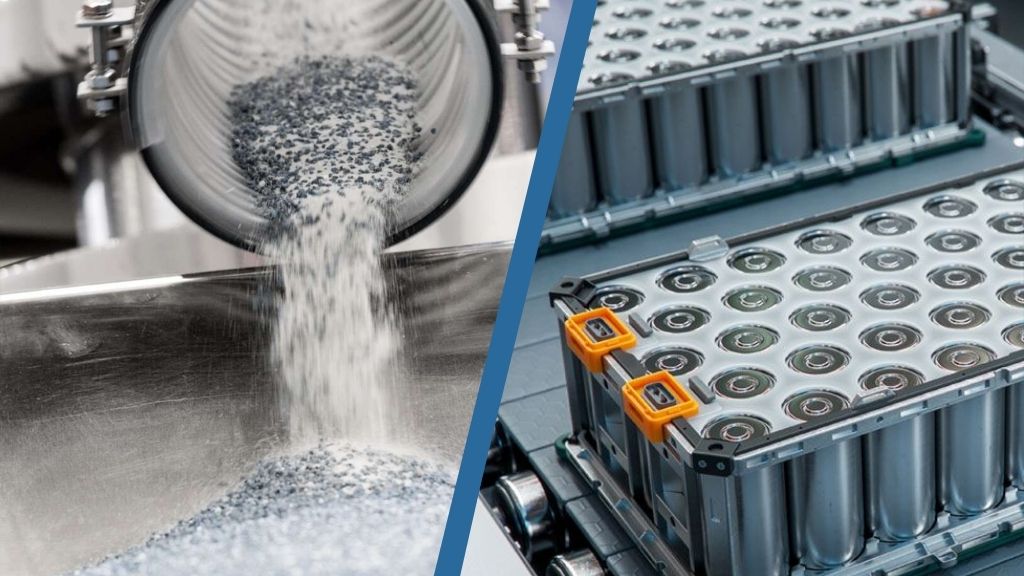
silicon powder cathode and anode

Let’s break this down together—what silicon powder is, why it’s tricky to handle, and how pneumatic conveying systems come to the rescue with safe, efficient, and dust-free transfer.


What Is Silicon Powder?

Silicon powder is a finely milled form of silicon metal, typically used in high-tech industries—especially for anode material in lithium-ion batteries. Its particle size usually ranges from 0.1 to 10 microns, making it ultrafine, lightweight, and—yes—highly reactive.

Properties of Silicon Powder That Matter:

  • Extremely Fine: Low particle size means large amount of dusting.
  • High Bulk Density: Tends to compact, making it hard to control.
  • Combustible Dust: When dispersed in air, it can form explosive atmospheres.
  • Abrasive Nature: Can cause wear and tear on mechanical components.
  • Moisture Sensitive: Absorbs humidity and can clump if not handled correctly.


Why Pneumatic Conveying? Why Not Just Use a Screw Conveyor or Bucket Elevator?

You could try using mechanical conveying systems, but here’s the catch: they often involve lots of moving parts, open transfer points, and more friction, which are exactly the conditions that increase ignition risk when handling combustible dust like silicon.

Pneumatic conveying uses air pressure or vacuum to move bulk materials through enclosed pipelines. For materials like silicon powder, it’s not just efficient—it’s vital for safety.

pneumatic conveying pipes system - Indpro


Why Pneumatic Conveying Wins for Safety for Silicon Powder Conveying:

  • Closed Conveying System: Prevents dust leakage and contains explosion risks.
  • Minimal Moving Parts: Reduces mechanical friction and ignition sources.
  • Gentle Material Handling: Maintains particle integrity for battery-grade material.
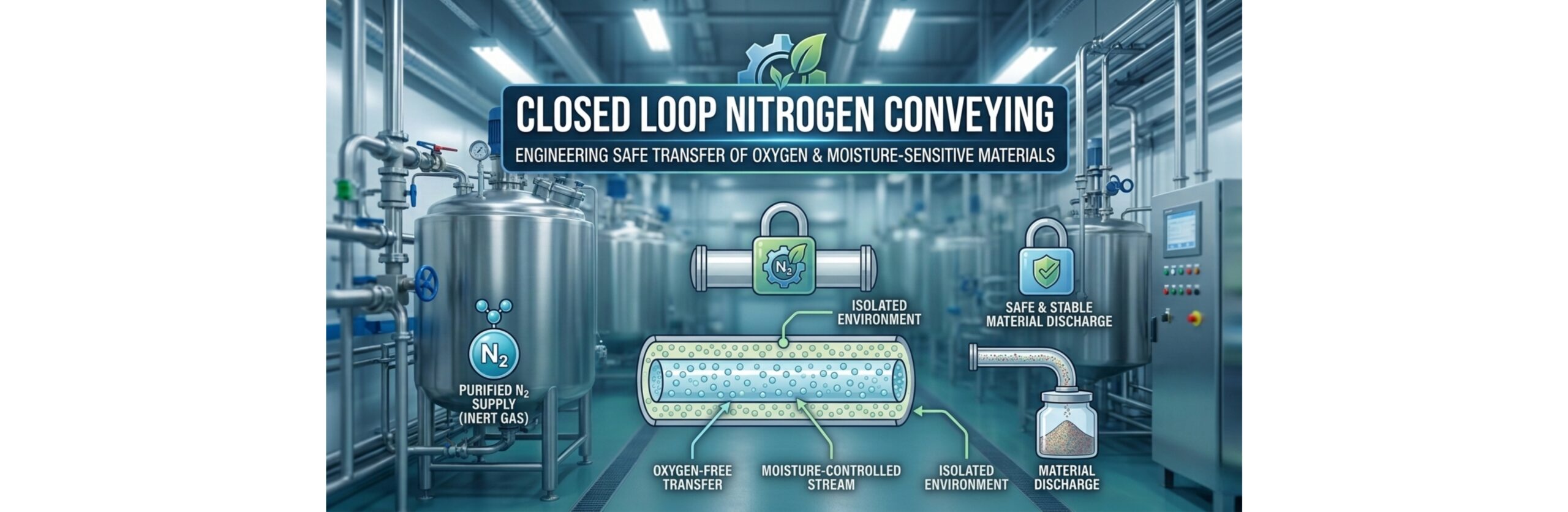
  • Inert Gas Conveying Option: Use of nitrogen or CO₂ instead of air helps eliminate oxygen, reducing combustion risk.
  • Dust-Free Operation: Protects workers and keeps the environment clean.

It is the perfect blend of safety, control, and performance—especially in a cleanroom or classified area.


Inside the Process: A Real-World Case Study

Let us walk through the actual material flow at a battery raw material manufacturing company, step by step, and how they designed each stage for safety and efficiency:

Great question. Let’s break it down:

1. Bag-Dump Station with Dust Collection

  • Operators manually empty silicon powder bags into a sealed dump hopper. Airborne dust is captured by dual cartridge filters equipped with reverse pulse jets, which clean and return dust to the hopper—keeping particles contained and the environment clean. 

2. Pneumatic Conveying Line

  • From the hopper’s outlet, silica flows into a pickup adapter, then rises vertically 90°, transitioning to a horizontal pipeline toward the main area. A blower creates vacuum to draw the powder—ensuring containment even if there’s a leak.

dense phase pneumatic conveying system setup

3. Filter-Receiver and Slurry Tank Feed

  • At the pipeline’s end, a filter-receiver separates powder from airflow. It also uses reverse pulse jets for self-cleaning. A vacuum relief panel ensures any explosion is vented and equipment is protected.

4. Controlled Discharge via Slide Gate Valve

  • Powder exits into the slurry tank through a pneumatically actuated slide valve. There’s also two-stage load-cell weighing—one under the bag dump, another under the filter-receiver—feeding data to a PLC for precise batching. Level sensors halt the process during refill or if the receiving hopper nears overflow 

Why it’s smart: Fully enclosed, filtered, automated, and vacuum-safeguarded. Even a breach in the line keeps dust contained thanks to negative pressure.


What Makes This Setup Explosion-Safe?

The system includes:

  • Cartridge filters with reverse pulse cleaning—no manual intervention needed 
  • Vacuum conveying—dust remains inside even if there’s a leak  
  • Explosion relief panel—ensures safe pressure release  
  • Grounded metalwork, inert gas purging potential—common industry best practices
  • Integrated PLC with load-cell and level sensing—automated and safer weighing & batching control

It’s a textbook case of designing safety into every stage—from powder deposition to delivery.


Bringing These Lessons to Your Setup

Here’s how you can adopt this model effectively:

Smart Safety Adaptations for Silicon Powder Conveying

ElementAdaptation Tips
Bag-dump stationUse sealed hoppers with dust filters that auto-clean
Vacuum-based pneumatic lineEnsure negative pressure to contain dust even during leaks
Filter-receiver with explosion ventingInclude reverse-pulse cleaning and relief panels
Automated discharge & batch controlUse weigh cells and PLCs to manage feed rates and safety
Inerting optionsPurge with nitrogen or CO₂ during startup
Regular inspectionPeriodically check seals, valves, and grounding systems

Handling combustible silicon powder isn’t just about boosting production—it’s about protecting lives, assets, and investment. The above setup is a real-world example of how a well-engineered pneumatic conveying system can make a hazardous process safe, reliable, and efficient.

Here’s to smarter—and safer—powder handling as we build next-gen batteries!