
Importance of Bulk Powder Handling in Battery Manufacturing
Importance of Bulk Powder Handling
in Battery Manufacturing
The global battery market is expanding rapidly, driven by electric vehicles, renewable energy storage, portable electronics, and industrial applications. At the heart of this growth lies a critical—but often overlooked—factor: Powder Handling.
From lithium compounds and graphite to conductive additives and binders, powders form the foundation of battery production. How these materials are stored, conveyed, and processed directly impacts product quality, plant safety, and operational efficiency. Effective powder handling is no longer just a manufacturing requirement—it’s a competitive advantage.
This blog explores why powder handling is vital in battery manufacturing, the challenges involved, and how modern bulk material handling technologies address them
Powders Used in Battery Manufacturing
Battery cells are built from carefully engineered powder blends. These typically fall into two main categories:
Cathode-Based Powders
Cathode materials define the energy density and voltage of the battery. Common examples include:
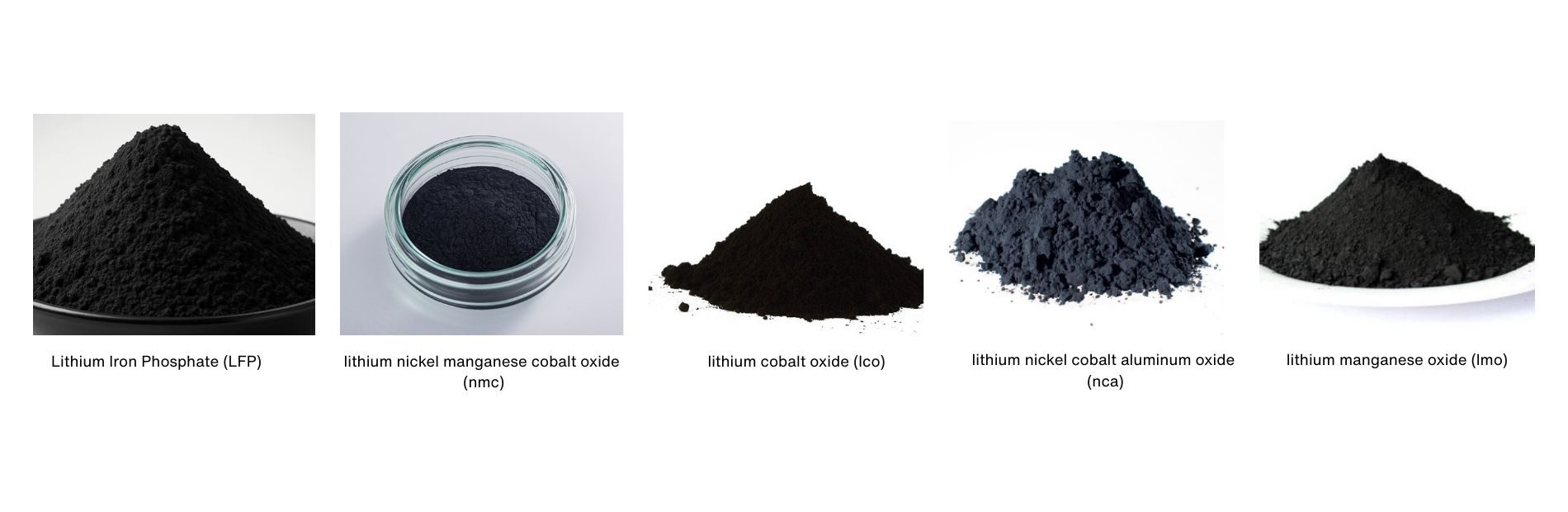
- Lithium Iron Phosphate (LFP)
- Lithium Nickel Manganese Cobalt Oxide (NMC)
- Lithium Nickel Cobalt Aluminum Oxide (NCA)
- Lithium Cobalt Oxide (LCO)
- Lithium Manganese Oxide (LMO)
These powders are often:
- Sub-micron to few-micron in size
- Highly reactive and moisture sensitive
- Expensive and intolerant to contamination
Anode-Based Powders
Anode materials influence charging speed, cycle life, and stability. Typical examples include:
• Natural Graphite
• Synthetic Graphite
• Silicon-based powders
• Hard carbon
• Conductive carbon black
These materials are extremely dusty, lightweight, and prone to electrostatic charging, making them particularly difficult to manage using conventional conveying methods.
Why Powder Handling Matters in Battery Production
Battery manufacturing demands exceptional control due to the fine, reactive nature of materials and strict quality standards. Here’s why powder handling is so critical:
1. Quality Control and Consistency
The properties of battery powders influence critical performance metrics such as capacity, cycle life, and electrical conductivity. Improper handling can lead to:
- Density variations
- Particle segregation
- Inconsistent blending
2. Safety and Environmental Protection
Many battery powders are flammable, toxic, or electrostatically sensitive. Uncontrolled dust increases risks of:
- Fire and explosion
- Worker exposure
- Environmental contamination
3. Operational Efficiency
Inefficient powder transfer leads to:
- Production delays
- Material wastage
- Higher labor dependency
Challenges Faced During Powder Handling
1. Dust Generation and Control
Fine particle powders have a high tendency to become airborne, leading to:
- Contaminated production areas
- Respiratory issues for workers
- Fire and explosion hazards in confined spaces
2. Flowability Issues
Powders may exhibit poor flow characteristics caused by:
- Cohesion
- Moisture
- Electrostatic charges
- Irregular particle shapes
3. Cross-Contamination Risk
Mixing different powders (e.g., cathode active materials with conductive additives) while being contaminated with some particles from the previous batch can affect product quality and cause waste.
4. Maintaining Particle Integrity
Some materials are fragile and can break down with aggressive handling, significantly affecting:
- Packing density
- Electrochemical performance
Role of Bulk Material Handling Technology in Battery Powder Processing
1. Enclosed Powder Transfer
Using sealed conveying lines and closed storage ensures:
- Zero dust escape
- Clean production environments
- Protection of sensitive materials
- Preventing oxidation
2. Precise Feeding & Metering
Loss-in-weight feeders, controlled discharge devices, and automated batching provide:
- Accurate dosing
- Repeatable recipes
- Uniform mixing
3. Gentle Handling
Modern systems minimize:
- Particle breakage
- Agglomeration
- Degradation
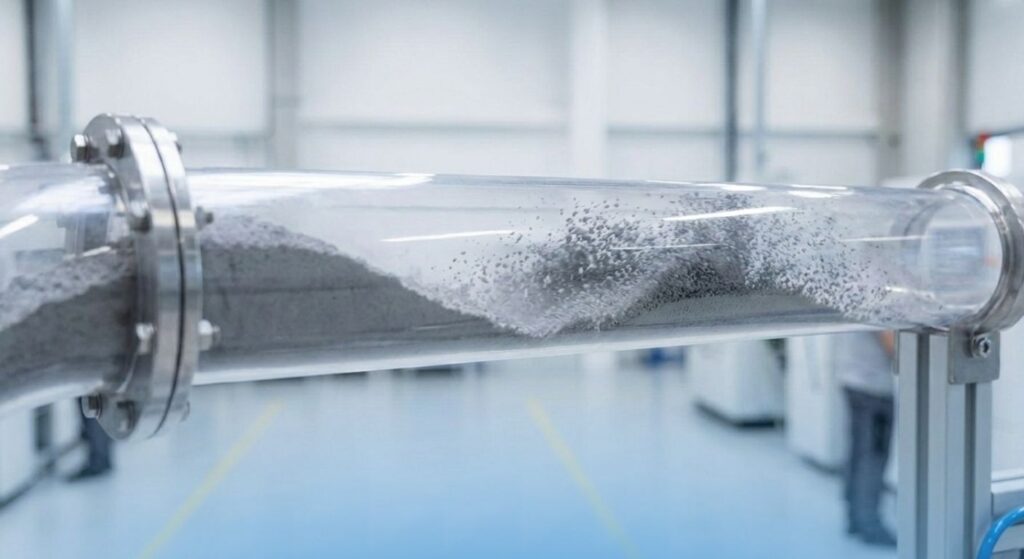
One of the most critical technologies in bulk material handling of battery powder is the closed-loop nitrogen pneumatic conveying system.
Unlike conventional air conveying, this system uses inert nitrogen gas in a fully sealed loop.
Why this matters:
✱ Explosion Prevention: Nitrogen eliminates oxygen from the conveying environment, dramatically reducing:
- Fire risk
- Dust explosion probability
✱ Moisture-Free Conveying: Nitrogen is dry by nature, preventing:
- Moisture ingress
- Powder degradation
- Unwanted chemical reactions
✱ Closed-Loop Operation: The nitrogen is continuously recirculated through filters and blowers, resulting in:
- Minimal gas consumption
- No emissions into the atmosphere
- Clean-room compatible operation
- External contamination
- Product loss
- Operator exposure
✱ Automation Ready: These systems integrate seamlessly with below equipments supporting fully automated battery production lines:
- Silos & Day bins
- Big bag unloaders
- Feeders
- Mixing stations
Concluding Remarks
Battery manufacturing success depends not only on chemistry—but on how that chemistry is handled.
With powders forming the foundation of every cell, bulk material handling technology becomes a core enabler of safety, quality, and scalability.
From cathode and anode powders to conductive additives, advanced solutions such as closed-loop nitrogen pneumatic conveying, precision feeding, enclosed storage, and automated transfer systems ensure: