Indpro Logo

Indpro
Typically replies within an hour

Indpro
"Hello!👋

How can I help you today with your bulk material handling needs?"
×
Chat with Us

What is Big Bag Unloading System

What is Big Bag Unloading System​

Big bags Unloading– How to improve on your bulk material logistics​

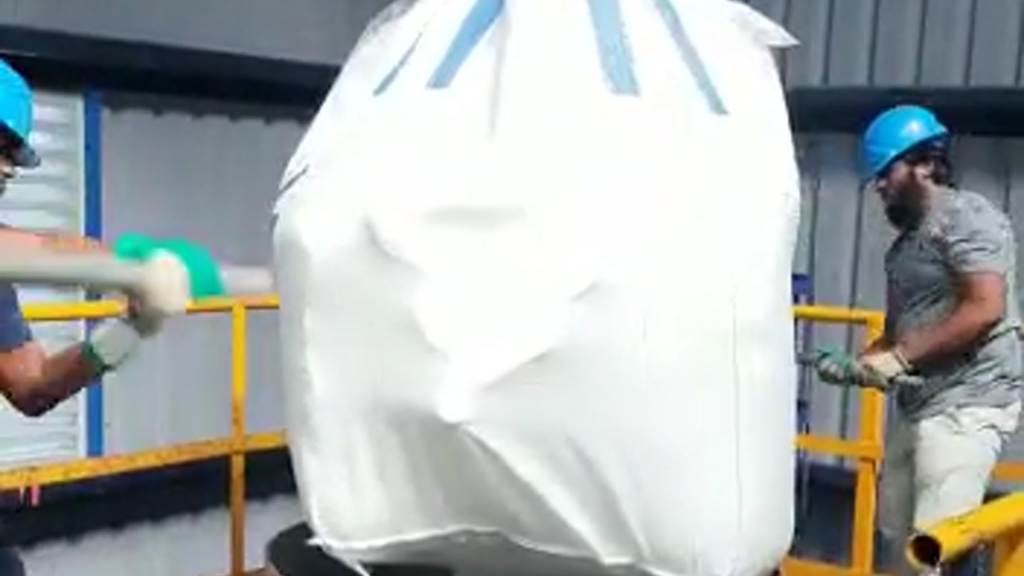
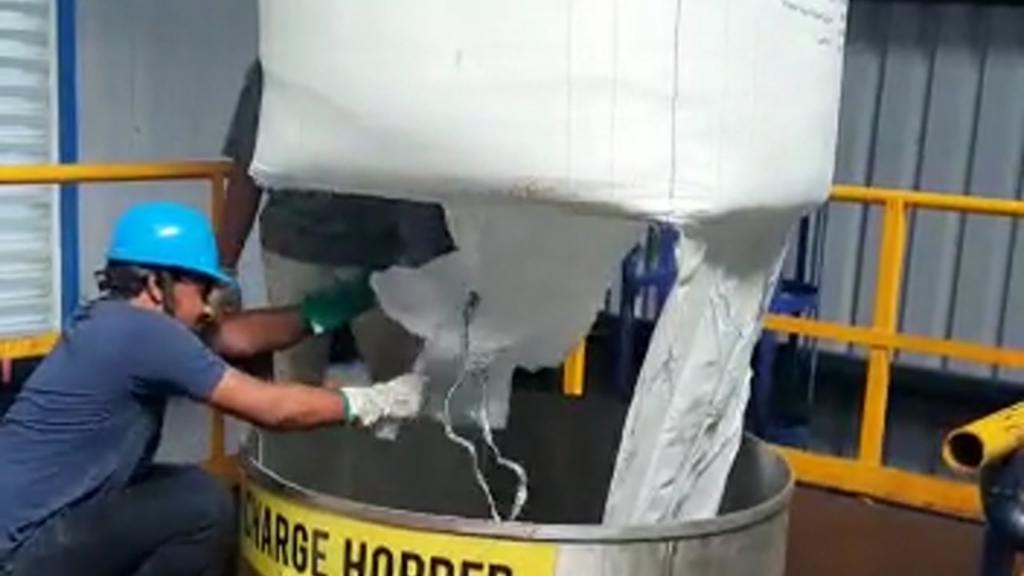
The use of big bags in the material handling industry is on the rise. Improved cost-efficiency and high safety standards of bulk bag unloaders for handling a variety of materials have led to the progressive use of bulk bags by a wide range of sectors. Bulk bags unloaders have become a viable distribution source for many products and have resulted in a changeover from the fact that small bags were practically used exclusively, and that the shipment and storage of bulk material have also been changed in the last decade. Likewise, bulk bag dischargers have now revolutionized the way bulk bags are filled, untied, deployed, and withdrawn as operators are no longer forced to enter them manually via restricted access doors and strain to withdraw partially empty bags, clean up spillage after disconnection, dislodge goods from dead spots or flatten bags. This method of loading and unloading large amounts of the material involves technical expertise, which has given rise to the development of such big bag unloading systems. The unloading method of the Jumbo bag operates well even when the material in the bag is not free-flowing making it a very versatile device for the industry.

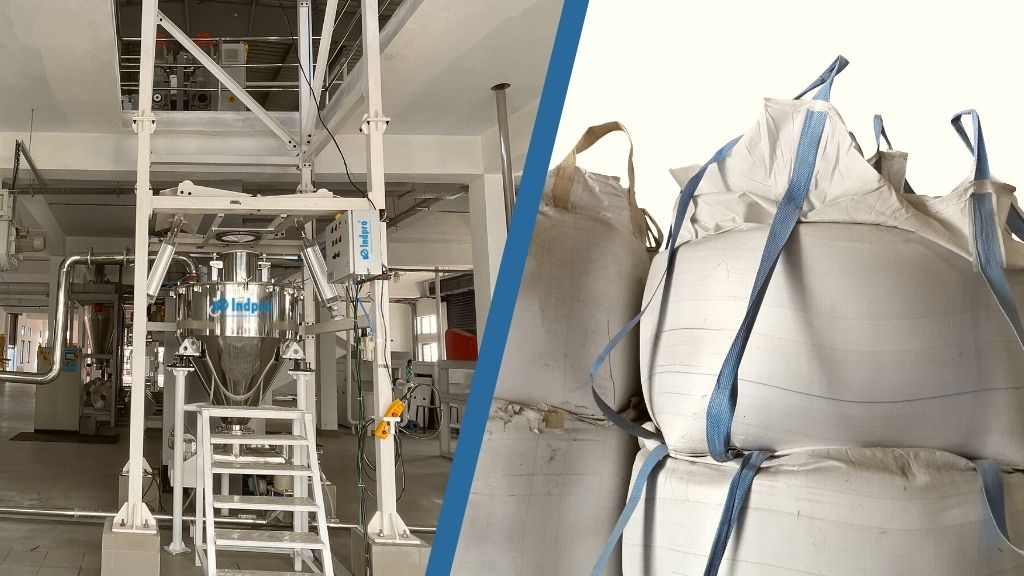
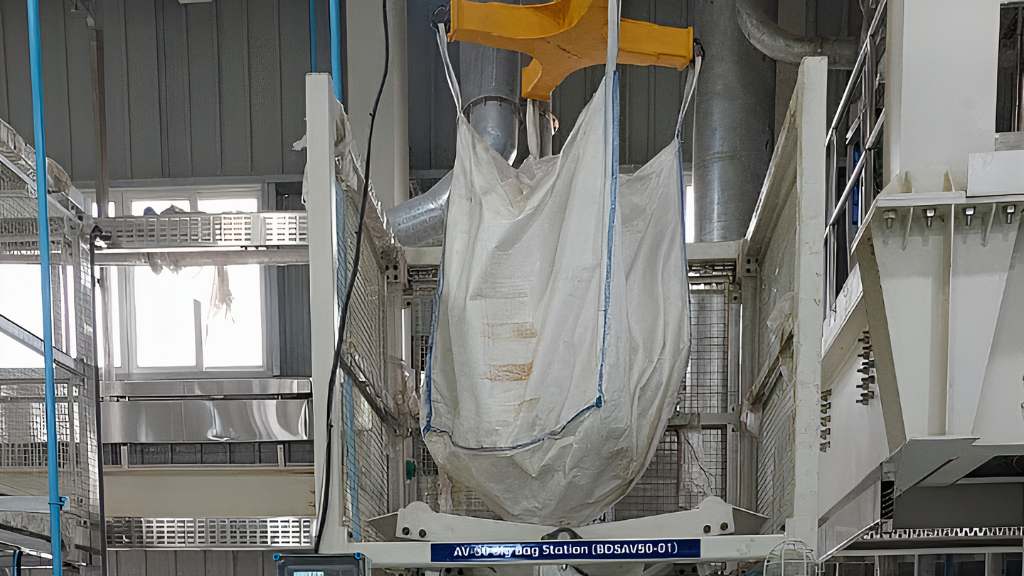
jumbo bag unaloding indpro

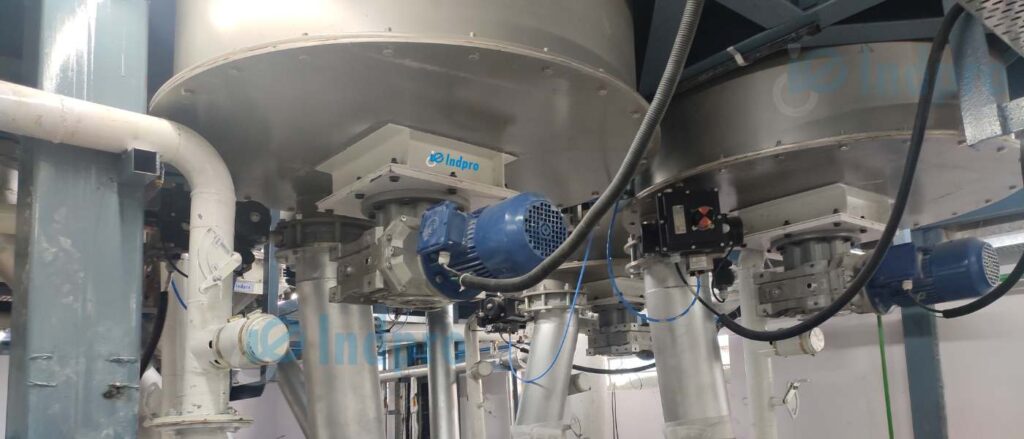
Big bag unloading systems are often classified as unloaders for bulk containers, bag supports, FIBC unloaders, FIBC dischargers, and wide bag dumpers. Used for unloading from a range of bulk bags such as bulk packages, FIBC, Jumbo packages, etc. A basic frame for the mounted bag supporting the lifted bag is equipped with a lift or a hoist to unload the Bulk Bag. 

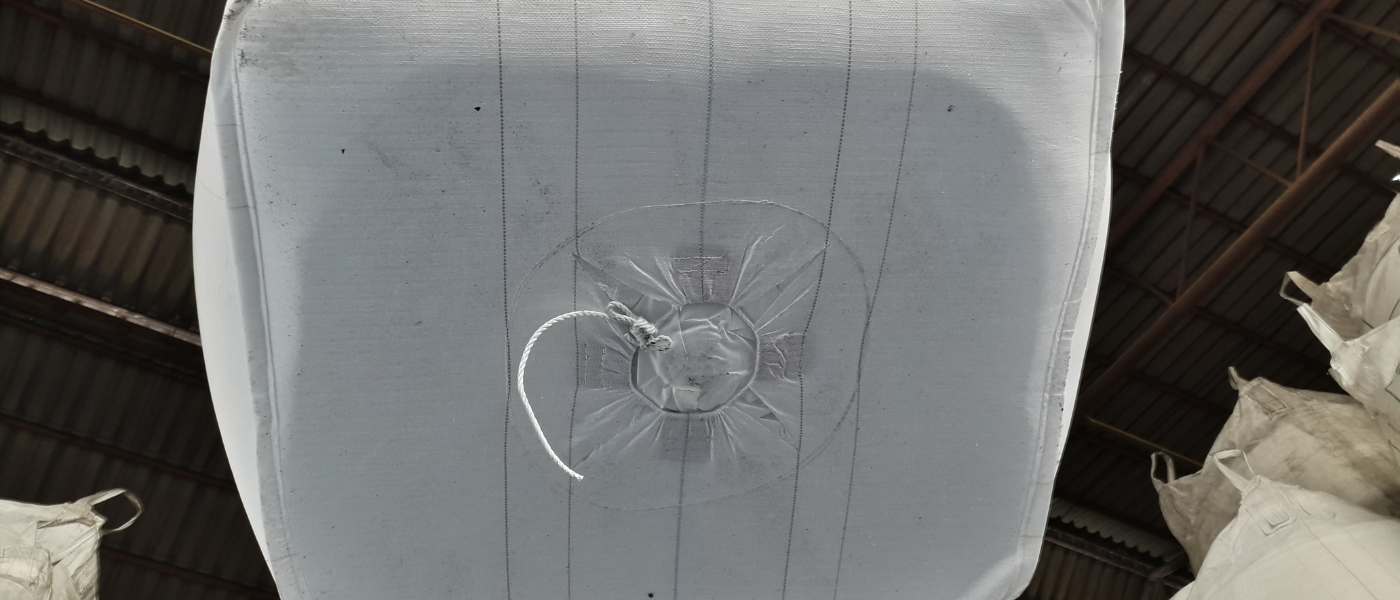
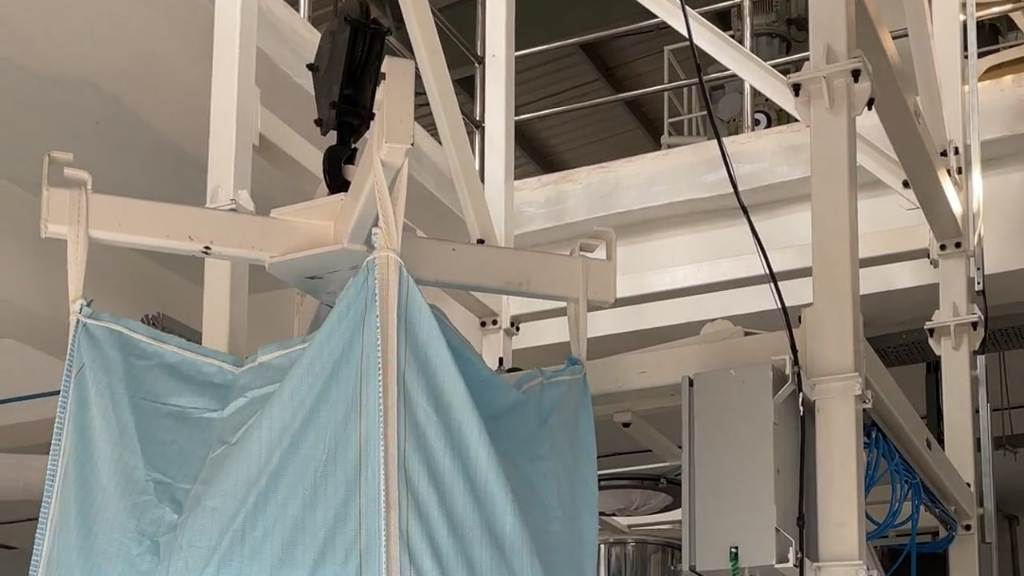
The basic setup involves a bag frame that can be connected to the bag’s suspension clips. The frame is then raised and positioned in a way to counterbalance the suspension frame in the unloaded by the hooks on the frame. The bottom of the bag sits on a locking plate, and the loops of the bag hold the bag straight when lowered. The spout is clamped on by a pneumatic clamp to completely seal the system and avoid dust from escaping. This ensures the environment stays clean. Additionally, content in the bag can be discharged into storage, a conveying system, or a process vessel for transfer to another location by gravity. These unloaders use a broad array of devices, such as pneumatic conveying systemsscrew feedersrotating valveslump breakers, etc., which unload or convey material from the station to various locations

Bulk solids handling products – Market dynamics:

The bulk bag unloaders market is projected to see healthy growth over the forecast period led largely by the economic benefits associated with bulk bags in managing bulk materials that have generated a steady demand for bulk bags and are causing consumer switches from other alternative packages such as rigid IBCs, small bags, Gaylord boxes, etc. These unloaders are equipped with many advantages that drive the competition in the bulk bag unloaders industry.

Some advantages are, these systems are compatible with several bag types and are complemented by a broad range of models and accessory models, provide controlled dosage, reduce labor, and enhance productivity. These types of equipment eliminate dust and spillage associated with the use of other bulk bags. Besides, frequent innovation related to the unloading and dispensing of bulk bags is expected to drive growth in the market for bulk bag unloaders over the forecast period.

Recent advances and improvements in bulk bag handling products will remove the inconveniences of outdated designs while enhancing comfort, cleanliness, and, safety intensively. The new items are not only intended to create a dust-proof cover, but also to facilitate material movement and complete evacuation.

Components in a big bag unloading system:

  • Hoist
  • Bag holder
  • Discharge funnel
  • Bag massager
  • Discharge chute
  • Dust extraction system (optional)
  • Sturdy metal frame to support the entire structure
  • Heavy metal gives a support frame to the entire structure

How does a big bag unloading system work?

  1. A big bag is attached to a hoist for better handling and a better bulk handling operation.
  2. The hoist picks up and takes the jumbo bag into its discharging location. The outlet of the bag is tightly clamped to the spout clamping arrangement.
  3. A wide access hood is given to untie the big bag outlet spout.
  4. As the outlet completely covers the nozzle, a pneumatically operated seal mechanism is used during release which produces a dust-proof material discharge.
  5. The pneumatically operated massager paddles help to massage and discharge non-free-flowing products.
  6. Optionally, the hopper comes with a flanged dedusting system connection.
  7. The dedusting system creates a vacuum during discharging which makes sure no dust escapes from the crevices.
  8. The heavy steel frame is a sturdy framework with entirely enclosed profiles.
  9. A control panel is used to operate all pneumatic operations of the device.

Indpro’s Jumbo Bag Discharge Solution:

  • Indpro’s big bag discharge systems are particularly equipped for discharging a broad range of bulk material from big or jumbo bag. They eliminate emissions from dust, product loss, or contamination of the product. For safe and hygienic discharge of food ingredients, pharmaceutical products, and toxic materials, several unique options are available.
  • Our range is based on a simple modular structure that allows the basic models to be extended with several options for obtaining a complete solution for discharging big bags aka jumbo bags. Indpro’s expertise in the practical application of such equipment with proven reliability has resulted in the development of various application specific enhancements. This allows all facets of the requirement to be addressed taking into consideration all consumer requirements such as product size, bag form, environmental issues, device capability, and expenditure.
  • Indpro provides intense emphasis for the bulk bag unloading system and associated equipment to ensure secure, effective, and full unloading and, handling of bulk bags.

Advantages:

To ensure optimal performance, consider the following factors:

  • Easy integration into existing setup where big bags must now be used instead of small bags.
  • Minimal space requirement for retrofitting in an existing plant.
  • Available in both stainless steel and carbon steel.
  • Operator safety is ensured.
  • Surfaces made of stainless steel are polished to the desired standards. All mild steel exterior surfaces are coated with high grade paint.
  • Complete discharge of granular and powder is possible with the help of massaging paddles.
  • Entire operation of unloading material from big bags can be made dust free which will ensure hygiene of the plant as well as safety for operators.
  •  

Next-Gen Technology in Mechanical Material Handling

Next Gen. Technology in Mechanical Material Handling

Everyone has rules of thumb when it comes to choosing a conveying system — rules based on bulk material characteristics, required flow rates and distances, sources and destinations, plant configurations and other variables. But those with experience in all types of systems will understand that the only rule for choosing a conveying technology is that there are no hard-and-fast rules. The fact is, most materials can be conveyed using any of several methods, but which is your best choice? Leave that to the experts to guide you.

There are primarily two types of Conveying System, Pneumatic Conveying System and Mechanical Conveying System.

Pneumatic conveying is by far the most hygienic conveying method for bulk dry powders and granular bulk materials because it’s a totally enclosed system that protects materials from air, dirt, and waste, and in turn, facilities from fugitive dust. Pneumatic conveying uses gas (usually air) to transfer suspended material through tubes. A pneumatic conveyor requires a prime mover to displace air which in turn moves the material.

Mechanical conveying include tube chain conveyors, conveyor belts, aero mechanical conveyors, flexible screw conveyor, and bucket elevators that use a mechanical device which is in direct contact with the material to be transferred. The advantage of a mechanical conveyor is the ability to move large amounts of material with minimal energy consumption and minimal particle breakage.

The very versatile nature of the tube chain conveyor makes it adaptable to any configuration and provides it the power to handle all kinds of bulk solids. Just about any industry that needs to convey material gently and quickly can speed up their process by integrating tube chain conveyor into their setup. One of such well known tube chain conveyors in the market goes by the name of Diskcon. Diskcon is mostly used where gentle material handling is required for fragile and perishable products. They are widely used where space is constrained. In process industries flexible material handling solutions are a need of the hour, especially in brown field project, which is where such tube chain conveyors are used.

Food industries use it to gently convey cereals, grains, coffee, peanuts, almonds as well as small-sized solids such as sugar, pepper, etc. Pharmaceutical and chemical industries use it to convey explosive powders with low minimum ignition energy. The plastic and polymer industries use it to convey polymer powders which are again explosive in nature.

Diskcon is a fully enclosed mechanical conveying system that consists of a tubular case through which the product is conveyed. Material is pulled along the channel through specially designed polymer disks with exceptional compressive strength and low coefficient of friction. Inside is a chain disk assembly which carries the material. This may be used to convey several types of bulk solids, however abrasive, hazardous, or sticky they may be. Our tube chain conveyor system can transfer almost any material gently and securely, without altering the product’s integrity.

Our tailor-made tube chain conveyor systems are used in chemical, pharmaceutical, food, polymer, and other process industries for a wide range of applications. With special versatile technological approaches, we care for individual customer requirements. Tube Chain Conveyor is an innovative concept which addresses three major industrial factors: Energy, Space & Environment. This is a gentle moving machine backed up by a control panel featuring Electronic Logic Controllers and sensors for automated operation of a chain tensioning system and an under-speed monitor, making this equipment practically maintenance-free.

A broad variety of products can be conveyed which includes food stuff, cereals, chemicals, pesticides, animal feeds, salt, sugar, dairy powders, plastics and polymers. Operating temperatures can be up to 200° C. Particles ranging from fines to 20 mm lump size, can be easily conveyed. This conveyor comes in stainless steel constructions, with the conveyor chain made from hardened and tempered steel alloy materials, with high tensile properties and wear-resistant.

The heart of our system lies in the driving station, which gives the chain-disk assembly the necessary force for gentle conveying.

DiskCon’s chain tension station continuously tensions the whole chain length in the conveying direction of the equipment while maintaining minimal tension in the return route. It helps reduce chain-disk mounting, sprocket, valve and pipe.

Every bulk solid has different physical and chemical properties. The sum of cohesive and elastic power that it produces defines its flow behavior and pattern.

When compared to a rope, the chain is less susceptible to exhaustion, tear, and elongation. Individual disks can be substituted in a tube chain conveyor in the event of any unexpected damages and may be substituted completely in the case of cable conveyors. Diskcon’s UHMWPE disks are lightweight, have excellent compression properties, and have a high resistance to wear coupled with low friction. Each of these properties offers optimal conveying for reduced energy usage, with small power requirements.

Cohesive and sticky bulk solids require separating cleaning devices from the chain-disk assembly. This is where the brushes mounted inside the driving station ensure that minimal material residue is left over the chain disk assembly while it returns.

We use specialized conveyor tubes that have extremely accurate dimensions and low resistance to movement. Standard ERW tubes cause excessive wear to conveyor disks. Due to a smooth inner finish, our conveyor tubes have low friction, which helps to minimize power consumption and disk wear. The conveying tubes are built for high tensile strength which requires minimal external supports.     

  • Our conveyor uses a chain rather than a cable, which is why they can be run anywhere between 0 and 100% load.

  • The quality of the bulk material is entirely protected, which means you receive the same material from the outlet like the one you put in the inlet. 

  • The chain tensioning station constantly tensions the whole chain length in the conveying direction of the commodity while maintaining minimal tension in the return route to minimize wear.

  • The very flexible design of the Diskcon helps it to conform to any setup and enables it to accommodate all types of bulk solids. Just about any industry that needs to gently and quickly convey material can speed up its process by integrating Diskcon into its setup.

  • Tube chain conveyors consume less than half the power for the same distance and capacity compared with our pneumatic conveying system.

  • We individually plan your system in a modular design. Layout, materials, and speed will be perfectly adapted to your bulk material.

  • We also supply several accessories, such as a cleaner assembly or air spray to clean the chain disk assembly on the return line, manual or pneumatic slide gate valves to monitor product discharge.

  • Diskcon is the ideal solution to handle fragile, explosive, and hygroscopic bulk solids.

  • Material is gently handled inside the tubing at a very low intensity.

  • Due to its compact dimensions, low maintenance, ease of use, and amazingly low energy consumption, this system operation is completely free from dust.

  • After years of material handling experience, and having experienced a variety of bulk solids, we provide material feeding devices that are best suited to your specific needs.

  • Users can choose which system (speed-size combination) they require for their material from our wide range of conveyors, or we could suggest one based on our experience in handling bulk solids.

  • We offer the following range of tube sizes: 4″, 5″, 6″ and 8″

  • Indpro’s Diskcon is available in Stainless Steel construction for food & pharmaceutical applications.

  • We offer standard configurations: C Type, Z Type, Inline TCC, Inclined TCC, Transfer Type, O Type, Inclined O Type, and Portable Type.

Air Pollution Control – A need of the hour

Air Pollution Control – A need of the hour

World Health Organization (WHO), states “Solid dust, from below 1 mm, to a minimum of 100 mm, are often transmitted or may be transmitted by air, depending upon the quantity. They are usually released into the air by natural forces including pollens in soil, sandstorms, and volcanic ashes “Their structure, physical characteristics, and environmental factors”. Manual processes, i.e. grinding, cutting, and crushing also can generate these. Small in size, this often makes them invisible to the eye, making them difficult to control only by human effort. Dust consists of small particles in its most elementary form which floats within the atmosphere. Dust can mix with anything from pollen, to skin cells, to harmful pollution particles, depending on the environment or industry being worked in. Dust are often produced from a variety of sources.

This kind of dust is generated while conveying pharmaceutical/chemical powders from one place to another for their processing in plants. This will be very harmful as sometimes these powders are hazardous if inhaled. Even the utilization of masks might not be sufficient to arrest them. So dust collectors are necessary for such applications. These dust collectors in first place refrain from releasing such particles within the atmosphere by arresting them in the process itself.

Fiberglass, or glass wool, consists of glass filaments combined with yarn and woven into a cloth. Although there is inadequate data, many suspect that fiberglass can cause respiratory diseases when worn down and turned into an airborne material. Wearing a mask when working with fiberglass or other manufactured plastics is strongly suggested as a precautionary measure.

Metal dust usually forms by grinding metal during any metal manufacturing process. Workers subjected to metal dust can suffer from lung and throat irritation. Other sorts of metal dust are often highly poisonous, particularly if the metal consists of heavy metals such as cobalt, lead, or nickel. If dealing with the metal it is necessary to wear any form of a respirator to avoid injury to the lungs.

The silica dust is airborne while dealing with concrete and might be harmful. Exposure to silica dust may result in a disease caused by inhaling an excessive amount of the silica found in dust. Such small particles may cause the lungs to thicken or scarring of lungs, and eventually trigger lung cancer.

Wood dust is additionally referred to as sawdust, as a result of wood manipulation. Whether it’s by sanding, scraping, digging, or shaving, small wood particles are emitted into the soil, creating a coating of dust until deposited. Wood dust are often hazardous when inhaled. It may cause allergic reactions, problems with the oral mucous membrane, or cancer, although the extent of these risks has not been fully identified.

Air pollution control equipment is a vital component of industrial processes that cannot be neglected. Name any industry, and you will realize the extent of harmful stuff it sends into the environment through its processes. Petroleum, energy production, coal and metal mining, chemical, and waste management industries are a few of the many players that have played a considerable role in polluting the environment. Every industrial procedure – including sourcing of raw materials, manufacturing of the final product, maintenance of the site and machinery, and transporting of the product to different locations – results in some kind of pollution. The burning of fossil fuel releases volatile hydrocarbons, burning wood and coal as fuel produces carbon dioxide and sulfur dioxide, and automobiles are also a key source of harmful carbon. Each industrial activity generates emissions that directly pollute the air, soil, or water.

  • Decrease the release of harmful gases and control the spread of air pollution.

  • Conserve whatsoever natural resources are available for our future generations.

  • Decrease health threats posed by breathed in and otherwise consumed pollution.

Air pollution is a threat to nature and due to rapid industrialization, it has become a need of the hour to control it. Indpro Engineering Systems Pvt. Ltd. is a manufacturer and provider of air quality control equipment. We recognize that the growth of the country is directly related to the production in factories, but also there is a need to monitor airborne contaminants. Let’s see some of the pollution management equipment and there uses.

The bag filter is separated into many sections and every component includes a filter bag that removes the particles throughout the process. The collected particles and dust are spread over the fabric and, as the coating thickens, it can be extracted for washing or be dry cleaned so that it may function more effectively. Such elements can be made of nylon, polypropylene, polyester or porous PTFE.

cartridge filter is an analogous equipment to bag filters, where, instead of using a simple element made of fabric, the element consists of pleats which in turn increase the surface area for filtration per element. This effectively reduces the total space required for such a unit. Depending on the selection of media as per the application, such filters can be either used for surface filtration or depth filtration. Cartridge filters can also remove submicron particulates.

The function of a cyclone dust collector is extremely simple. It works on the principle of centralizing the mixture of air, forming a vortex, and entering the device. It uses a cyclonic separation process to isolate particles without the utilization of filters. The only downside is that it is limited to be used with coarser materials and cannot be used with fine powders.

Uses: They are widely used in industries like power plants and several industries like polyolefin, pulp, and paper plants, cement plants, petroleum and coke industry, metallurgical plant, sawmills, and other units.

Indpro in association with Herding is pleased to offer a revolutionary sintered plate filter element based pulse jet filter used to separate dust particulates from fugitive dust emitting sources & process off-gas. The herding sinter plate filter elements feature a PTFE coating that is embedded into the matrix of the rigid body. This leads to consequent surface filtration and effective protection. The base body (rigid) is sintered and then coated. All Herding filter media are classified therefore as mechanical surface filters which can be cleaned online. They are generally characterized by very high separation rates < 0.2 mg/m³ (depending on the dust) and by a service life of up to 15 years and more. They cover a temperature range of up to 450° C (842° F). It has low maintenance costs thanks to long service life. They are free of fibers and therefore ideal for product recovery processes.

Uses: Used in industries such as woodworking, food processing, pharmaceuticals, painting as well as powder coating, and other industries where the emitting particles are of minute size.

What Is a Powder Transfer System?

What is a Powder Transfer System?

A powder transfer system is an efficient & reliable method to transfer powdered & granular materials. It is a significant enhancement to any conventional, mechanical, or pneumatic material conveying process and provides total dust-free means of material transfer. Powder transfer system being very compact is specifically installed where space is a constraint. It also provides the easiest method of material handling automation with minimum modifications required at an existing setup.

Powder transfer system (iTransfer) conveys material vertically or horizontally to and from process machines. The technology allows direct loading of powder into mixers, closed-hoppers, vessels, reactors, etc. in a safe way preventing dust formation during transfer.

What is powder transfer system

This system facilitates reduction in batch time & total process integration. The system comprises of a suction device, transfer vessel with automated valves & regeneration type filter, vacuum pump, intermediate piping & fittings and control panel. The powder transfer system is easy to use, easy to clean and provides excellent rates of efficiency to optimize your process.

PTS is used in the following industries:

  • Pharmaceuticals
  • Food
  • Chemical
  • Fertilizer

Features in powder transfer systems:

Handling powders presents unique challenges due to their physical properties and sensitivity to environmental conditions:

1. Dust Free Operation: iTransfer helps dust-free environment in the processing area. The residue tight framework improves working environment and reduces the risk of product contamination.

2. Quick powder transfer: iTransfer eliminates manual powder charging result in no powder spillage and airborne dust. Powder transfer system quickly load & unload the vessels, silos, or closed hoppers.

3Easy-to-clean system: Our powder transfer system is designed in such a way that minimum residue is left behind in the vessel due to vertical walls. The system has an easy to clean design consisting of components which are ‘quick-release’ so that the system can be disassembled and reassembled quickly to minimize its downtime.

4. Charging of different vessels: Through PTS we can charge various vessels like silo, blenders, reactors & other processing equipment, which helps to quick transfer of powder & reduce batch time.

3Compact and modular design: Powder transport system has a compact and modular design, which fits well into where the powder must be transferred, where generally space is a limitation.

Recognitions of powder transfer system:

  • Quick release couplings are installed for quick dismantle and assembly.
  • Single system can be used for multiple products.
  • Minimum residue left behind in the vessel due to vertical walls.
  • Low power consumption helps in achieving quick ROIs.
  • Gentle handling of transfer material.
  • Minimal modifications required to install in existing setups
  • Greatly improves health and safety of all operators

Models Available of iTransfer

Models Capacity
iTransfer 200 0.75 TPH to 1.5 TPH
iTransfer 250 1.5 TPH to 2.5 TPH
iTransfer 300 2.5 TPH to 3.5 TPH
iTransfer 400 3.5 TPH to 4.5 TPH

Which Industries Use Pneumatic Conveying System?

Which Industries Use Pneumatic Conveying System?

Why Pneumatic Conveying?

A standardized mechanical conveying device operates in a straight line with minor directional adjustments, usually requiring its own motor and drive for each directional shift. It often has a fairly significant number of moving pieces, usually involving regular maintenance. Often, the machine appears to take up much precious real estate in a plant. Pneumatic conveying system, on the other side, uses a basic pipeline with a small diameter to move material. The pneumatic conveyor system is totally enclosed and has few moving parts as it is electronically managed. It is completely dust free and is easier to maintain.

One of the most important factors to consider is the properties of the material to be conveyed, including bulk density, flow properties, temperature, moisture content, inherent hazards and allowable degree of degradation. Both pneumatic and mechanical conveyors will handle a wide range of products, from fine powders to large particles. Both types are often designed to move materials that are friable or fragile, also temperature-sensitive materials.

Food-industry-Processing

Food production is one of the largest, most varied and important industries in the world. Pneumatic conveying equipment and experience-based engineered solutions for any type of dry food or dry ingredient processing is a challenge. Indpro Engineering Systems Pvt. Ltd. is holding a sizable market share in the food sector by providing complete solutions for the segment, especially pneumatic conveying systems, cleaning & sorting systems, storage, weighing solutions for popular products such as – sugar, rice, corn, spices, grains, maida, seasonings, toppings, coatings, cereal, animal feed and Flour. Propelled by the increasing disposable income, the food sector has been witnessing a marked change in consumption pattern. Currently, India is the world’s second largest producer of food in the world and the food processing industry is one of the largest industries in India.

The food Industry is a huge which constantly needs higher hygiene and efficiency. That’s why our customers many a times prefer to go with pneumatic conveying systems considering they are more hygienic and flexible than the traditional mechanical conveying methods. A wide range of foods may be transmitted through pneumatic conveying mechanisms.

India is the biggest global supplier of generic drugs. Indian pharmaceutical industry provides more than 50% of global market for multiple drugs, 40% of US generic production and 25% of all medicines in the UK. India holds a significant role in the pharmaceutical industry worldwide. Our country also has a large pool of scientists and engineers with potential to bring the industry even more forward.

Pharmaceutical sector is also growing at rapid pace. Indpro provides solutions to this sector in the area of pneumatic conveying of dry powders & filtration solutions for handling of various powders having normal, hazardous, explosive and active nature. Closed loop pneumatic conveying systems are offered for hazardous or explosive products using inert gas as a conveying media. Now a days various powder transfer systems are in great demand. Hygienic, quick clean and no residue design are standard features of pneumatic conveying system. Transferring materials pneumatically also supports a virtually dust-free atmosphere. The system’s air-tight pipes isolate carcinogenic and oxygen-sensitive materials from being released into the air, promoting a safer and healthier workplace, not to mention, environment. Charging the vessel/reactor also needs less manpower, giving employees time to attend to other important tasks.

With an increased use of virgin polymers in various products and an increased use of man-made fibers in textile industry, petrochemical industry is required to produce the building blocks ingredients for the most of the chemicals in abundance. To help address this growth we offer a solution to this sector in the area of bulk solids handling from the receipt of the raw material, various intermediate stages till finished product packaging.

Unloading stations, Pneumatic conveying, filtration solutions during handling of various bulk solids, bagging of finished products forms the major part of system supply. Products in the chemical & petrochemical industry can be dangerous and include precautions such as explosion risks, dust control, protection of the environment and prevention of cross contamination.

Plastic and Polymers:

The Indian plastics industry produces and export a wide range of raw materials, plastic-molded extruded goods, polyester films, molded/ soft luggage items, writing instruments, plastic woven sacks and bags, polyvinyl chloride (PVC), leather cloth and sheeting, packaging, consumer goods, sanitary fittings, electrical accessories, laboratory/ medical surgical ware, tarpaulins, laminates, fishnets, travel ware, and others. The Indian plastics industry offer excellent potential in terms of capacity, infrastructure, and skilled manpower. It is supported by many polymer producers, plastic process machinery and mould manufacturers in the country. Among the industry’s major strengths is the availability of raw materials in the country. Thus, plastic processors do not have to depend on import. These raw materials, including polypropylene, high-density polyethylene, low-density polyethylene, and PVC, are manufactured domestically. The recent trend of replacing metallic parts with engineering plastics, increase in various types of electronic gadgets & packaging concepts has increased the consumption of plastic as a raw material. To match this development for industries in compounding & master batches, Indpro offer following solutions:

  • Combination of mechanical & pneumatic conveying of raw material (calcium carbonate, Talc, polymers, resins, various additives etc.) from its receipt till extruder feed

  • Blending of different polymer grades.

  • Pneumatic conveying of finished product to storage silo.

  • De-duster for removal of fines & streamers, generated due to conveying, from finished products before packing.

  • Bagging & pelletizing solutions for finished products.

India has been lucrative market for global beer giants. India is the third largest and fastest growing liquor market in the world. Alcohol beverage can considered an emerging industry due to its high growth potential and increased social acceptance. According to one research, the market for alcoholic beverages in India is expected to grow by around 7.72% over a 10 year period.

Indpro has been in this sector for 15 years as the most preferred partner by all the corporates when it comes to Greenfield, UB – Breweries across the country, as well as brown-field projects.

Our Pneumatic conveying solutions for Brewery & Distilleries include total dry goods handling section including – Cleaning / Weighing and Milling solutions. Off late we have added to our manufacturing range as end of the line spent grain or DDGS handling solutions. This is a critical application as the moisture of input is in the range of 12 % to 60 %. This changes the product behavioral pattern completely. We have around 200+ installations covering major market share pan India.